"A study in the Journal of Experimental Psychology: Applied showed that buffet customers with large plates took 52% more food, ate 45% more, and then wasted 135% more food than diners with smaller plates. It's a simple trick, but clearly an effective one."
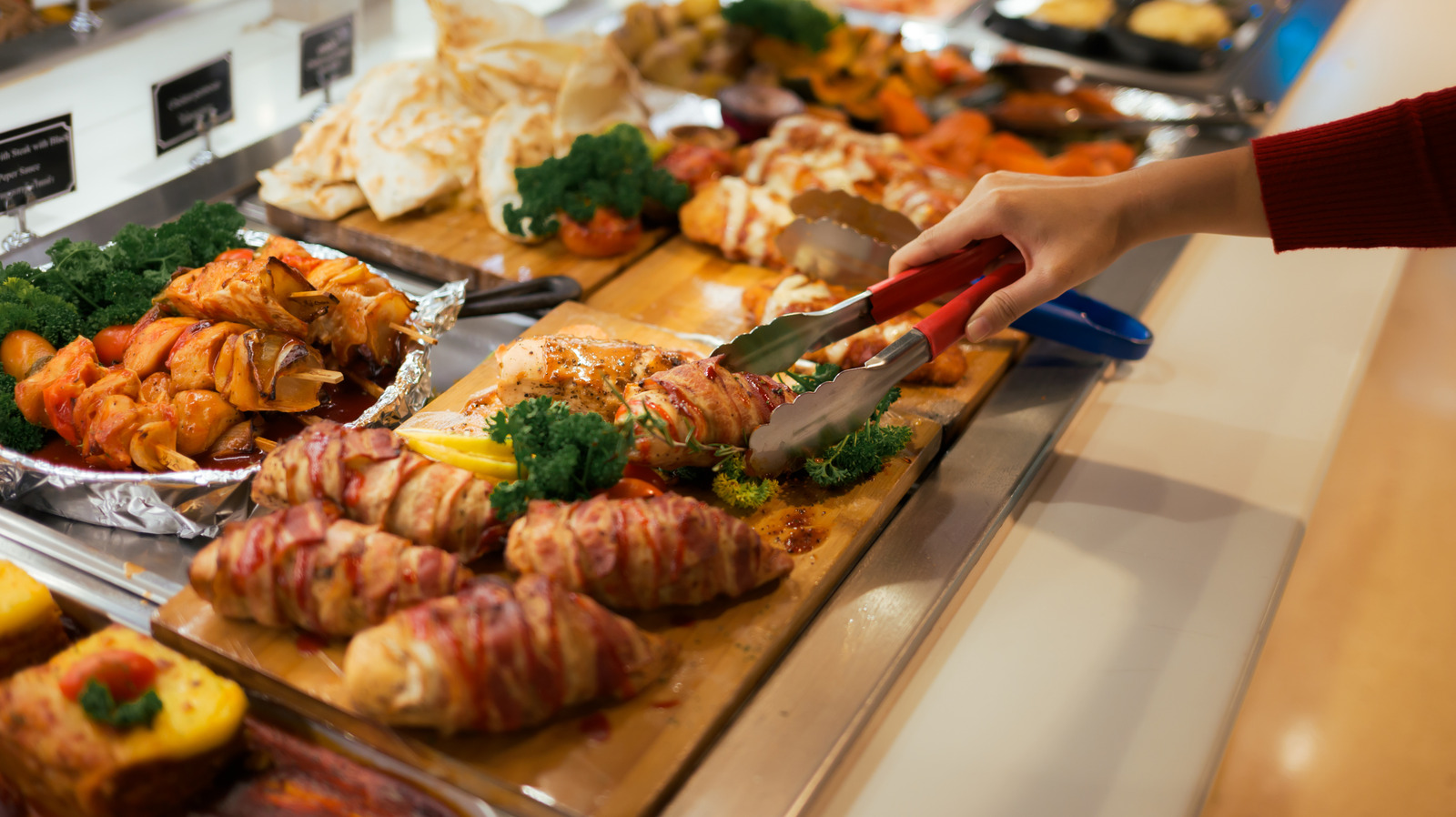
"Smaller spoons will be placed with more expensive items so you take less. Conversely, larger spoons will be provided for lower cost (and better satiating) items so you take more. Some dishes may be elevated and lit in a way that makes them look more inviting."
"Surprisingly, BusinessDojo reports that only 5% to 10% of buffet customers are considered unprofitable. This means they eat enough to exceed the expected cost of food per customer. With such a low percentage, overeating is not a major concern for any buffet."
Buffets remain profitable despite offering unlimited food by employing strategic psychological tactics. Only 5-10% of customers eat enough to exceed the expected food cost per person, making overeating a minimal concern. Restaurants use smaller plates to create the illusion of fullness while serving less food. Studies show customers with large plates consume 52% more food and waste 135% more than those with smaller plates. Additional tactics include pairing smaller utensils with expensive items to limit portions and larger utensils with cheaper, filling items to encourage consumption. Strategic lighting, elevation, and garnishes make lower-cost dishes appear more appealing. Large food selections create perceived value, encouraging customers to feel satisfied without consuming high-cost items.
#buffet-economics #consumer-psychology #food-service-tactics #portion-control #restaurant-business-strategy
Read at Tasting Table
Unable to calculate read time
Collection
[
|
...
]