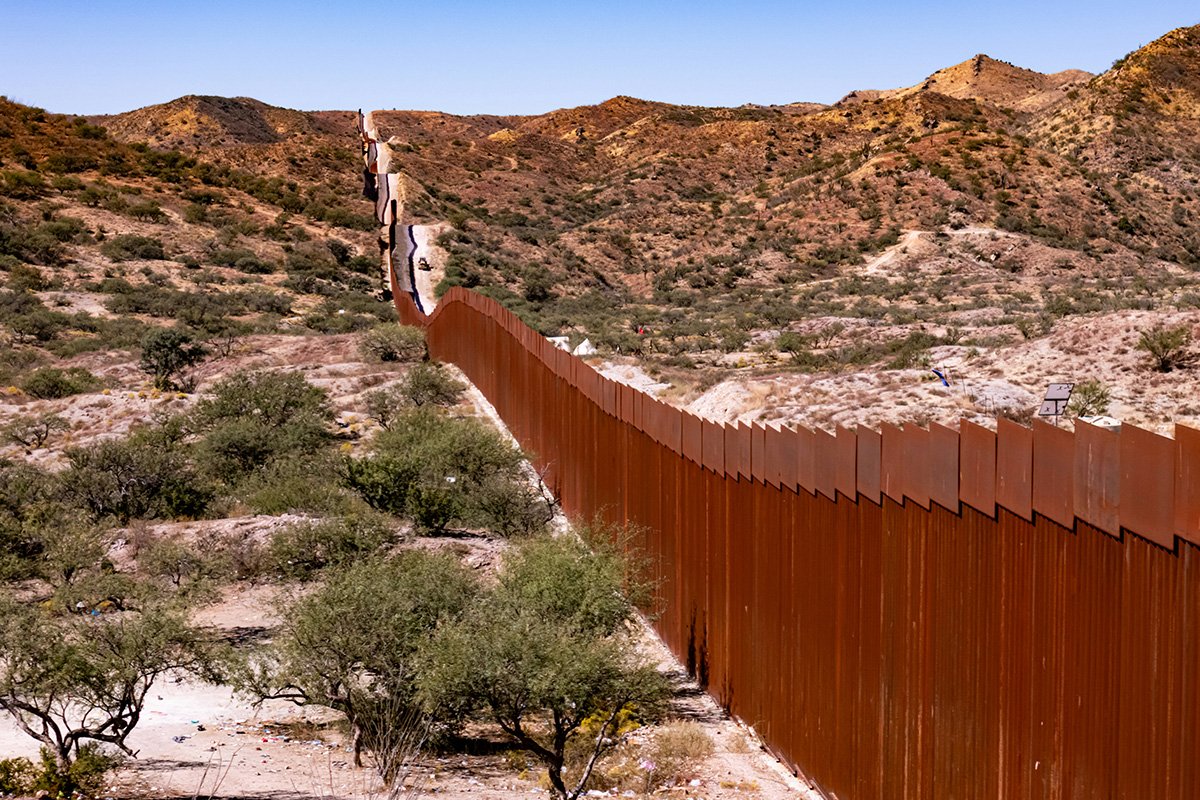
"Border walls are located along imaginary geopolitical boundaries. They slice arbitrarily through critical ecosystems that know only natural boundaries, cutting wild animals off from the resources they need to live—food, water, a diverse selection of mates—and the ability to migrate for survival."
"As of 2022, there were 74 border walls around the world. According to WOLA, 'three miles of new border wall are now being built every week.' These walls reflect the immigration policies of human governments on either side and are often dangerous zones for people living around them and attempting to cross."
"The kind of disruption a border wall presents to wildlife would be problematic under any circumstance, but climate change has exacerbated the issue. In a warming world, wild animals must move beyond their typical ranges or leave their natural habitat entirely to access cooler climates in more northern latitudes."
"Customs and Border Protection (CBP) is currently 'utilizing funds from the 'One Big Beautiful Bill Act (H.R. 1)' to construct a border barrier system, or a 'Smart Wall', which includes a combination of technologies to enhance border security."
The desert borderlands between the U.S. and Mexico host a biodiverse ecosystem essential for rare species like the jaguar and Sonoran pronghorn. Human activities, including urban sprawl and border wall construction, are damaging these habitats. Border walls disrupt wildlife by cutting off access to food, water, and migration routes. Climate change further complicates these challenges, forcing animals to seek cooler climates. The U.S. is currently building a 'Smart Wall' that combines various technologies, exacerbating the threat to wildlife and their habitats.
Read at Nonprofit Quarterly | Civic News. Empowering Nonprofits. Advancing Justice.
Unable to calculate read time
Collection
[
|
...
]