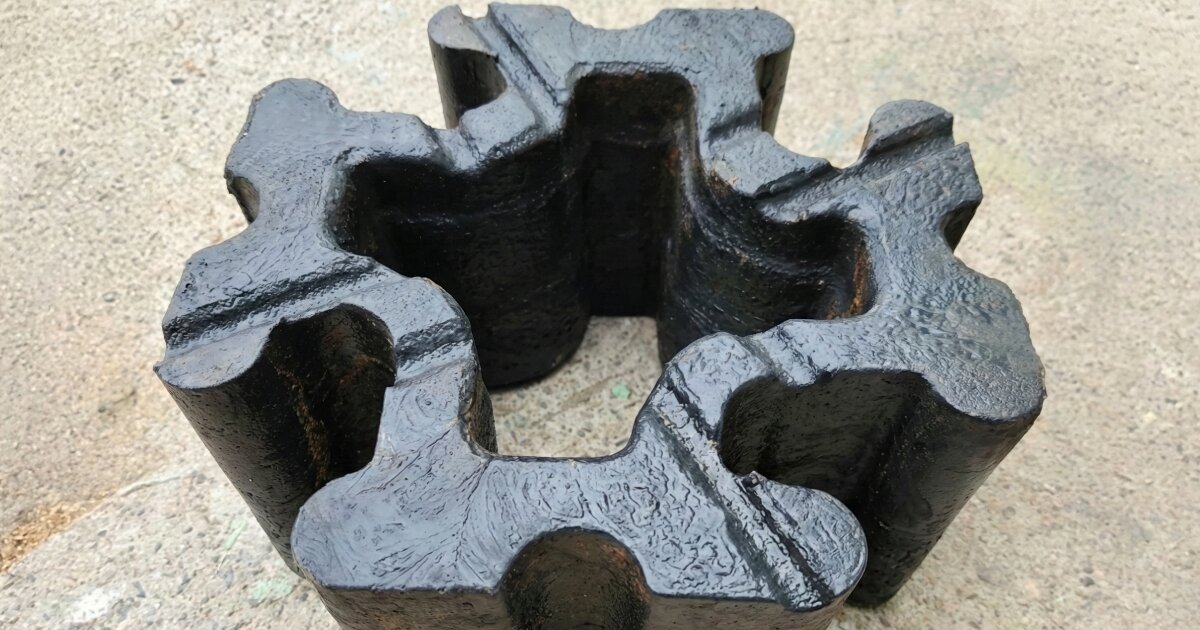
"Meet Eco-C Cube, an eco-friendly construction block built from recycled plastic waste, such as old fishing nets, buoys, agricultural vinyl, mulching film, and other mixed, discarded plastic. The manufacturer Westec Global relies on what it describes as New-Cycling process. Instead of cleaning, sorting, and breaking plastics down into raw polymers, mixed plastic waste is fused directly into usable blocks to preserve the materials' strength and flexibility while avoiding the cost and emissions that are often linked with traditional recycling."
"Because washing and sorting are eliminated, water use and chemical use are also reduced, resulting in the entire plastic input being recycled. The design of eco-friendly construction blocks is based on modular cube-shaped bricks intended for infrastructure. The cross-like shape with a hollow center allows builders to interlock and bond Eco-C Cubes in three dimensions, and this modular system supports quick installation and flexible design depending on the environment and where they'll be built."
"The eco-friendly construction blocks target plastics that contribute directly to environmental damage. Marine plastic threatens ecosystems and enters food chains. Agricultural plastics accumulate in soil and rural areas, where recycling infrastructure is limited. By using these materials as feedstock, Eco-C CUBE addresses both ocean pollution and agricultural waste at the same time by reusing mixed plastics without separating them. These materials are typically difficult to recycle because they are contaminated with soil, salt, organic matter, or chemical residues. As a result, they are often incinerated or sent to landfills, which harms the environment."
Eco-C Cube converts mixed, contaminated plastic waste—including fishing nets, buoys, agricultural vinyl, mulching film, and other discarded plastics—into modular, interlocking construction blocks. Westec Global's New-Cycling process fuses mixed plastics directly into cube-shaped bricks without washing, sorting, or polymer reprocessing, preserving material strength and flexibility while cutting water, chemical use, and emissions. The cross-like hollow design enables three-dimensional interlocking for fast installation and adaptable infrastructure. Targeting hard-to-recycle marine and agricultural plastics reduces landfill and incineration, reuses contaminated feedstock, and aims to lower the carbon footprint compared with traditional concrete and recycling methods.
Read at designboom | architecture & design magazine
Unable to calculate read time
Collection
[
|
...
]