ODDO architects shape the public art pavilion T10A in Hanoi, Vietnam using over 40,000 recycled plastic bags as well as handmade paper. Developed as a temporary exhibition space for Vietnamese architecture projects, the design team draws inspiration from Hanoi's craft heritage. The structure includes traditional handmade paper, known locally as Giấy Dó alongside the recycled plastic. Alongside the public art pavilions, there are paper domes within which visitors can explore the architectural drawings and information of the exhibitions from inside.
Meet Eco-C Cube, an eco-friendly construction block built from recycled plastic waste, such as old fishing nets, buoys, agricultural vinyl, mulching film, and other mixed, discarded plastic. The manufacturer Westec Global relies on what it describes as New-Cycling process. Instead of cleaning, sorting, and breaking plastics down into raw polymers, mixed plastic waste is fused directly into usable blocks to preserve the materials' strength and flexibility while avoiding the cost and emissions that are often linked with traditional recycling.
There's something quietly radical about sitting in a recycled Adirondack chair while you're waiting for your flight at the world's busiest airport. Plastic Reimagined transforms locally sourced plastic waste into full-scale seating prototypes, bridging design education, material research, and civic infrastructure at Hartsfield-Jackson Atlanta International Airport, and honestly, I can't stop thinking about how clever this is. Here's what happened.
Plastic Box, designed by Minimal Studio, reinterprets the supermarket as a site for architectural exploration, combining minimalism with circular design principles. The building in Mallorca, , is enclosed within a monolithic shell, establishing a clear and austere framework for the retail space. The ceiling is composed of over a thousand recycled plastic crates, arranged modularly to diffuse natural and artificial light while accommodating technical infrastructure, integrating utility and structure into a cohesive architectural element. Reused materials, sculptural counters, and indirect lighting contribute to a spatial system that emphasizes material clarity, structural logic, and functional economy.
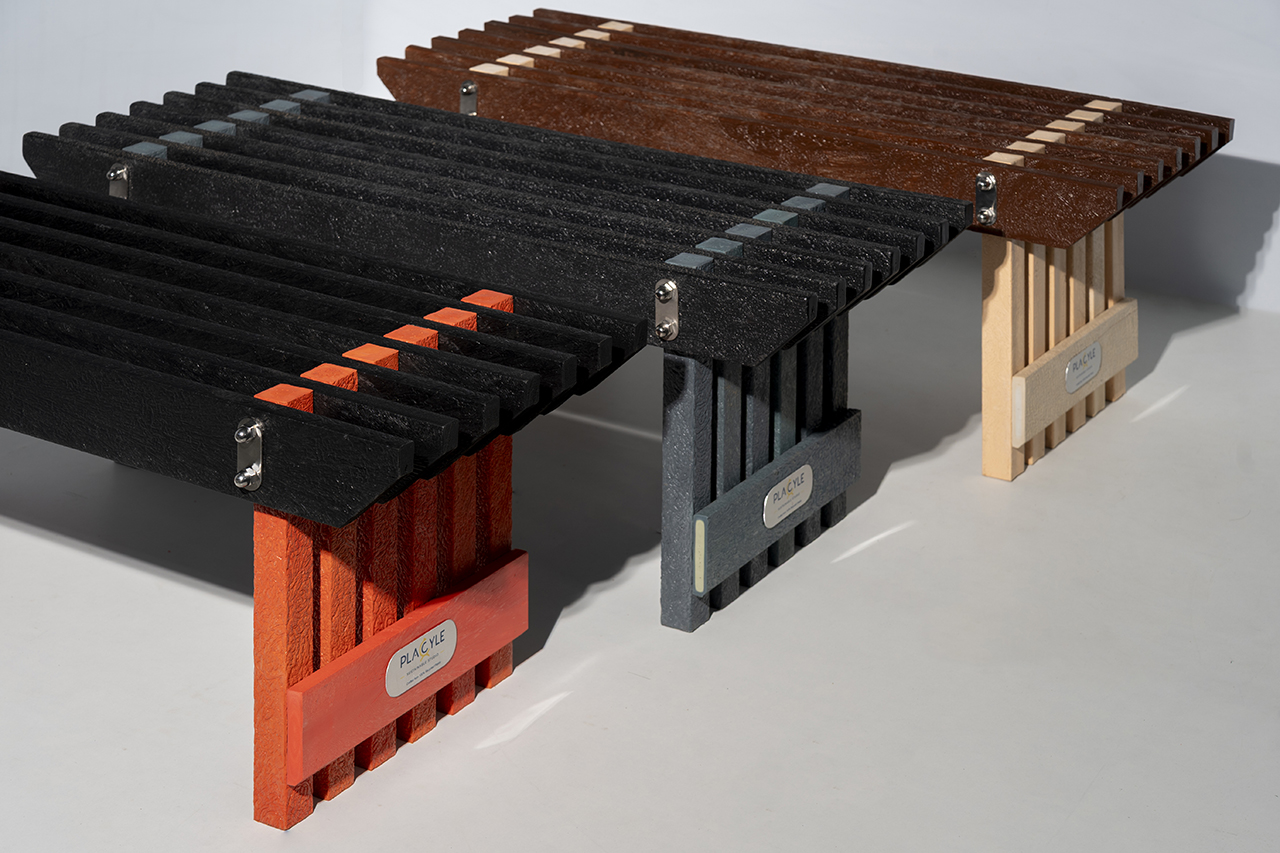
The idea was to show the true value of plastic, not as garbage but as possibility. While walking beneath the red gates of Fushimi Inari in Kyoto, the designer was struck by the pure, elemental form of the torii gate-a threshold that invites movement yet offers moments of stillness. That feeling of entering a calmer space became the soul of the bench's design.
As someone who lives in a small apartment, there are two main things I think about when looking for household items: Does it look good, and is it functional? I want the things in my space to be aesthetically pleasing (especially because they will stand out in my small space more prominently than they would in a bigger space), and I can't sacrifice an inch for something not functional.