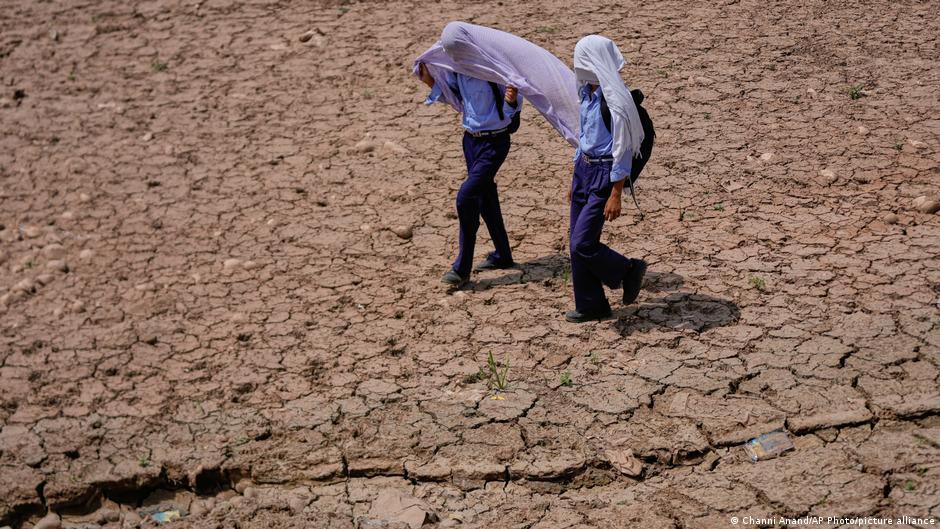
A worst-case climate pathway previously used as a benchmark is now assessed as less likely. The scenario involved more than 4°C of warming by the end of the century, with deadly heat waves, rising seas, crop failures, and mass displacement. The pathway was designed as a low-probability, high-risk possibility rather than a prediction. The updated assessment attributes the reduced likelihood to renewable energy build-out occurring faster than expected and to government policies that have slowed projected emissions growth. Climate scientists say the scenario assumed continued unchecked coal-driven fossil fuel expansion, which did not occur. They call the change fundamentally good news while warning that it should not lead to complacency.
"A temperature rise of more than 4 degrees Celsius (7.2 Fahrenheit) by the end of the century would bring with it catastrophic consequences including deadly heat waves, rising seas, crop failures and mass displacement. But a scientific paper published in April says that doomsday pathway known as RCP8.5 and later SSP5-8.5 is now less probable. Designed as a benchmark to help governments prepare for dangerous possibilities, the worst-case scenario was not a prediction."
"It reflected the knowledge and energy trends of the late 2000s, when the world was more reliant on burning planet-heating coal, oil and gas. But those trends have now changed. The world is not heading toward the worst-case scenario "because we've actually taken political measures allowing us to move away from that," French climate scientist Christophe Cassou told the AFP news agency. The rapid growth of renewable energy is helping shift emissions trends away from the most dire heating scenario."
"The new assessment attributes the shift to renewable energy build-out happening faster than expected, with many governments adopting policies that have slowed projected emissions growth. Friederike Otto, a climate scientist at Imperial College London, said the worst-case scenario had "assumed humanity would continue an unchecked coal-driven fossil fuel boom, which fortunately did not happen." While acknowledging that as "fundamentally good news," she urged that it "should by no means lead to complacency.""
Read at www.dw.com
Unable to calculate read time
Collection
[
|
...
]