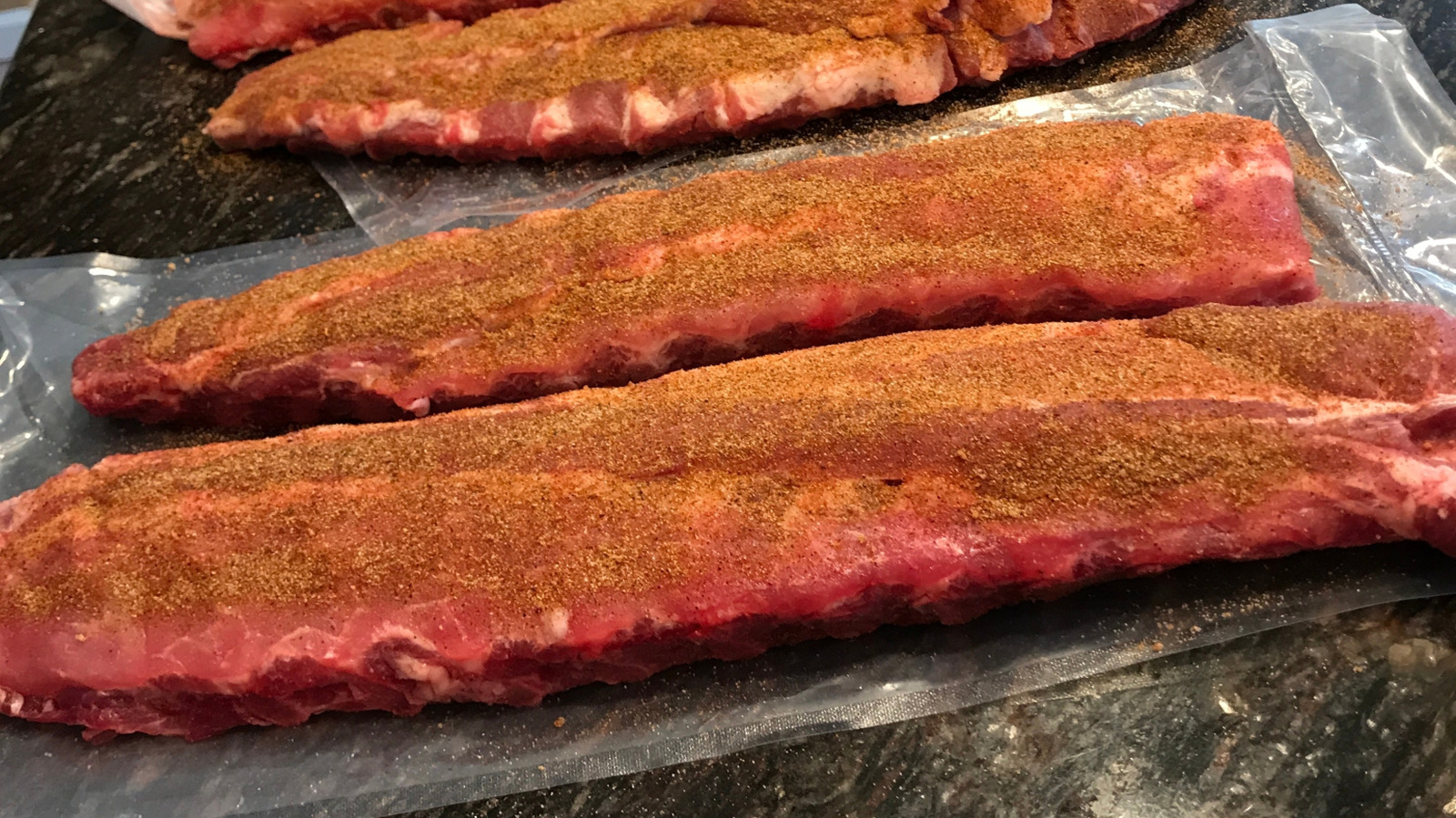
"One error that's commonly made is applying your dry rub to the general surface of a rack of ribs, but missing all the nooks and crannies. This can lead to uneven flavoring of your ribs, with some portions beautifully coated with flavorsome rub - and others woefully lacking."
"One of the best tips when cooking beef ribs is to remove the membrane from the underside, since this can form a barrier for seasoning and rubs. Less membrane, more nooks and crannies."
"Ribs have plenty of surface area for a dry rub to stick to, so you'll want to be careful not to overdo it. Applying a moderate amount of rub - not an ultra-thick coat - can help you avoid over-salting, over-seasoning, getting an over-caramelized crust, as well as a sandy texture of built-up spice."
Dry rubs are essential for enhancing barbecue flavors, but proper application is crucial. Common mistakes include neglecting nooks and crannies, leading to uneven flavor. Removing the membrane from ribs allows better seasoning adherence. Patting ribs dry before applying rub helps create a tasty bark. It's important to apply a moderate amount of rub evenly rather than overdoing it, as excess can lead to over-salting and undesirable textures.
Read at Tasting Table
Unable to calculate read time
Collection
[
|
...
]