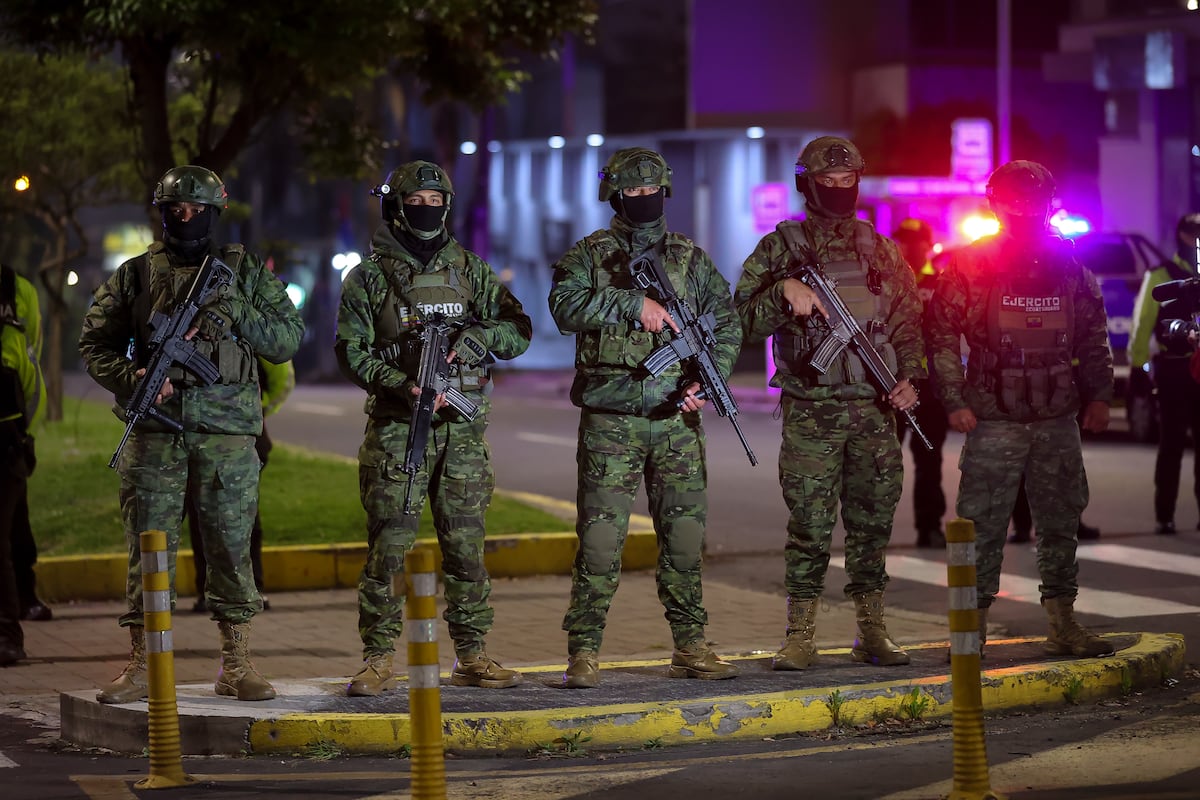
"In two and a half years, Ecuador has spent 846 days under a state of emergency, almost the same amount of time that Daniel Noboa has been in power. During this period, the president has restricted people's free movement for 272 days, decreeing seven curfews, which the government has maintained as its main strategy for combating violence. For the authorities, the supposed success of the initiative is measured by the number of people arrested: during the 15 days of the curfew last March, 1,283 people were apprehended for violating the measure, and homicides were reduced by almost 30% during the early morning hours."
"Even so, the country is experiencing its seventh curfew since this government took office, and although government spokespeople announce the measures in advance, some people are only now finding out that their daily routine will be disrupted once again. Like Vanesa Cervantes. Cervantes lives in one of Guayaquil's most dangerous neighborhoods, on the banks of the Salado Estuary. There, some times of the year it feels more like a war zone. Gunfire erupts at any hour, robberies are constant, and the tension seems endless, never allowing anyone to let their guard down."
"For her, life in the neighborhood boils down to a single rule: see no one, hear no one, speak to no one. It's a constant state of anxiety. Curfews, she says, haven't brought any more security. She watches her neighbors those who leave for work early in the morning lock themselves inside before nightfall, but she never sees military or police patrols on the streets. For Cervantes, the curfew is already the new normal, even though it disrupts her daily routine."
"Buses are running almost an hour late, and you have to fight for a seat to get on because everyone is late for work, she explains. She also has to incur unexpected taxi expenses to get to work on time. In the nine provinces and four cities where the latest curfew is in effect, life has changed dramatically. Public transportation starts run"
Ecuador has spent 846 days under a state of emergency, nearly matching the time the current president has been in power. During this period, free movement has been restricted for 272 days through seven curfews. The government measures the initiative’s impact by arrests and by a near 30% reduction in homicides during early morning hours after a curfew in March. Despite this, the country has already imposed a seventh curfew under the current administration. Some residents learn about curfews only after their routines are affected. In Guayaquil’s high-risk neighborhoods, residents report constant gunfire and robberies, anxiety, and a lack of visible police or military patrols. Curfews also delay buses and increase transportation costs, disrupting work schedules.
Read at english.elpais.com
Unable to calculate read time
Collection
[
|
...
]