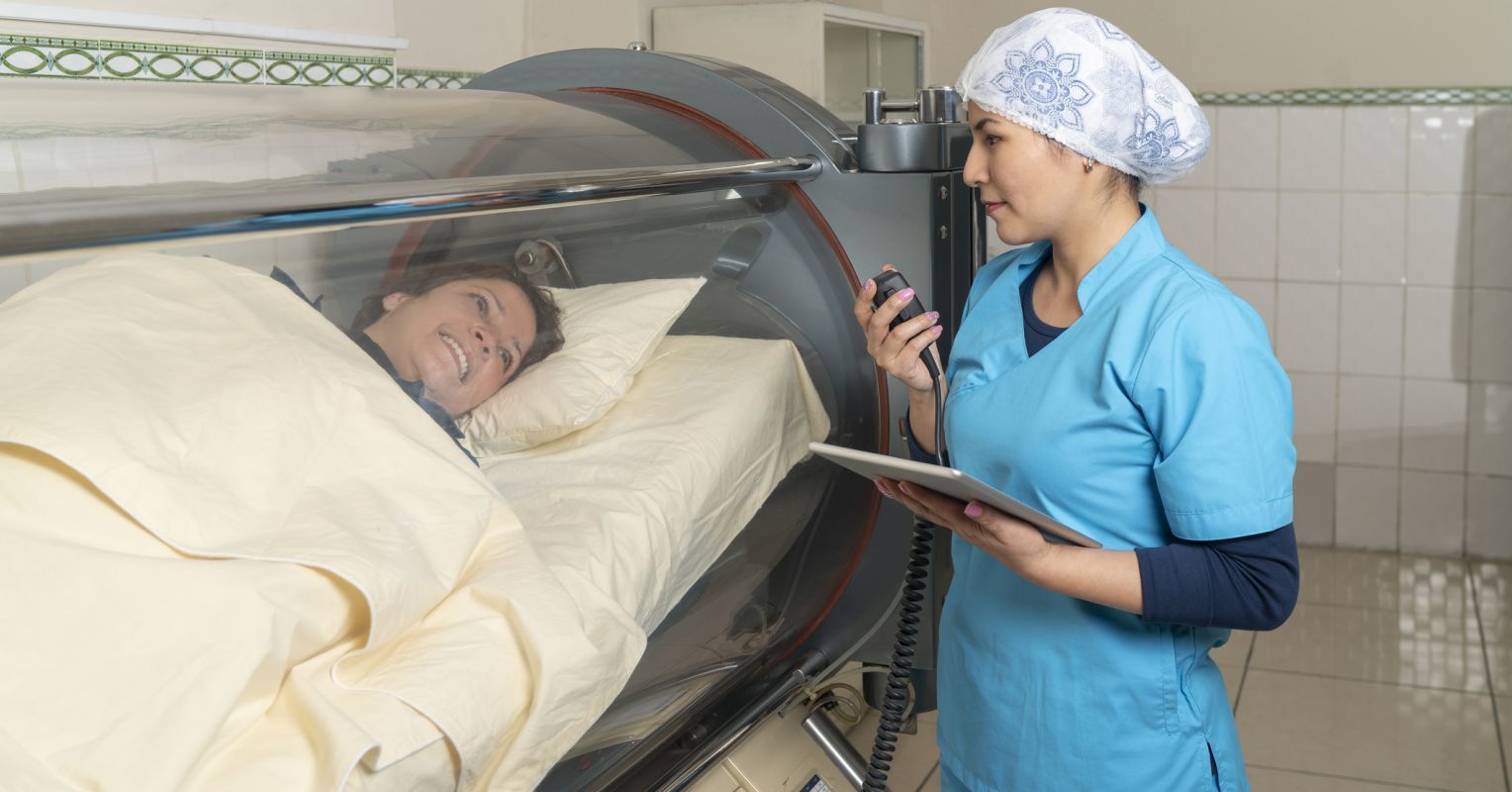
"HBOT involves breathing 100-percent-pure oxygen inside a chamber that is pressurized to 1.5 to 3 times normal atmospheric pressure. Under these conditions, oxygen dissolves directly into the plasma (i.e., the liquid part of blood) in addition to binding to red blood cells. This floods our tissues with much higher oxygen concentrations than we can achieve through normal breathing."
"HBOT can reshape our brain. For example, it restores energy production in cells whose mitochondria aren't functioning well. Mitochondria are known as the 'powerhouses' of our cells, because they generate energy in the form of ATP. HBOT also stimulates the growth of new neurons and blood vessels, reduces neuroinflammation, and triggers the formation of new synapses, which are connections between neurons."
"Researchers have described a process known as the hyperoxic-hypoxic paradox that happens when our oxygen level cycles between high and normal levels. Such fluctuations trick the body into experiencing a false sense of oxygen deficiency (hypoxia). This activates the brain."
Hyperbaric oxygen therapy (HBOT) involves breathing pure oxygen in pressurized chambers at 1.5 to 3 times normal atmospheric pressure, allowing oxygen to dissolve directly into blood plasma and flood tissues with higher concentrations than normal breathing achieves. Beyond oxygenation, HBOT reshapes the brain by restoring mitochondrial energy production, stimulating new neuron and blood vessel growth, reducing neuroinflammation, and triggering synapse formation. The hyperoxic-hypoxic paradox occurs when oxygen levels cycle between high and normal, creating a false oxygen deficiency that activates beneficial brain responses. Clinical evidence demonstrates HBOT effectiveness across PTSD populations including combat veterans and sexual trauma survivors, improves memory and executive function after brain injury, and produces sustained psychiatric and cognitive improvements in post-COVID patients lasting one year.
Read at Psychology Today
Unable to calculate read time
Collection
[
|
...
]