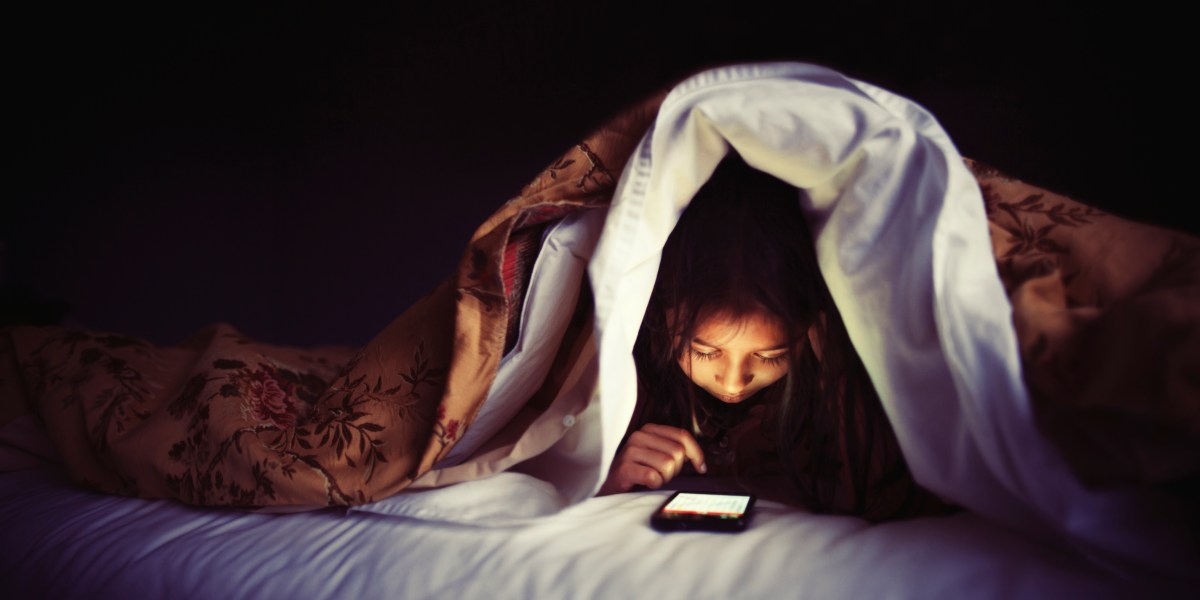
"The fear of missing out, which is driven by social media, is directly affecting their sleep. They want to know what their friends are doing, and if you're not online when something is happening, it means you're not taking part in it. And it can be a feedback loop. If you are anxious, you are more likely to be on social media; you are more anxious as a result of that. And you're looking at something that's stimulating and delaying sleep."
"more than four hours a day, with two-thirds saying they were using it in the hours before bedtime."
A UK study of sixty ten-year-olds in Leicester found that 12.5% wake during the night to check social media notifications, losing about one night of sleep per week. The group averaged 8.7 hours of sleep nightly, below the CDC recommendation of nine to twelve hours for school-age children. The majority reported using social media more than four hours daily, and two-thirds used it in the hours before bedtime. Fear of missing out drives nighttime checking and creates an anxiety–social-media feedback loop that stimulates and delays sleep. Recommendations include logging off an hour before bed, using blue-light filters, and keeping devices out of the bedroom.
Read at Fortune Well
Unable to calculate read time
Collection
[
|
...
]