"Did I, now that there was 'life inside me,' find it harder to critique? Were my impulses gentler; was I any less inclined to dissect, analyze, pass judgment? Oh, hell no. If anything, I felt, and still feel, more inclined to rip into all the wrongness of the world in the hopes of clearing some tiny furrow for my daughter to begin to experience its astonishment and beauty along with its brokenness."
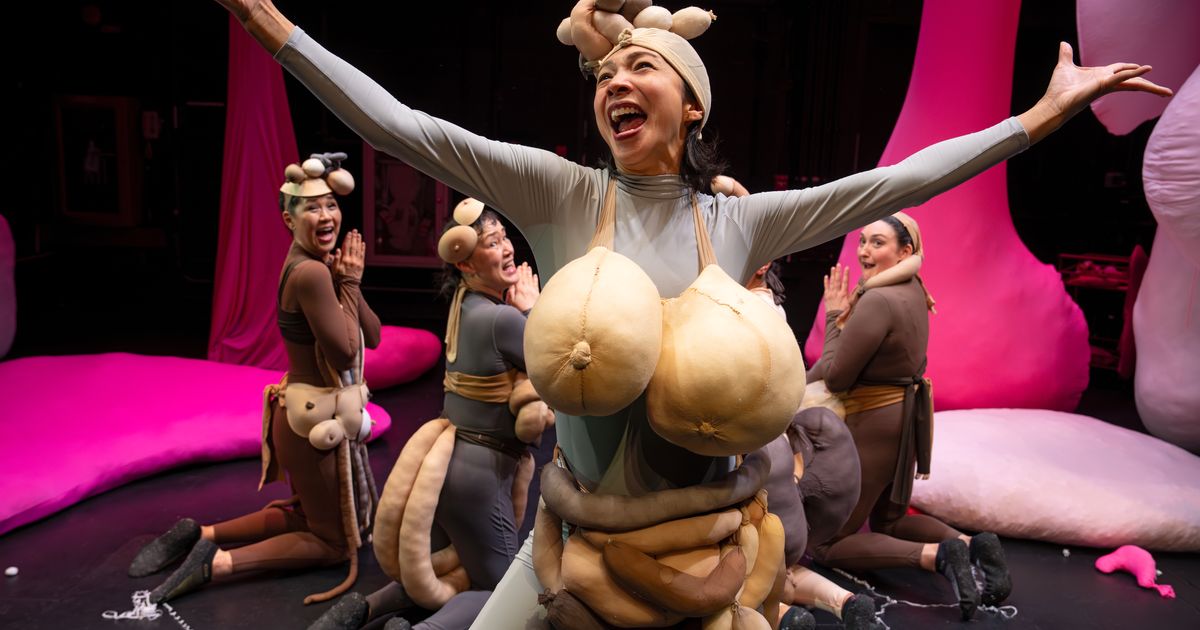
"An episodic framework, physical comedy, a small ensemble of actors who are all at home in their clowns and who will all, at some point, drop the mask to speak to us as themselves - for Ogawa, these are ways to bring effervescence and intimacy to the contemplation of insoluble, heavy things."
A critic reflects on how becoming a mother has intensified rather than diminished her critical instincts, maintaining her drive to analyze and critique the world's wrongness. She explores the uncertainty of how motherhood changes one's perspective, acknowledging that such transformations resist simple explanation. Aya Ogawa's play Meat Suit addresses this same territory, examining the rawness and perplexity of parenthood through an episodic framework combining physical comedy, ensemble performance, and moments of direct address to the audience. The production uses theatrical tools to bring both effervescence and intimacy to heavy, complex themes about parents, children, and bodily experience, though it occasionally risks simplicity or sentimentality.
Read at Vulture
Unable to calculate read time
Collection
[
|
...
]