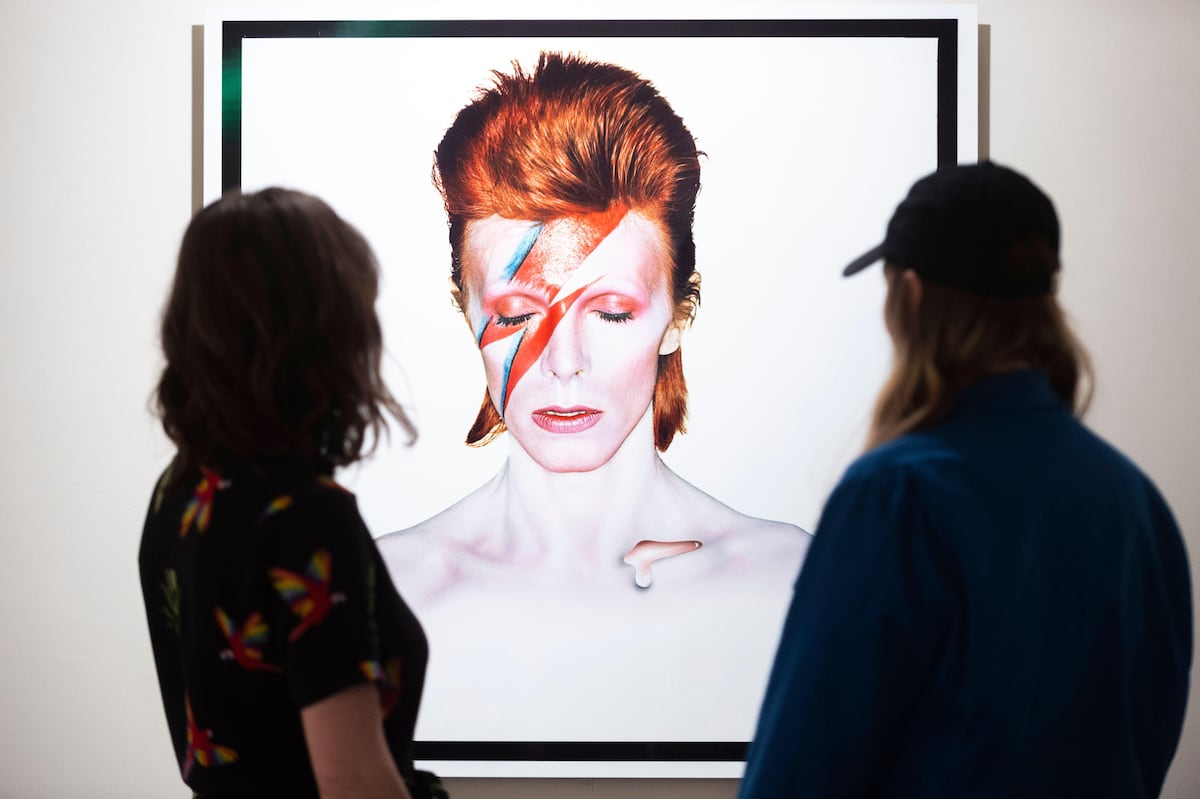
"Ahead of his time, Bowie spoke of post-apocalyptic landscapes, of isolation, of the technological journey beyond the human realm posing the great question of our time: Is the planet going to survive? He talked of dynamiting binarism and making room for different notions of identity, while forging a deep and warm bond between those who listened to him."
"Because beyond pessimism, his songs reveal two things, as the philosopher Simon Critchley writes in his book Bowie: one is the hope that we are not alone and the other, that it is possible to escape from this place, even if it's for a day. In his multiple phases, Bowie addressed the fragility of being by embodying the adolescent, the madman, the ghost, the degenerate ascetic, the android, the addict, the father, the friend, the brother, the human."
David Bowie died on January 10, 2016, inspiring a sense of personal loss among millions who never knew him. He opened minds to being different and changed more lives than other public figures by challenging norms. His music and iconic album portraits remain widely played and collected, and new books and documentaries continue to appear. He anticipated post-apocalyptic themes, isolation, and technological transformation while questioning planetary survival. He challenged binary identities and expanded notions of self, creating warm bonds with listeners. His songs combine hope of not being alone with the possibility of temporary escape. He embodied many personae and invited limitless identification.
Read at english.elpais.com
Unable to calculate read time
Collection
[
|
...
]