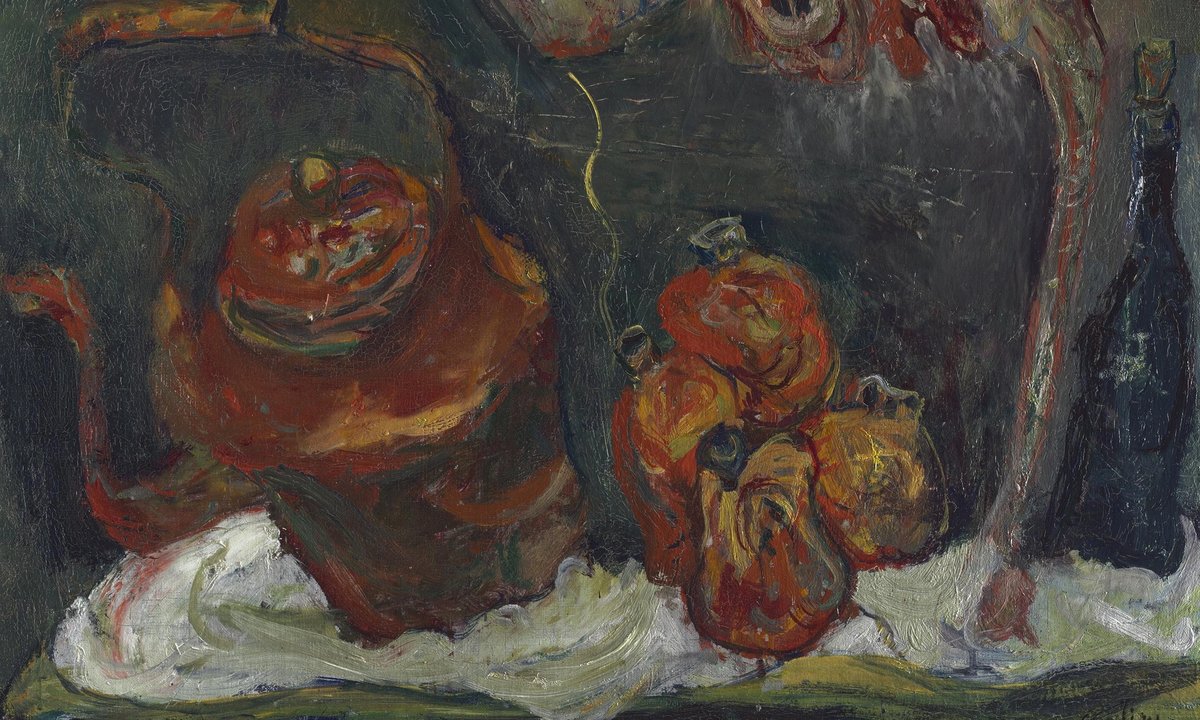
"Celeste Marcus argues that those who find a mood or, even worse, a moral in Soutine's work are missing the point. Soutine was more about paint and energy than about feelings."
"John Ashbery described his response to Soutine: 'The fact that the sky could come crashing joyously into the grass, that trees could dance upside down ... was something I hadn't realised before.'"
"Marcus observes that Soutine practiced a sort of pictorial translation, setting himself the task of resuscitating Rembrandt and Chardin and Courbet with their forms but his soul."
"None of Soutine's pictures were intended to be easy to look at, but neither did the artist set out to explore the pain from his childhood or the suffering of the Jewish people."
Chaïm Soutine, an Expressionist painter, arrived in Paris in 1913 from Belarus. His work is often misunderstood, with some critics seeking emotional depth where there is none. Celeste Marcus emphasizes that Soutine's art is about paint and energy rather than feelings. His landscapes and still lifes reflect a unique pictorial translation of Old Masters, aiming to revive their forms with his own spirit. Soutine's paintings are challenging and not meant to explore personal or collective suffering.
Read at The Art Newspaper - International art news and events
Unable to calculate read time
Collection
[
|
...
]