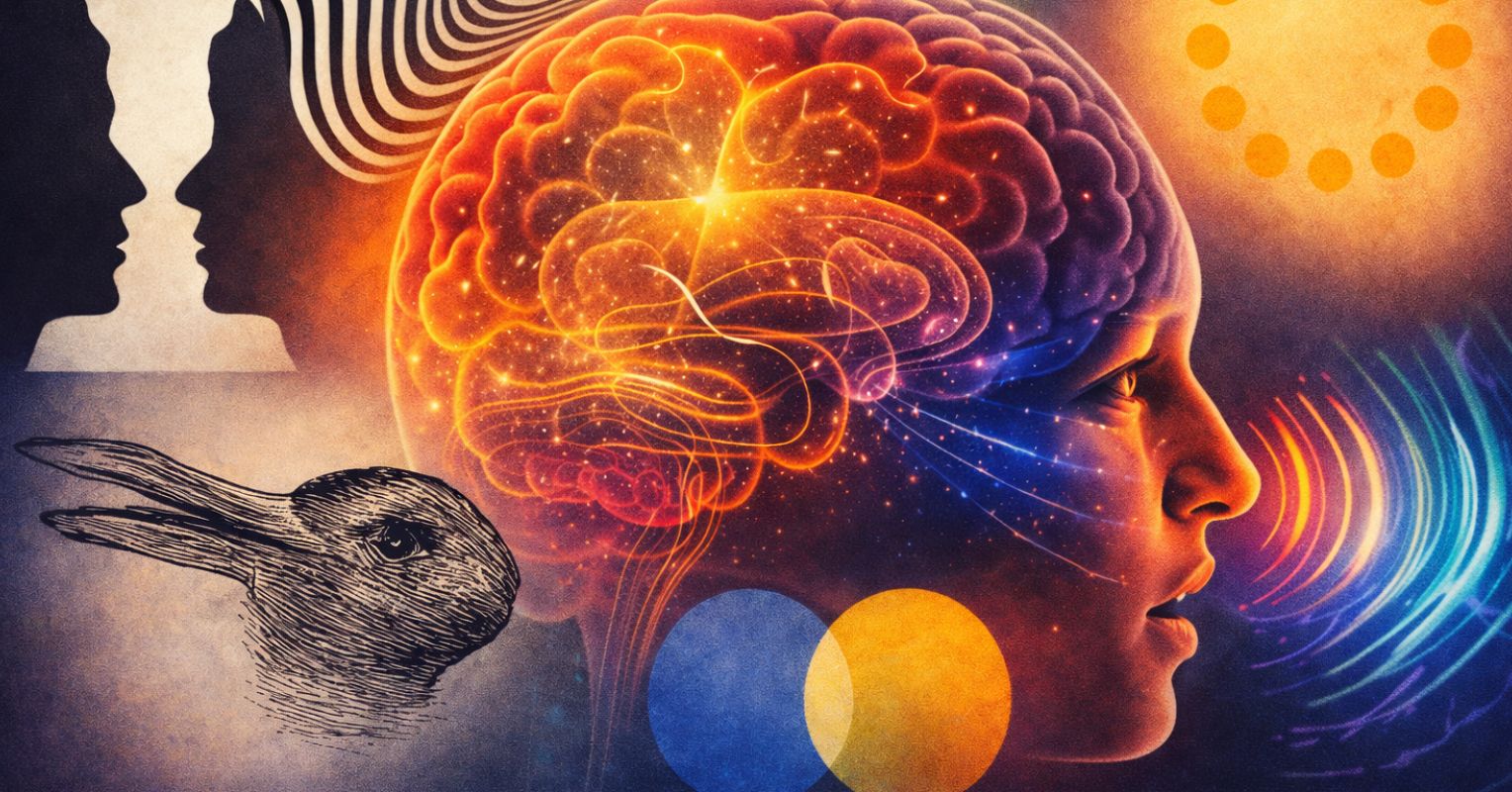
"I first encountered the McGurk effect in a neuroscience class. My professor played a video of a person moving their lips as if saying "ga," while the audio track played "ba." Most students heard neither. They heard "da or ka" - a third sound created by the brain. My experience was different. When I focused on the sound, I heard "ba." When I watched the lips, I perceived "ga.""
"Most of the time, perception works because the senses cooperate. Sight, sound, and touch usually point to the same event, arriving close together in time. When that happens, the brain doesn't need to think very hard about what belongs together. The world feels stable. Neuroscientists call this multisensory integration. In everyday terms, it's the brain weaving separate signals into a single story. Most of the time, we never notice the weaving."
Perception is constructed by the brain rather than simply read from the senses. Sensory illusions arise from the brain's shortcuts to resolve uncertain or conflicting inputs. Attention can shift which input the brain privileges, changing experienced perception. Multisensory integration combines sight, sound, and touch into a coherent percept when inputs align. Brief extra cues, such as sound, can resolve ambiguity by increasing certainty. Conditions like autism and ADHD often rely on different perceptual shortcuts. Reported sensory difficulties frequently reflect sustained interpretative processes rather than raw sensory failure.
Read at Psychology Today
Unable to calculate read time
Collection
[
|
...
]