But now, top US health officials argue that diagnoses have spiralled out of control. In May, the Make America Healthy Again Commission - led by US health secretary Robert F. Kennedy Jr - said ADHD was part of a "crisis of overdiagnosis and overtreatment" and suggested that ADHD medications did not help children in the long term. So what, exactly, is going on?
As outlined in the recently published, NHS-England commissioned, Independent ADHD Taskforce Report, there is robust evidence that unsupported ADHD can lead to multiple adverse outcomes. 2 I was Chair of this Taskforce, but this work is now completed, so these blog posts are independent of that position. Despite the risk of adverse outcomes, we know that people with ADHD can and do thrive if they are offered early support and intervention.
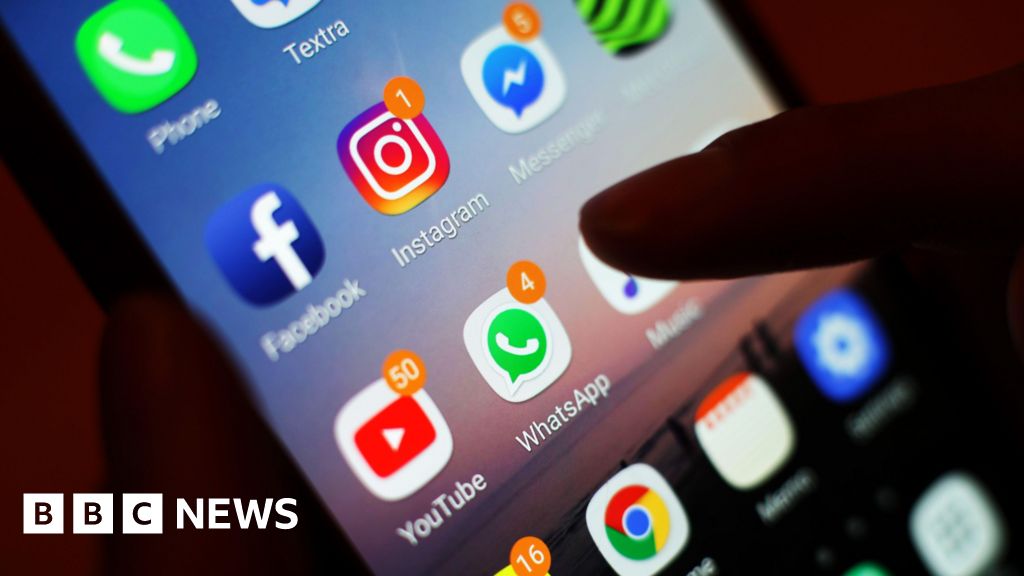
You open Instagram to grab a trending audio for a reel. Just one quick thing. Two hours later, you're still scrolling. You haven't created anything. You haven't even saved the audio you meant to find. And now it's 10 p.m., and you're mentally exhausted - and a little sad, tbh - from consuming content instead of making it. (Seriously, why is Instagram's search function on the Explore page?) Oh, wait, that was me. Hi. 👋
Your donation allows us to keep sending journalists to speak to both sides of the story. The Independent is trusted by Americans across the entire political spectrum. And unlike many other quality news outlets, we choose not to lock Americans out of our reporting and analysis with paywalls. We believe quality journalism should be available to everyone, paid for by those who can afford it.
I've spent a lot of this year trying to perfect the art of leaving the house. This might sound like an odd mission until you've seen me spend 25 minutes getting distracted while looking for my wallet and sunnies, doubling back to grab my laptop, tripling back for my work pass, missing my train, arriving at my destination with 1% battery and only then realising the medication I was meant to take that morning is still sitting on the counter.
Specialist ADHD services for adults in England are stopping taking on new patients as they struggle to cope with demand, a BBC investigation has shown. The BBC has identified 15 local areas that have closed waiting lists and another 31 that have introduced tighter criteria, making it more difficult to access support. Reacting to our investigation, Prof Anita Thapar, chair of NHS England's ADHD taskforce, said the findings were "disturbing", adding there were "enormous risks" for patients.
Doctors feel disempowered and pressured and do not have the time they want to spend with patients. And anyone who goes to see doctors feels about the same as they try to advocate for themselves. At the national ADHD conference, for example, a theme arises: How can I even talk to my provider about my ADHD? ADHD is not a highly emphasized part of medical training-and it takes time to discuss the details. Rushed visits leave people struggling to communicate and feeling frustrated.
My daughter's father has some diagnosed mental health issues (and some that are not and probably never will be diagnosed). In terms of behavior, this looks like mood swings, shopping sprees, a lot of very elaborate plans that don't come to fruition, periods of inertia, struggling with basic upkeep in the home, and anger (never directed at her). Dear Trying, Officially, we have 50/50 custody, although in reality, I do most of the parenting.
I was 14 and feeling myself. I'm dressed in nylon parachute pants, a Members Only jacket, my bandana and a Van Halen necklace. On the amplifier you can see a bad graphic design of the letters SD, which I thought was the greatest logo of all time. It stands for Sudden Death, the name of my band. When I was a teenager, music was a way for me to make connections.
This month, I picked up a concerned parent from the waiting room. I walked her to my office and asked how I could help. "My 10-year-old son can't focus on anything. I think it's because of the video games. He won't read because he says it's boring, he won't even play a board game with me. He keeps getting in trouble at school for playing games on his Chromebook in class. The only time he sits still is when he's playing video games."
We've established the basic facts: He's not pooping the whole time, even if he has IBS. He has ADHD (so do I!) and claims he needs alone time to get things like balancing our budget and coordinating some of his elderly parents' home care stuff. Thankfully no porn addiction or anything like that. But he is highly avoidant and claims that if I complain, it makes him take longer. Sounds like BS to me.
Attention-deficit/hyperactivity disorder (ADHD) is one of the most common mental health conditions affecting school-aged children. It is growing rapidly, rising from 6 percent to over 10 percent in the last two decades alone. Some of these kids, those with hyperactive-type ADHD, are so full of energy that they have a hard time concentrating. They say it's like having a rocket engine held back by bicycle brakes. They feel they have the energy to do anything, but the focus to accomplish nothing.
Their lives look successful from the outside-strong careers, family responsibilities, and social connections-but privately they feel exhausted, disorganized, or emotionally drained. They may say things like: "I can meet every professional deadline, yet at home, even laundry feels impossible." "I look like I have it all together, but I spend evenings trying to calm my mind enough to start dinner." "I have ambition and potential, but no mental energy left for myself."
So why are you feeling bad? After allowing yourself to accept accolades from friends and family, you start wandering around the dark corners in your mind of insecurity and self-doubt. Wasn't the lasagna a bit soggy? Did people really have fun or just say so to be polite? Despite the outward success of the day, you've circled right back to feeling like a failure.
Several years ago, when the last of my daughters graduated from college, loaded her 'how-can-she-possibly-carry-that!' backpack, hugged me tight, and boarded a plane for South America with a one-way ticket, I felt a hole in my stomach the size of a meteor crash pit. I knew so many things at that moment. I knew I had a world of worry ahead of me that would last the duration of her adventure-with-no-end-date.
Have you ever felt the need to start a task, but you just can't get to that first step? Maybe it's a household chore, a course you've wanted to pursue for a while, even something incredibly trivial-starting simply feels impossible. This experience, a combination of overwhelm and mental freeze, defines the reality of millions of people around the world. And there's a name for it: task initiation paralysis.
When child psychiatrists gather, presentations on ADHD almost always orbit around the use of stimulants- methylphenidate and amphetamine in their many formulations. At this year's Texas Society of Child & Adolescent Psychiatrists meeting, I decided to flip the script and devote a presentation to the less celebrated options: the non‑stimulants. That choice reflects the changing prescription landscape. Stimulants still account for roughly 90 percent of all ADHD scripts, but from 2019‑2023 the annual fills for non‑stimulants climbed by about 60 percent, triple the growth rate of stimulants.
Much has been written about the relationship between social media use and Attention Deficit Hyperactivity Disorder (ADHD). It requires no citations to state that social media use has increased over the last 20 years, as have diagnoses of ADHD. The question is whether there is any kind of meaningful relationship between the two. Correlations between events can sometimes mean nothing other than both events are related to something else, but not to each other.
"ICEBERG! Right ahead!!!" Perhaps you remember this famous line from the iconic 1997 movie, "Titanic." Panicked, the ship's captain alerted the passengers and crew that they would soon strike a nearby, mostly invisible iceberg with 90% of it obscured underwater. Within 30 seconds of sighting the iceberg, the ship made impact, sending everybody scrambling for safety amid the frigid waters. Had they been able to see more than only 10% of the iceberg and adjust their course, disaster might have been averted.