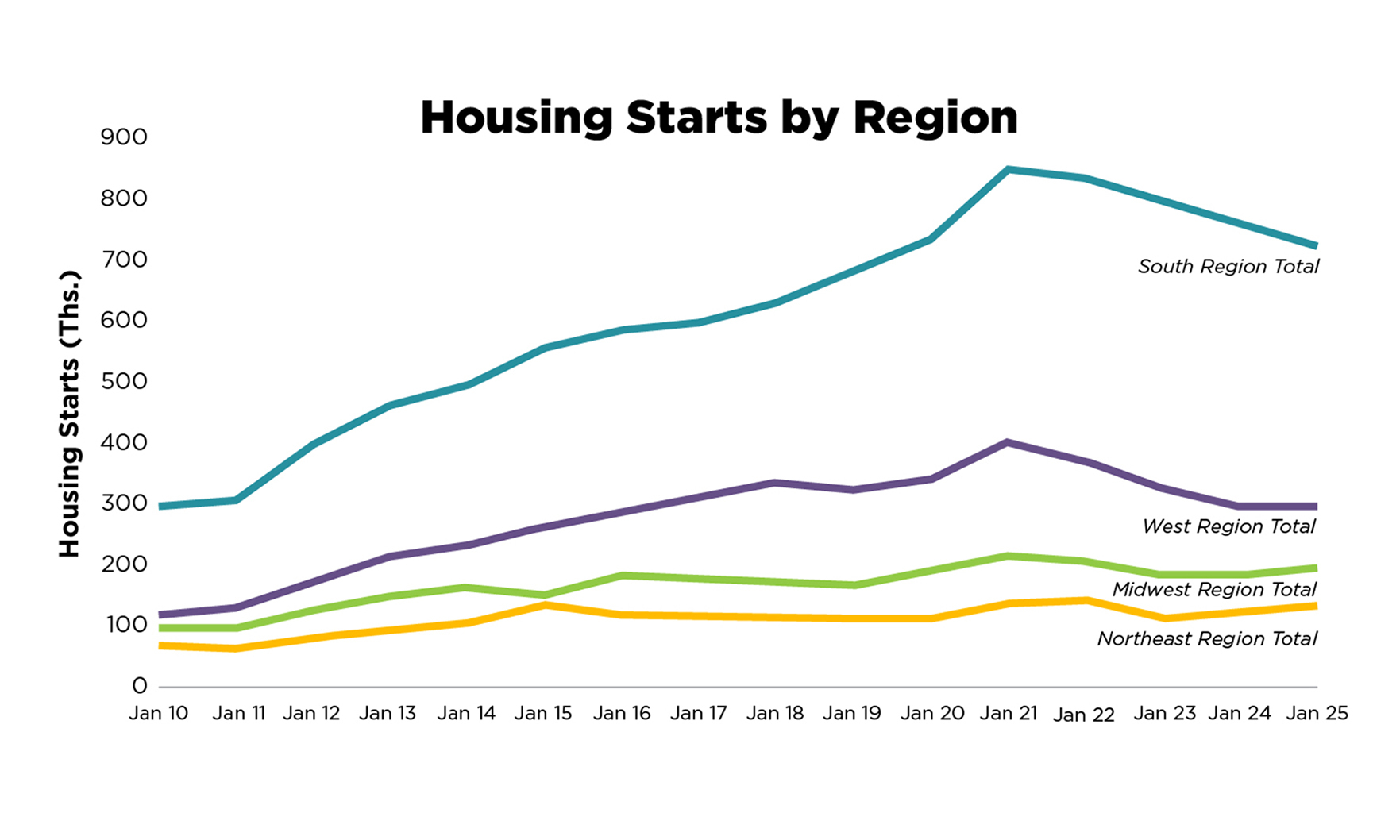
Household formation in the U.S. is on the rise, especially among older adults aged 65 and above, as well as adults aged 35-44. In 2025, approximately 1.4 million households were formed, but only 1.36 million homes were constructed, resulting in a housing gap of about 4.03 million homes. The U.S. has been underbuilding since 2012, with the gap growing from 1.5 million homes in 2012 to 3.84 million in 2019. The homeowner vacancy rate remains low, indicating a tight housing market despite some increases in multifamily construction.
"NAR reports that household formation isn't being driven by just one generation. Between 2023 and 2024, the largest increases in the number of households came from older Americans, particularly those ages 65 and older. However, at the same time, since 2019, household growth among adults ages 35-44 has also been strong, reflecting continued family formation and life-stage changes."
"Realtor.com reports that approximately 1.4 million households were formed in 2025, while 1.36 million homes were started. During the same year, new construction fell short of household formation, widening the U.S. housing gap to an estimated 4.03 million homes."
"The U.S. has been underbuilding since at least 2012, creating a shortage that has only deepened over time. In 2012, the housing gap was estimated at just 1.5 million homes. By 2019, it had more than doubled to 3.84 million, before climbing in 2025."
"Single-family starts declined from just over one million in 2024 to roughly 940,000 in 2025. Meanwhile, multifamily starts increased from 354,000 to 415,000, helping support rental supply more than ownership supply."
Read at Boston Condos For Sale Ford Realty
Unable to calculate read time
Collection
[
|
...
]