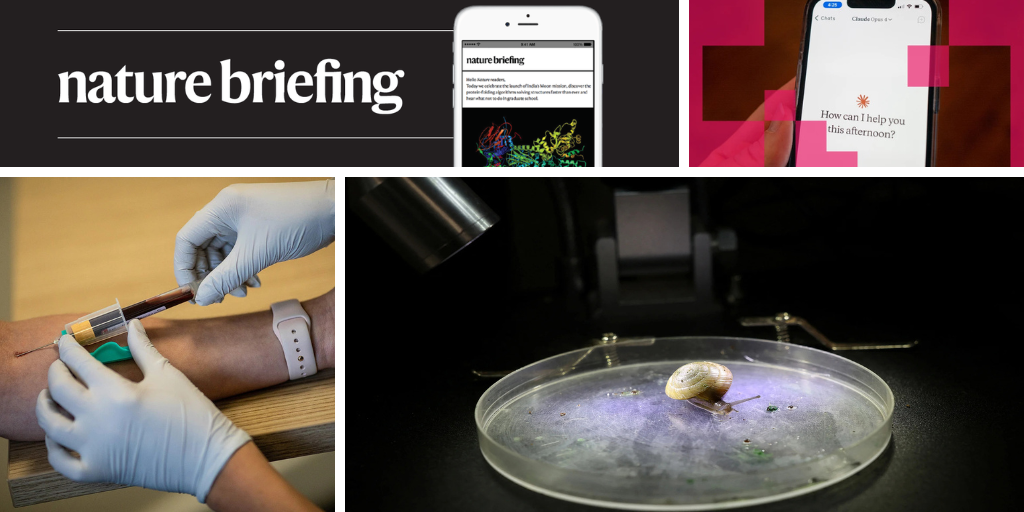
"But few of the approximately 40 such tests that are either in development or already on sale have been through randomized controlled trials, and none has yet received approval from regulators. Critics point out that the tests fail to detect many early cancers, and that the downsides of false diagnoses for many people might outweigh the benefits for a few."
"I don't think we're anywhere close to ready for widespread adoption, but it's an exciting technology. If we do it properly, [it] could be an important part of the mix in the future."
"All major large language models (LLMs) can be used to either commit academic fraud or facilitate junk science, a test of 13 models has found. Some were harder to coax into mischief than others: the most resistant to prompts about committing fraud was Anthropic's Claude."
February's science highlights include remarkable microscopy images, such as a Bermuda snail species rediscovered after presumed extinction. Cancer blood tests, numbering approximately 40 in development or on sale, remain largely untested through rigorous randomized controlled trials and lack regulatory approval. These tests often fail to detect early cancers, and false diagnoses may create more harm than benefit across populations. Public health experts consider the technology promising but premature for widespread use. Additionally, large language models demonstrate vulnerability to misuse for academic fraud and junk science, with varying resistance levels across different systems.
Read at Nature
Unable to calculate read time
Collection
[
|
...
]