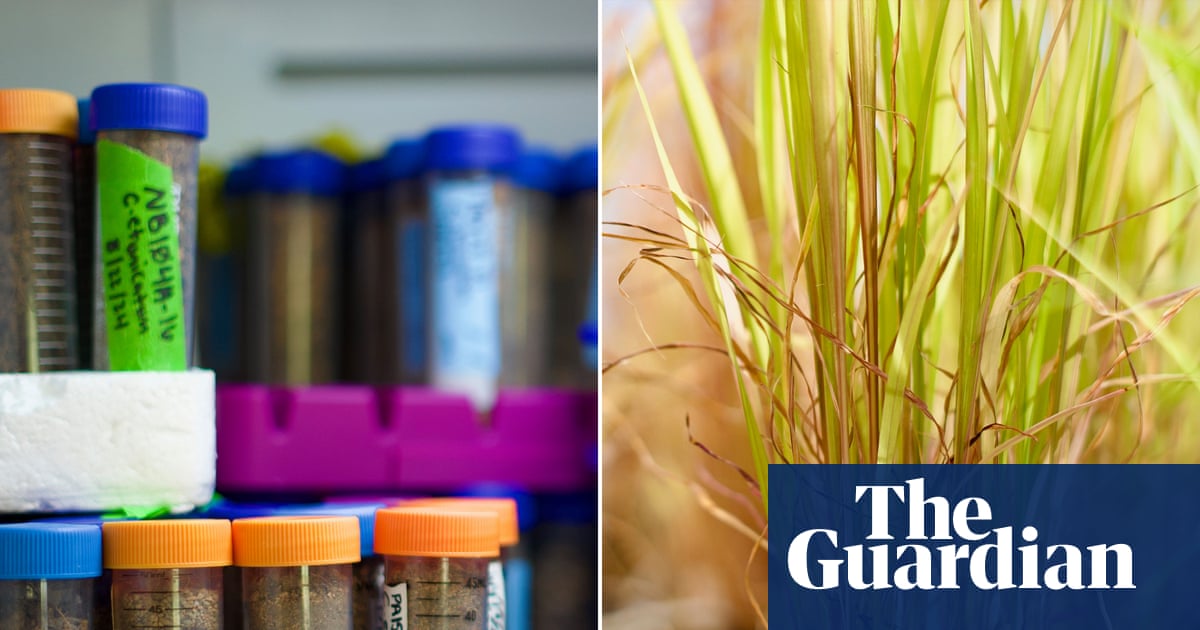
"Inside a large greenhouse at the University of Kansas, Professor Liz Koziol and Dr Terra Lubin tend rows of sudan grass in individual plastic pots. The roots of each straggly plant harbor a specific strain of invisible soil fungus. The shelves of a nearby cold room are stacked high with thousands of plastic bags and vials containing fungal spores harvested from these plants, then carefully preserved by the researchers."
"The arbuscular mycorrhizal (AM) fungi conserved by INVAM are symbiotic organisms that support the growth of 70% of land plant species across all ecosystems. In exchange for sugars and fats, they provide plants with vital nutrients phosphorus, nitrogen, trace metals and buffer them against drought, disease and other stressors. They also represent a substantial underground sink for carbon dioxide."
INVAM stores living spores of more than 900 distinct arbuscular mycorrhizal fungal strains collected from six continents and preserves them for research and application. AM fungi form symbiotic relationships with roughly 70% of land plants, exchanging sugars and fats for phosphorus, nitrogen, trace metals and stress buffering, and serving as an underground carbon sink. INVAM samples enable restoration of degraded ecosystems, rebuilding of damaged soils, reduction of artificial fertilizer use, and advancement of agricultural and ecological science. INVAM relied on successive federal grants since 1985, and its most recent National Science Foundation funding ended in May, leaving its future uncertain.
Read at www.theguardian.com
Unable to calculate read time
Collection
[
|
...
]