Now scientists at the University of East Anglia have found that some genes related to heat stress, ageing and metabolism are behaving differently in polar bears living in south-east Greenland, suggesting they may be adjusting to warmer conditions. The researchers analysed blood samples taken from polar bears in two regions of Greenland and compared jumping genes: small, mobile pieces of the genome that can influence how other genes work. Scientists looked at the genes in relation to temperatures in the two regions and at the associated changes in gene expression.
SAN FRANCISCO (KGO) -- When this monarch butterfly hits the sky it won't be traveling alone. In fact, an energetic team of researchers will be following along with a revolutionary technology that's already unlocking secrets that could help the entire species survive. "I've described this technology as a spaceship compared to the wheel, like using a using a spaceship compared to the invention of the wheel. It's teaching us so, so much more," says Ray Moranz, Ph.D., a pollinator conservation specialist with the Xerces Society.
The Center for Biological Diversity filed a lawsuit today to prevent President Donald Trump from replacing a beautiful picture of Glacier National Park with a close-up of his own face on the America the Beautiful National Parks and Federal Recreational Lands Annual Pass, reads a press release. Kieran Suckling, executive director of the Center, blasted the president's image being used on passes as his crassest, most ego-driven action yet.
66 million years ago, a giant asteroid hit the earth at a whopping 45,000 miles per hour and changed the course of life on our planet. Today, the American Museum of Natural History is telling the story in a fascinating and educational new exhibit called "Impact: The End of the Age of Dinosaurs." Impact transports visitors to a time before, during and after the catastrophic event occurred via interactive installments, immersive videos and realistic displays.
When the Bayeux Tapestry makes its historic visit to the UK next year, it will need to travel in a container that is exceptionally resistant to vibrations. That's one of the conditions applied to the transfer, which the government has just revealed, ensuring that the precious tapestry does not experience more than 2 millimetres of vibration per second on its trip to London.
The mystery of when, how and perhaps most importantly why a giant naked figure was carved into a dizzyingly steep hillside in the English West Country has been a source of wonder and intrigue for centuries. Future generations may come closer to solving the puzzle of the Cerne Giant after the National Trust stepped in to buy 340 acres of land around the 55-metre (180ft) figure. The planned purchase is expected to clear the way for more archaeological investigations around Britain's largest chalk hill figure, which looms over the rolling Dorset landscape.
Eels are the stuff of nightmares - slimy, snakelike creatures that lay millions of eggs before dying so their offspring can return home to rivers and streams. They've existed since the time of the dinosaurs, and some species are more poorly understood than those ancient animals. Yet they're also valuable seafood fish that are declining all over the world, leading to a new push for restrictions on trade to help stave off extinction.
Outdoor art can become a crucial element of a place's identity, but long-term and permanent pieces face particularly complex conservation issues. As these works weather the elements-which can include intended and unintended public interaction-they are subjected to damage and decay, leaving those in charge of their care with the difficult and costly task of ongoing maintenance. But who exactly is responsible can be complicated, leading to disrepair, litigation and even the eventual removal of works.
A biologist has shared the heartwarming moment he found one of the rarest flowers in the world, breaking down in tears over the discovery. Dr Chris Thorogood, associate professor of biology at the University of Oxford, had trekked day and night through the jungle to hunt for the incredibly rare Rafflesia hasseltii. These elusive plants only grow in the tiger-patrolled jungles of West Sumatra, Indonesia and bloom for only a few days.
He's taken up the mantle of keeping the world's zoos in check at an interesting time, when their role in modern society is the subject of heated debate, with rows about lonely gorillas or penguins kept in a basement seem to erupt every week. Keeping wild animals solely for entertainment purposes was socially acceptable some decades ago, but there are now far more concerns for their welfare and the conservation objectives of their captivity. This particularly applies to animals such as elephants, which need large spaces to roam and in the wild have complex relationships within giant social groups.
Some people just use one bow their whole life, said Baker said from his home in the United Kingdom. The bow is really their voice. The violin, you just have a string, and you put your fingers down. But the way the sound comes out all comes from the bow.
This wildly popular, family-friendly experience features hundreds of ALL new, larger-than-life animal lanterns throughout the Zoo. Each lantern tells the story of the ongoing journey of wildlife, the importance of every species on our planet, and Oakland Zoo's commitment to conservation. This year's experience includes new themes - explore the future of Oakland, learn about coexisting with wildlife, swim through the reef to see colorful underwater creatures, go on a safari through the savanna to spot iconic African animals,
As cities sprawl ever outwards, they bring their big lights with them, and the once-dark night skies overhead are being lost. But in New Zealand, thanks to its low population density, the skies have remained surprisingly dark, and over 96 percent of its landmass still has views of the Milky Way at night. DarkSky International, a nonprofit organization dedicated to preserving and protecting the night sky, has identified some of the best spots for witnessing the wonders of the cosmos across the island country.
For years, limited flights, visitor caps, and steep environmental fees kept Fernando de Noronha notoriously difficult to access, especially for international travelers. This kept the remote Brazilian archipelago wild and rugged, its volcanic cliffs and crystalline waters luring mostly domestic travelers in search of Brazil's most pristine beaches. But now a new direct LATAM flight from São Paulo, Brazil's main travel hub, makes it easier for foreign visitors to fly in.
Following an HIV diagnosis in 2000, thespian-turned-lepidopterist Liam O'Brien leaned into his passion for butterflies as a source of wonder. After decades of observing, counting, and (responsibly) capturing these scaled winged beauties, he became an ambassador for the species. In his debut book Butterflies of the Bay Area and (Slightly) Beyond: An Illustrated Guide, O'Brien chronicles 135 varieties of butterfly with vim and vivid hand-painted illustrations to introduce readers to the breadth and beauty of butterfly biodiversity of this region.
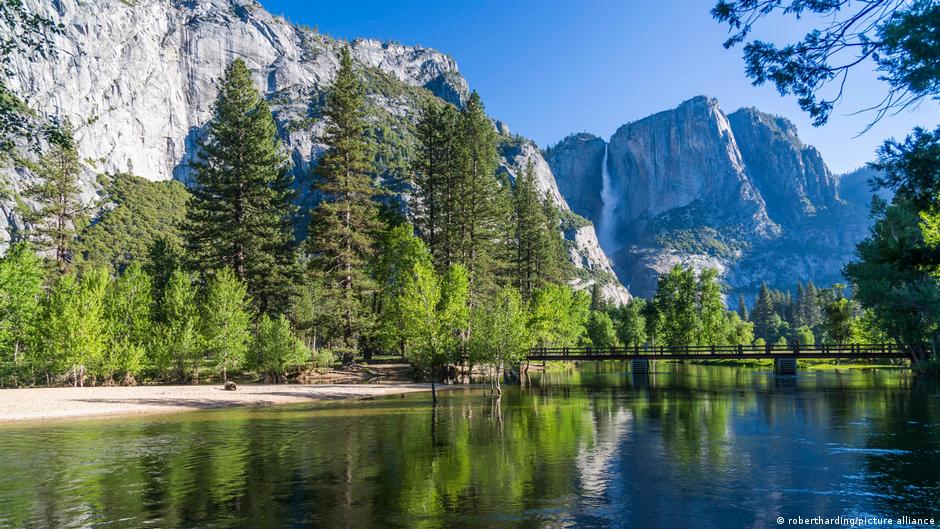
Yosemite National Park is famous for its towering granite, thundering waterfalls and world-class hiking trails. The stunning heart of the park, Yosemite Valley, is extremely popular and almost always filled with humans - and perhaps that's why the park's wildlife tends to fly under the radar. In fact, not a single book in the past 100 years has been solely dedicated to the creatures of Yosemite.
We knew that these lineages across the coast of California were really different from each other and had been separated for a very long time," said Jochim, a researcher in the Department of Entomology and Nematology at UC Davis. The spiders pose no risk to humans, Jochim said. Though our activities can pose a risk to them. "These spiders are not scary," she said. "They mind their own business and [generally] stay in their burrows ... They live in a really important and fragile ecosystem - the coastal dunes of California. So, it's really important to protect their habitat.
The brown arachnids are the size of a quarter. "While there are over 50,000 species of spiders worldwide, there are probably hundreds of thousands left to be discovered, even along the coast where new spider species may be hiding just underfoot of California beachgoers," Jason Bond, a professor in the UC Davis Department of Entomology and Nematology and the study's senior author, said in a statement.
The East Bay Regional Park District applauds Gov. Gavin Newsom's recent signing into law of Senate Bill 392, landmark legislation that strengthens conservation efforts and enhances climate resilience across the East Bay, as well as other areas throughout the state. SB 392, authored by state Sen. Tim Grayson, D-Concord, and passed unanimously by the state Legislature, establishes the East Bay Hills Conservation Program, empowering the East Bay Regional Park District (EBRPD) to better protect the ecological integrity of the East Bay hills while improving wildfire
More than 100 million red crabs making their annual trek from Christmas Island's rainforest to the coast are creating a migration spectacle that occupies countless bucket lists. Their dominance of the landscape is an eye-catching phenomenon loved by tourists and treasured by residents. For the island's conservationists, it's a reassuring sight. The annual migration creates plenty of work for park rangers, who use rakes to keep them clear of the busiest roads.
The Nikon 2025 Comedy Wildlife Photography Awards have unveiled their finalists, and the results are hilariously delightful. With 40 uproarious images, 3 curated portfolios, and 10 laugh-out-loud videos, this year's entries showcase nature's unexpected comedic flair. From expressive lions to penguins mid-blunder, the contest celebrates the quirky charm of animals while highlighting the skill and timing of wildlife photographers. Beyond the laughs, the awards carry a meaningful message about conservation and the importance of protecting these fascinating creatures.
At nearly 3.5-metres tall and weighing as much as a bus, you could be forgiven for assuming that Goshi one of an estimated 30 super-tusker elephants left in Africa would be easy to find. The radio tracker picking up his signal beeps encouragingly, indicating the giant bull is within 200 metres. But the dry season has turned the mass of arid acacia scrubland grey, and everything seems to resemble an elephant. Even when they are invisible, the huge herbivores shape the landscape here.
In June, when Utah Republican Sen. Mike Lee moved to force a sell-off of up to 3.2 million acres of public land, he insisted he was solely interested in combatting America's housing crunch and that the bill only targeted "unused, garden-variety" federal parcels - not national parks, wilderness areas and other "crown jewel" lands. Few bought what Lee was trying to sell.
The more we learn of the true nature of nonhuman animals, especially those with complex brains and corresponding complex social behavior, the more ethical concerns are raised regarding their use in the service of man-whether this be in entertainment, as 'pets,' for food, in research laboratories, or any of the other uses to which we subject them.