"I can't be sure you're conscious. I have to infer that from the evidence: that you're the same species as me, and our species can be conscious, and we have something called philosophy of mind, which is an imaginative faculty that allows us to imagine what other people are thinking. I know I'm conscious, I think. That's actually the thing we know with the greatest certainty."
"I mean, [Rene] Descartes told us that 400 years ago: The only thing we can be sure of is the fact that we exist, and we are conscious. Everything else is an inference. So I'm inferring you're conscious, and I'm gonna operate on that basis, if it's okay. And then the microphone, the microphone hasn't shown me any evidence of consciousness."
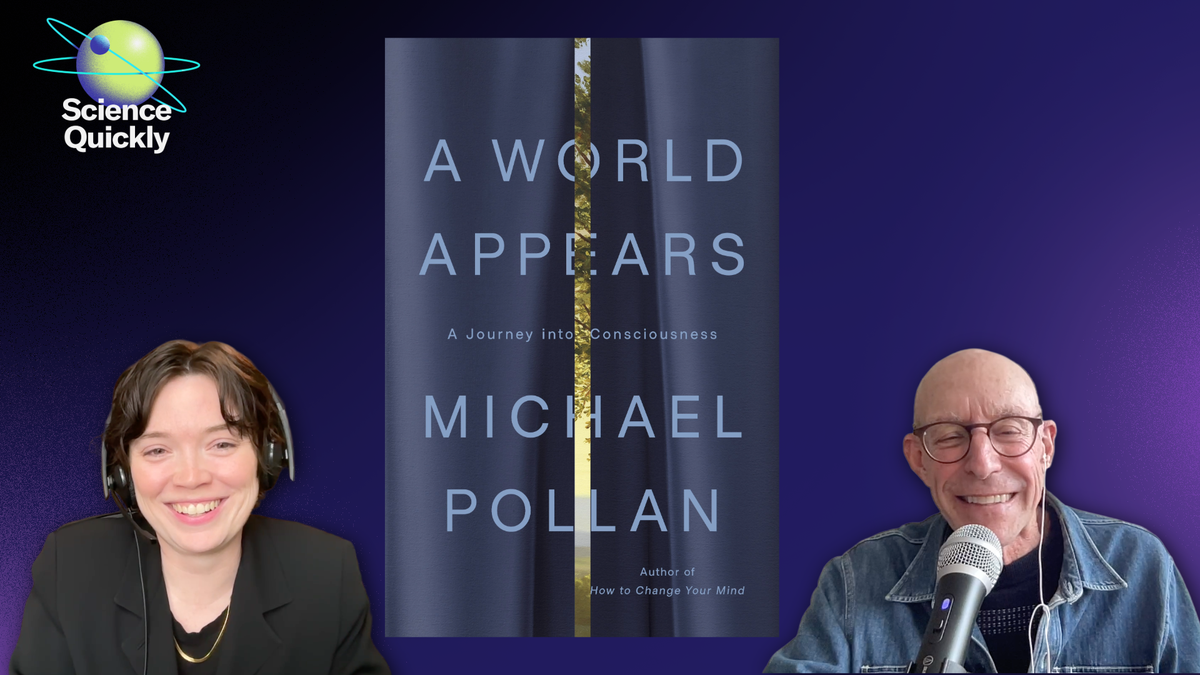
Michael Pollan's latest book, A World Appears: A Journey into Consciousness, explores the nature of consciousness and what it means to be human in relation to the natural world. In a conversation with Scientific American's associate books editor Bri Kane, Pollan addresses the epistemological challenge of consciousness: we can be certain only of our own consciousness, following Descartes' philosophical principle. We must infer consciousness in others through evidence such as shared species characteristics and behavioral indicators. Objects like microphones show no evidence of consciousness. Pollan emphasizes that determining consciousness in other entities requires both empirical observation and imaginative faculties that allow us to consider others' inner experiences.
Read at www.scientificamerican.com
Unable to calculate read time
Collection
[
|
...
]