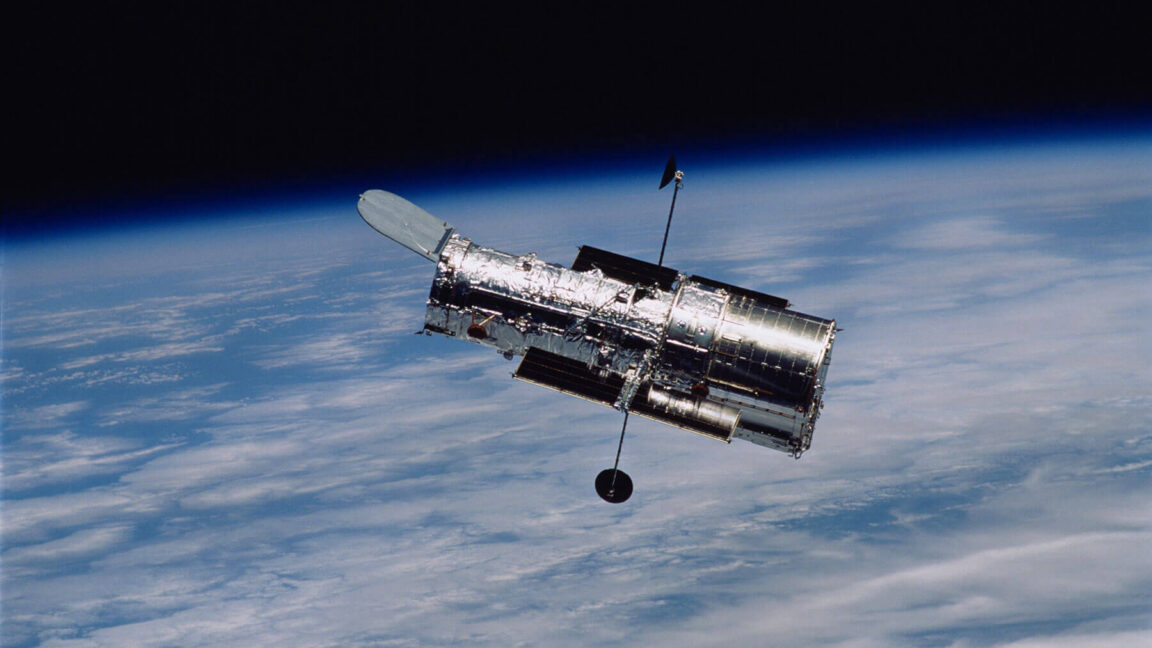
"While the impact of these constellations on ground-based has been widely considered, orbital hardware was thought to be relatively immune from their interference. But the planned expansion of constellations, coupled with some of the features of upcoming missions, will mean that at least one proposed observatory will see an average of nearly 100 satellite tracks in every exposure."
"Satellite constellations are a relatively new threat to astronomy; prior to the drop in launch costs driven by SpaceX's reusable rockets, the largest constellations in orbit consisted of a few dozen satellites. But the rapid growth of the Starlink system caused problems for ground-based astronomy that are not easy to solve. Unfortunately, even if we had an infinite budget, we couldn't just solve this by increasing our reliance on space-based hardware."
Planned megaconstellations such as Starlink and competitors will create frequent satellite trails across images taken by orbital telescopes, degrading data quality. Some upcoming orbital missions will be exposed to dozens or even nearly 100 satellite tracks per exposure on average. Measures designed to reduce ground-based interference, such as adjusting satellite brightness or orbital altitudes, can increase interference for space-based observatories. Orbital telescopes at similar altitudes to constellations are vulnerable despite being above ground. The Hubble Space Telescope archive shows over four percent of recent images contain a satellite track. Telescopes far from Earth, like the James Webb Space Telescope, remain largely unaffected.
Read at Ars Technica
Unable to calculate read time
Collection
[
|
...
]