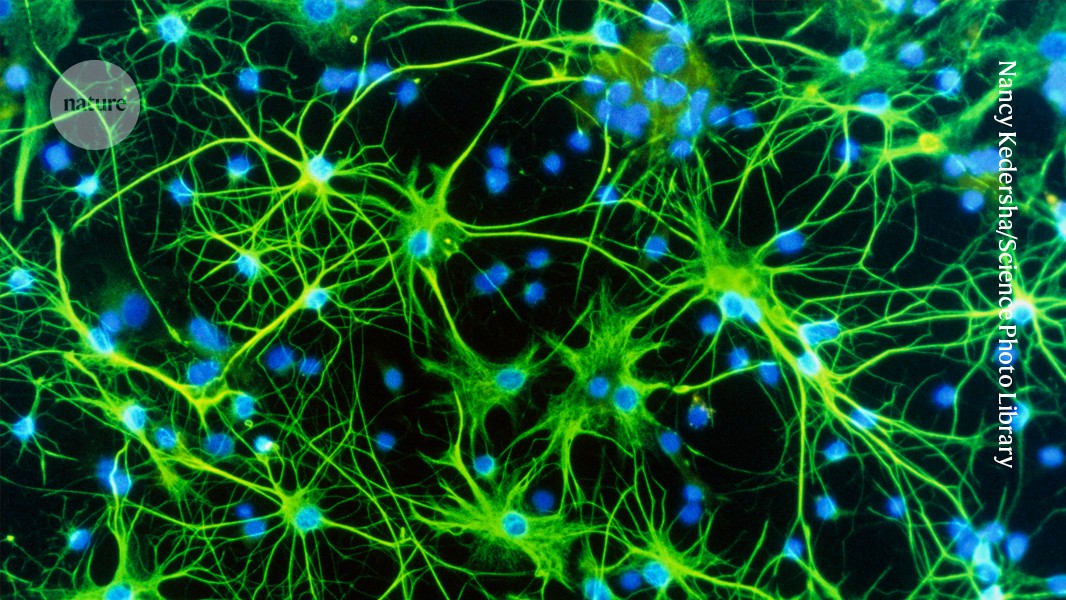
"She imagined colleagues thinking, "Oh, that's the weird one who works on astrocytes," says Goshen, whose laboratory is at the Hebrew University of Jerusalem. A lot of people were sceptical, she says. But not any more. A rush of studies from labs in many subfields are revealing just how important these cells are in shaping our behaviour, mood and memory. Long thought of as support cells, astrocytes are emerging as key players in health and disease."
"Long thought of as support cells, astrocytes are emerging as key players in health and disease. "Neurons and neural circuits are the main computing units of the brain, but it's now clear just how much astrocytes shape that computation," says neurobiologist Nicola Allen at the Salk Institute for Biological Studies in La Jolla, California, who has spent her career researching astrocytes and other non-neuronal cells, collectively called glial cells. "Glial meetings are now consistently oversubscribed.""
Neuroscientists historically focused primarily on neurons and treated other brain cells as support. By the 2010s, memory researcher Inbal Goshen used molecular tools to investigate astrocytes and found they influence learning and memory. Early research met skepticism and social isolation at conferences, but subsequent studies across many subfields have shown astrocytes shape behaviour, mood and memory. Astrocytes are now emerging as key players in health and disease. Neurons and glia exist in roughly equal numbers in mammalian brains. Advances in twentieth-century technology concentrated attention on neuronal electrical activity. Researchers now recognize that astrocytes shape neural computation, increasing interest in glial-focused conferences.
Read at Nature
Unable to calculate read time
Collection
[
|
...
]