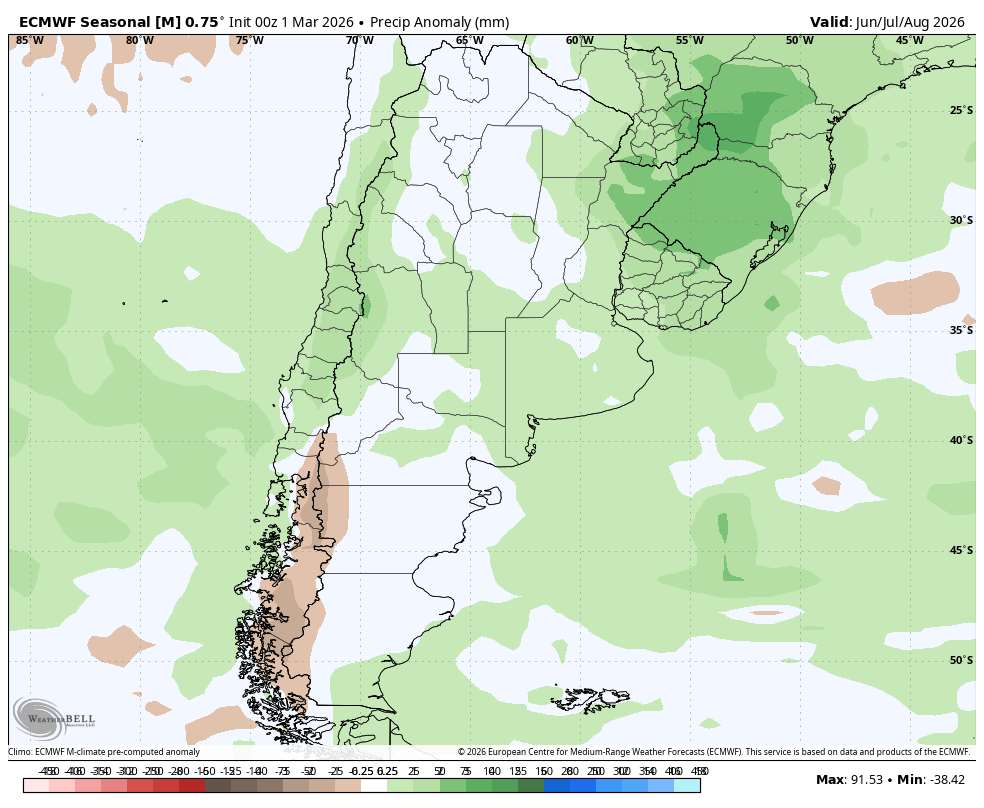
As winter approaches in South America, the central Andes are poised for better-than-normal snowfall, especially in Chile's ski belt and high terrain in Argentina. The transition from a weak La Niña to neutral conditions and the potential onset of El Niño enhances winter precipitation prospects. Central Chile's winter weather is closely linked to Pacific warming, which favors moisture transport and storm activity. Atmospheric rivers significantly contribute to snow accumulation, making a few strong storm cycles crucial for building a successful winter season.
"The strongest upside sits in Chile's core ski belt and the adjacent highest terrain in Argentina, especially where resorts can stay cold during Pacific moisture events."
"When the Pacific warms, the belt from roughly 30°S to 35°S tilts wetter in winter as the large-scale wave pattern and moisture transport become more favorable for Pacific storms reaching the Andes."
"Atmospheric rivers (ARs) are a huge part of that story. Across the southern Andes study area, they account for about half of annual snow accumulation, and the snow they produce is about two and a half times more intense than snowfall from non-AR events."
"Central and south-central Chile get wetter in winter when the South Pacific High pressure is weaker and displaced westward, because frontal systems can more easily reach the region."
Read at SnowBrains
Unable to calculate read time
Collection
[
|
...
]