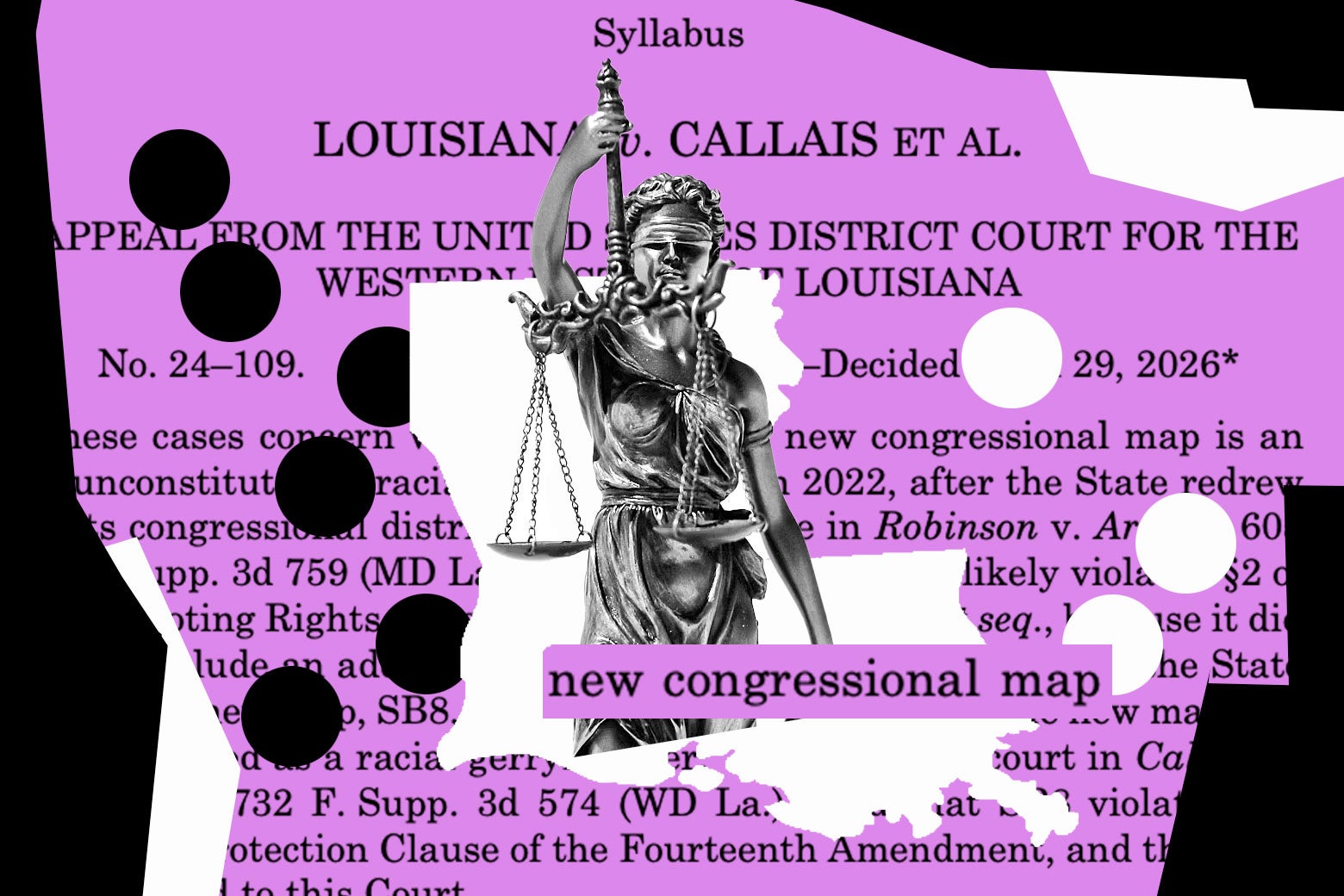
"The decision will bleach the halls of Congress, state legislatures, and local bodies like city councils, by ending the protections of Section 2 of the Act, which had provided a pathway to assure that voters of color would have some rudimentary fair representation."
"This ruling is the culmination of the life's work of Chief Justice John Roberts and Samuel Alito, who have shown persistent resistance to the idea of the United States as a multiracial democracy."
"It gives the green light to further partisan gerrymandering. It protects Alito's core constituency: aggrieved white Republican voters. It's a disaster for American democracy."
"After the Civil War, Congress passed the Reconstruction Amendments—the 13th, abolishing slavery; the 14th requiring that states, among other things, not deny persons equal protection of the laws; and the 15th, barring racial discrimination in voting."
The Supreme Court's ruling in Louisiana v. Callais significantly weakens the Voting Rights Act, particularly Section 2, which ensured fair representation for minority voters. This decision, supported by all six Republican-appointed justices, reflects a broader resistance to multiracial democracy and endorses partisan gerrymandering. Historically, despite the Reconstruction Amendments aimed at preventing racial discrimination, minority voters faced systemic barriers. The Voting Rights Act of 1965 was a crucial legislative response to these injustices, enhancing voting opportunities for minorities.
Read at Slate Magazine
Unable to calculate read time
Collection
[
|
...
]