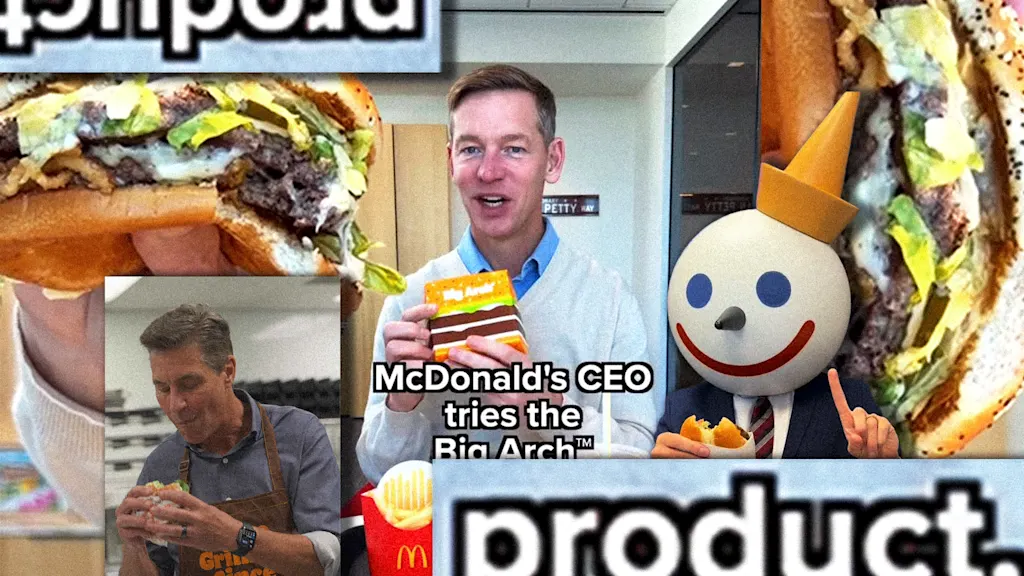
"When he got the Big Arch into his grips, he took a reasonable, if small, bite and said, 'I love this product. It is so good.' Cue the online mockfest. Kempczinski didn't deliver the news like an amphetamine-laced nano-influencer. No, here he was eating like some quarter-zip normie on a first date."
"It's amazing how a seemingly small moment-a lo-fi social post-can blow up bigger than most ambitions for a major ad campaign. The earned media value here for McDonald's is easily in the millions, which is exactly why so many CEOs from its fast food rival brands fervently jumped on the moment."
"As the video spawned cringe-inducing knock-offs from the CEOs of Burger King, Wendy's, and others, it entered the natural cycle of online brand virality: A video goes viral; it gets mocked; rival brands capitalize on the moment, squashing any last trace of organic attention; people turn on the pile-on brands; suddenly, the original video starts to look brilliant."
McDonald's CEO Chris Kempczinski posted an Instagram video of himself eating the newly launched Big Arch burger, delivering an understated endorsement that became unexpectedly viral. The video's awkward, corporate nature sparked widespread online mockery, yet generated significant earned media value worth millions. Rival fast food CEOs from Burger King, Wendy's, and other brands quickly capitalized on the moment by posting their own response videos. This competitive pile-on followed the typical cycle of online brand virality: initial viral success, mockery, rival brand attempts to capitalize, audience backlash against the copycat efforts, and eventual reassessment of the original video as more authentic.
Read at Fast Company
Unable to calculate read time
Collection
[
|
...
]