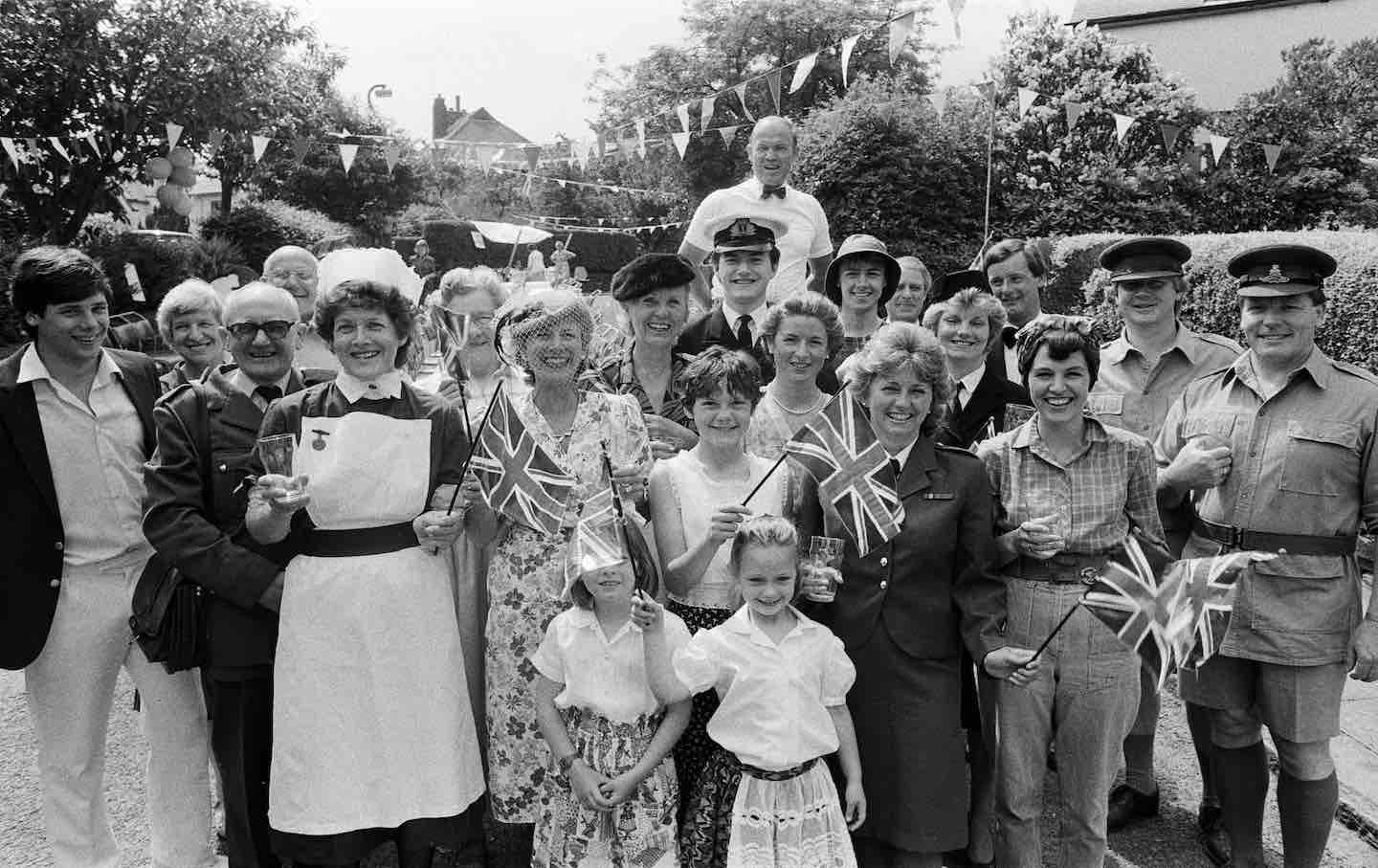
A late-1970s British cultural climate centered on nostalgia for an idealized imperial past and anxiety over national decline. Political rhetoric promising restored greatness invoked symbols of Crown, Empire, rural life, and traditional hierarchies to answer questions about national identity. Concurrently, monetarist economic measures—privatization, deregulation, and cuts to public spending—were implemented. Those policies produced modest economic recovery but also eroded social welfare and the built environment through reduced pensions and other austerity measures. The fusion of reactionary fantasy with neoliberal policy both capitalized on and deepened a sense of outmodedness and festering traditionalism across society.
"Thatcher rose to power on the back of a campaign to Make Britain Great Again-a promise to reverse the previous two decades of austerity, imperial contraction, and stagnating modernization. By 1979, the country was undeniably in decline-not just materially but on a more ineffable level, too. Divested of the unifying effect of global superpower status, the increasingly dis-United Kingdom's common identity was now an open, and anxious, question."
"What would ensure the shared future of the nation? For Thatcher and her ilk, the answer (at least rhetorically) lay in conjuring an ideal imperial past and the fantasies of Merrie England that went with it: the Crown, the Empire, green pastures and trout runs, the 12th of August, upstairs and downstairs, overseas plantations, and Gloucester cheese. With one hand, Thatcher's government rolled out staunchly anti-traditional monetarist policies; with the other, it stoked a reactionary fantasy of once and future greatness."
Read at The Nation
Unable to calculate read time
Collection
[
|
...
]