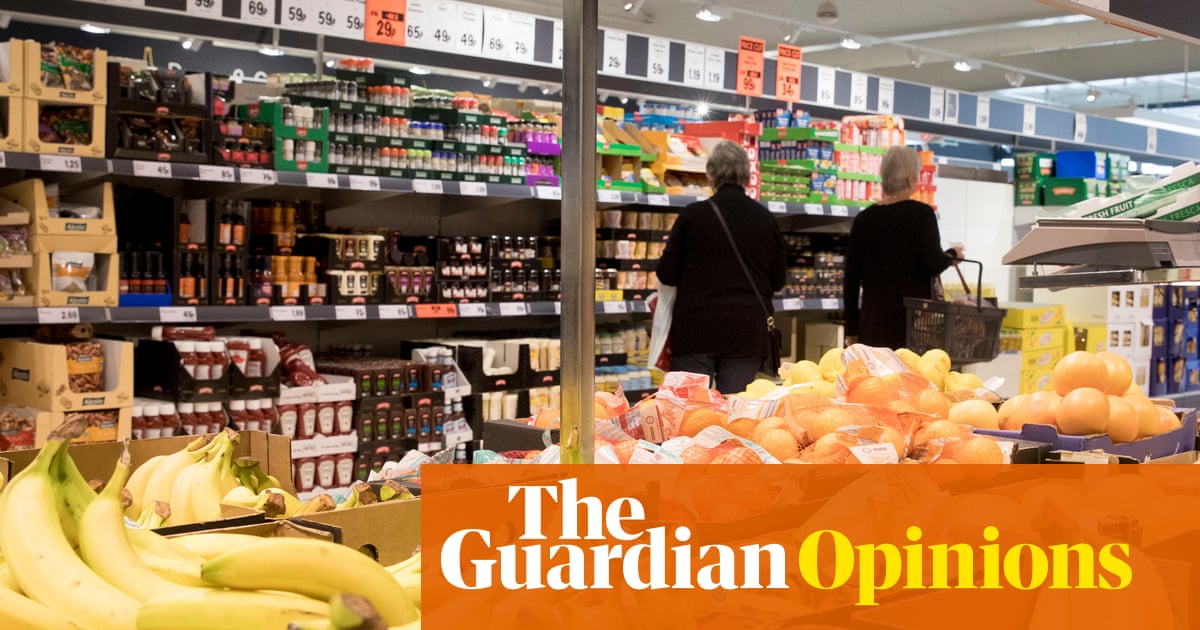
A proposal for voluntary price caps on food staples drew strong criticism from business and financial commentators. Similar ideas have appeared before during periods of cost-of-living pressure, but the current plan is not expected to proceed. Treasury ministers did not strongly defend the proposal and ruled out a mandatory scheme. Price caps are described as artificial and unnecessary because food prices are already influenced by everyday competition. Retailers may not profit much on staples, and loss-leader pricing is common. Artificially lowering prices could create knock-on effects that reduce supply over time. Practical implementation is questioned because collusion is illegal and enforcement details are unclear, so government should focus on competition rather than setting prices.
"Completely preposterous, said Stuart Machin, the chief executive of Marks & Spencer, about the Treasury's proposal for voluntary price caps on food staples. He was outdone in the outrage stakes by City analyst Clive Black at Shore Capital, who thought the government appears to be losing its mind in an orgy of neo-Soviet policy ideas. Both men can probably calm down. First, it's not the first time a panicky administration, feeling the heat from cost-of-living pressures caused by rising energy costs, has flirted with the notion of limited and voluntary price caps in supermarkets."
"Second, as with Sunak's dalliance, it's not going to happen. Treasury ministers on Wednesday barely bothered to defend their proposal and ruled out a mandatory scheme. Thank goodness for that, because price caps are a genuine nonsense. Food inflation was 3% in April and, while the rate will go higher in coming months with rising energy, transport and fertiliser costs, the UK is not in a state of emergency. If you depress artificially the price of milk, bread, eggs and so forth, history says there will be knock-on consequences eventually for the supply of those items."
"Machin said M&S doesn't make money on milk or bread, and its profit margins on eggs and sugar are skimpy. There is no reason to doubt him: the concept of a loss-leader is well understood by retailers and shoppers alike. In any case, how would the Treasury's idea work in practice? Since collusion between rivals is illegal, would the chancellor have to give weekly updates on the maximum price of bananas at participating supermarkets? Come on. The government's role surely extends only to ensuring competition is working."
Read at www.theguardian.com
Unable to calculate read time
Collection
[
|
...
]