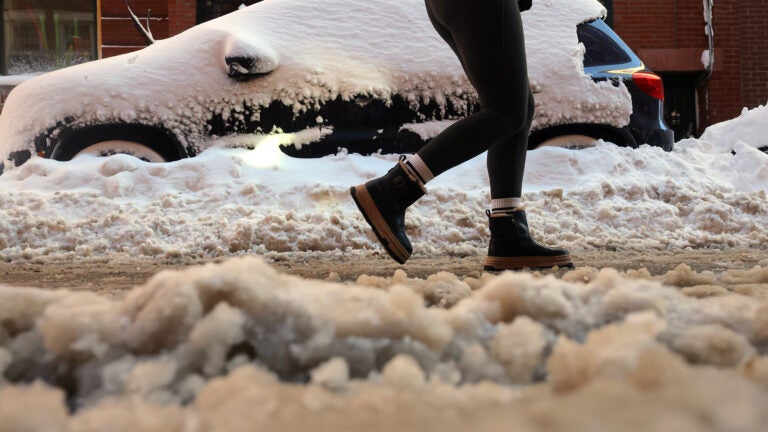
"Providence, for example, had 7 inches of snow on the ground before Monday's storm and now has over 40 inches. So, it doesn't take a scientist to know that several feet of snow is going to take a bit to melt."
"Although you may want to see your lawn and the crocuses next week, we also don't want this to be melting too quickly or else we would have a lot of flooding. A gentle return to bare ground will be a little more frustrating than a quick melt, but in the end, it will pay off."
"Aside from above-freezing temperatures, snow can also sublimate, going directly from a solid to a gas. This is why even when the temperature is below freezing, snow can still dwindle. It's similar to when you leave an ice cube tray in your freezer for a few months, the ice cubes eventually shrink."
Record snowfall across Eastern Massachusetts, Rhode Island, and Connecticut has created snow depths of 1 to 3 feet on the ground, with significantly higher snow banks. Providence alone accumulated over 40 inches following Monday's storm. While above-freezing temperatures this week and potentially reaching the 40s over the weekend will initiate melting, rapid thawing poses flooding risks. Gradual snowmelt is preferable to quick melting. Snow disappears through multiple mechanisms: sublimation converts snow directly to gas even below freezing, stronger spring sun causes melting on south-facing areas despite cold temperatures, and snow settles as air pockets compress, making it denser and requiring more time to melt completely.
Read at Boston.com
Unable to calculate read time
Collection
[
|
...
]