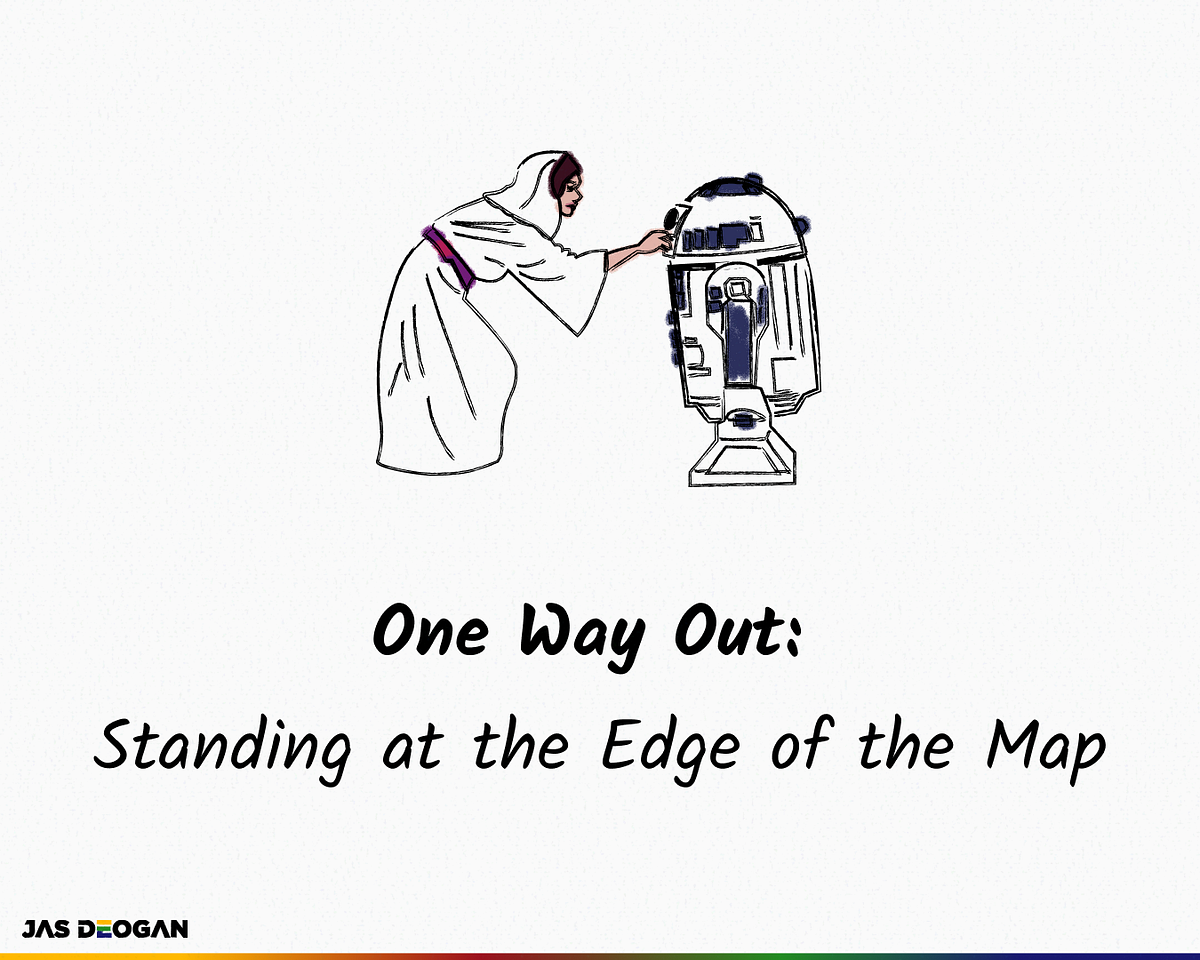
"There is one way out. Right now, the building is ours. You need to run, climb, help each other. If we can fight half as hard as we've been working, we'll be home in no time. One way out! One way out! One way out!"
"Generative AI hasn't slowed down; it's accelerating, reshaping our industry almost daily. And here we are again, standing at the edge of the map, staring out over a horizon that feels both limitless and terrifying. The question doesn't feel any less urgent. If anything, it feels sharper. Because the conversation has become noisier, more polarised, more exhausting."
"On one side, the doom-mongers: every job is toast, every role replaceable, and designers are just waiting for the axe to fall. On the other hand, the utopians: AI and humans skipping into the future hand-in-hand, solving everything from content ops to climate change. The truth. The truth, as always, is messier."
A personal account begins with unexpected origins and a cinematic call to urgent action. Uncertainty surrounds whether AI will replace content designers, and no definitive answer exists. Generative AI is advancing rapidly and reshaping industry workflows and expectations. Public reactions have polarized between catastrophic job-loss predictions and optimistic visions of seamless human–AI collaboration. Many high-profile forecasts claim dramatic displacement but often originate from observers who lack practical experience in design work. Practical realities are more complex and nuanced, leaving space for human skills, judgment, and collaboration alongside accelerating tools. The future hinges on adaptation, critical evaluation of predictions, and active shaping of AI's role in design practice.
Read at Medium
Unable to calculate read time
Collection
[
|
...
]