A leader at the Big Four firm EY recently told me that the firm has introduced an AI tool to help their employees navigate the uncertainty around jobs that the new technology is creating. It's part of an internal training program known as AI Now 2.0, which prompts EY employees to answer a series of questions about their job, day-to-day responsibilities, and overall deliverables.
AI has rapidly become a reliable coding assistant for many developers -- so much so that many are wondering about the future of the entire profession. Entry-level coding jobs are dwindling for recent grads as teams offload junior tasks to AI assistants; at the same time, experts cite the real limitations of these tools as proof that engineers will never actually become obsolete.
This year, the number of women in the workforce has fallen by 500,000, while the number of men rose by nearly 400,000. That statistic tells us something is very broken. We've built systems that aren't working, and women are bearing the brunt of it. I believe that if we're bold enough to rethink how work works-if we make it more flexible, more fair, more inclusive-then we're not just helping women. We're unlocking opportunity for everyone.
Cyberpsychology investigates the psychological processes related to technologically interconnected human behavior, informing disciplines such as human-computer interaction (HCI), computer science, engineering, psychology, and media and communications studies.5 The field explores how digital technologies influence and transform human cognition, emotion, and social interaction, as well as the reciprocal impact these human elements have on technologies. At its core, cyberpsychology seeks to understand the dynamic interplay between humans and technology.
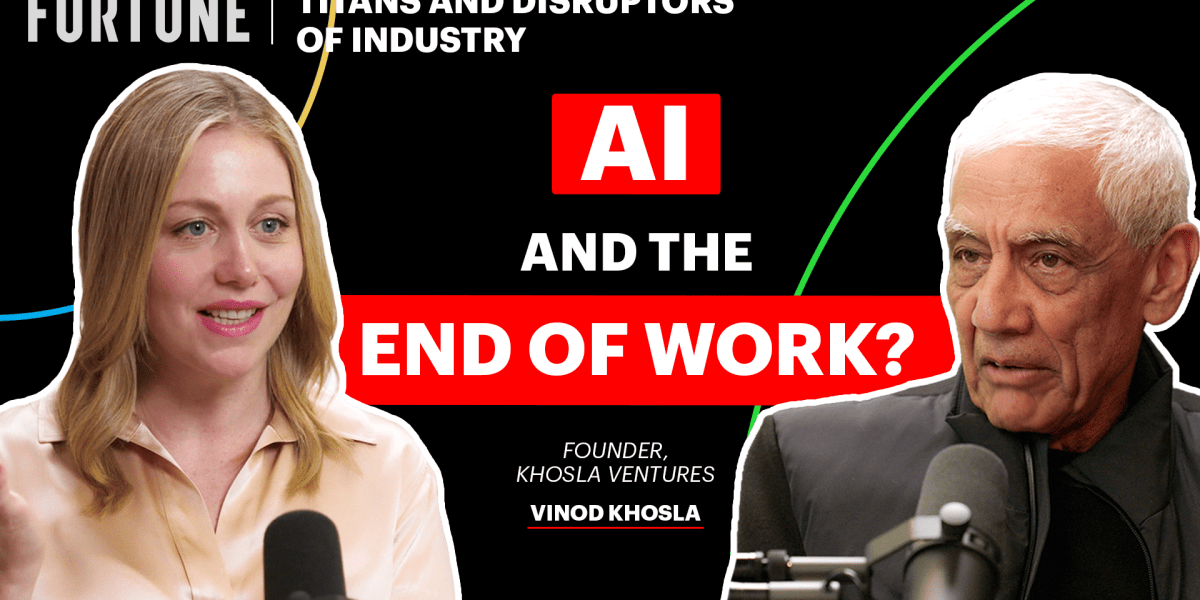
The speed of that displacement could require government intervention to help support the workforce, executives said. What they're saying: "As with most things, when an exponential is moving very quickly, you can't be sure," Amodei said. "I think it is likely enough to happen that we felt there was a need to warn the world about it and to speak honestly." Amodei said the government may need to step in and support people as AI quickly displaces human work.
The short answer: AI isn't replacing developers-it's changing what developers do. While AI is undoubtedly transforming the programming landscape, we're witnessing an evolution in how software is built, with AI serving as a powerful collaborator rather than a replacement. Understanding this shift is crucial for anyone concerned about the future of programming jobs. The Current State of AI in Development Today's AI coding tools are impressively capable.
Transformation of C-Suite capabilities is urgently required, with companies fundamentally unprepared for future uncertainties, particularly regarding leadership skills and digital expertise. 79% emphasize digital skills.
"This milestone is more than just a number - it's a signal that our approach is working, and we're ready to scale it," says Eva de Mol, the founding partner of CapitalT.
As AI-driven tools begin to replace or accelerate our traditional 'white collar' responsibilities, the most effective employees will be the ones who learn to mix the beauty of art and the precision of science.