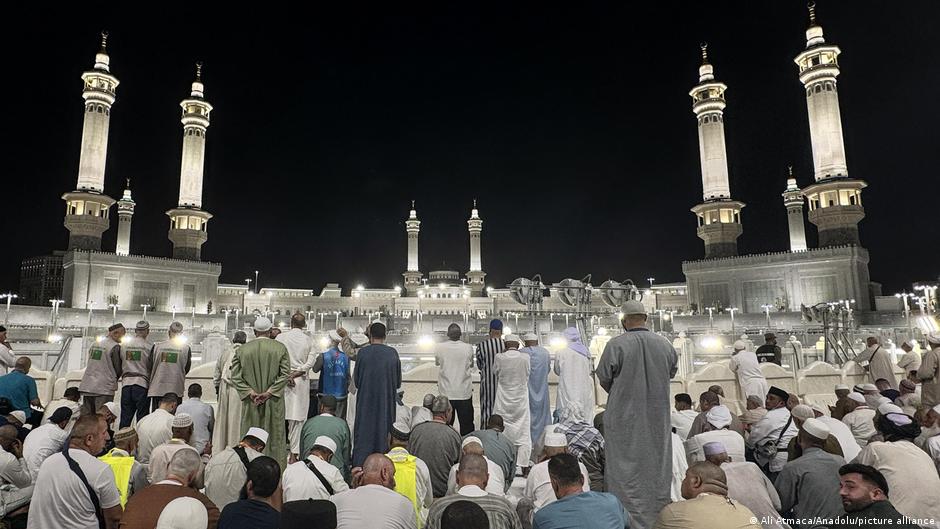
Hajj is an annual pilgrimage in Mecca that draws millions of Muslims to perform required rituals at least once in life if able. This year’s Hajj runs May 25 to May 29 with about 1.5 million pilgrims expected, following 1.7 to 1.8 million attendance over the prior three years. Historians note cancellations or restrictions have occurred only about 40 times in more than 14 centuries, with the last major disruption in 2020 due to COVID-19. Managing large crowds requires ticket lotteries for international pilgrims, security at sites, and extensive planning for flights, accommodation, food, water, and medical care under high temperatures. The current conflict involving Iran and Gulf states adds uncertainty, including a recent interception of drones Saudi Arabia attributed to pro-Iran militias, alongside travel advisories and US guidance for citizens.
"This year is the first time that Saudi Arabia has chosen to go ahead with the annual Hajj pilgrimage while it is also in the middle of a war that has seen direct strikes on Saudi territory. The Hajj is a once-a-year event that draws millions of Muslims to Mecca in Saudi Arabia to perform rituals that every believer is supposed to carry out at least once in their lives, if they are able to. It is one of the largest gatherings of humans worldwide, and this year's Hajj runs between May 25 and May 29 with around 1.5 million pilgrims expected in Saudi Arabia."
"Having more than a million pilgrims descend upon one place to perform the same ritual in under a week has always been a complex logistical exercise. It has involved Saudi Arabia restricting crowds with a ticket lottery system for international pilgrims, tight security at pilgrimage sites, flights, accommodation, food and water and medical care, and all that amid high temperatures that have proven deadly in the past. Many pilgrims arrive in Saudi Arabia days or even weeks before the Hajj rituals take place."
"This year that exercise is being complicated by the Iran war, which began in late February when the US and Israel attacked Iran. Iran has responded by targeting the Gulf states, along with Israel. There is a ceasefire in effect at the moment but it remains unclear how steady that is. Last weekend, Saudi Arabia intercepted three drones it says were likely launched by pro-Iran militias in Iraq."
"US, European nations issue travel advisories 2026 also marks the first time the US government has urged its own citizens to reconsider participating in the pilgrimage, noting that "non-emergency US government employees were ordered to l"
Read at www.dw.com
Unable to calculate read time
Collection
[
|
...
]