#middle-east-conflict
#middle-east-conflict
[ follow ]
Europe news
fromIrish Independent
1 hour ago'We shouldn't only think about fuel' - Central Bank governor flags cost of food and fertiliser in interest-rate decision
ECB rate decisions next month will consider non-fuel goods prices and indirect effects from blocked energy routes, alongside the prolonged Middle East conflict.

fromnews.bitcoin.com
1 day agoBitcoin Slides Below $77K as US Military Strikes on Iran Shake Risk Appetite
Following reports of U.S. Navy strikes against targets in Iran, bitcoin dropped nearly $800 in over three hours on Monday night, slipping below $77,000 and wiping out roughly $20 billion in market capitalization. Late on Monday, bitcoin fell nearly $800 below $77,000 following reports of U.S. Navy military strikes in Iran. Brent crude spiked near $99 as maritime clashes disrupted energy markets and dented crypto capitalization.
Cryptocurrency
World news
fromLondon Business News | Londonlovesbusiness.com
1 day agoSpring in the step of the Footsie amid hopes for Middle East peace deal - London Business News | Londonlovesbusiness.com
Renewed Iran strikes pushed oil prices higher, feeding into UK shop price inflation while a record heatwave boosts some retail spending.
fromIrish Independent
1 day agoRyanair leads as shares surge to pre-war levels on optimism over US-Iran talks
"There will be lots of upsides in those numbers if the Strait of Hormuz reopens and oil prices settle back," said Mr O'Leary. Oil prices fell 5pc as hopes were raised of progress following the US attack on Iran. Shares in IAG, the group that owns Aer Lingus, British Airways, Iberia and Vueling, were 3.8pc higher near the close of the market in Madrid.
Europe news
fromwww.bbc.com
1 day agoMexico agrees to host Iran at World Cup instead of US
Iran's sports minister Ahmad Donyamali, also confirmed that world football's governing body has stressed that the Iran squad will be given visas to play in the US this summer "The Fifa president promised us that all our players would receive visas. There is no reason why our players should not receive visas," he said. The Iranian FA (FFIRI) had presented Fifa with a list of 10 conditions for their participation at the World Cup, including allowing players, coaches and officials who have completed military service with the Islamic Revolutionary Guard Corps (IRGC) to receive visas.
World news
#oil-markets
World news
fromLondon Business News | Londonlovesbusiness.com
2 days agoOil futures slumping on a deal of negotiation over negotiation - London Business News | Londonlovesbusiness.com
WTI and Brent fall sharply on hopes of a US-Iran Middle East deal, but reported terms appear fragile and largely non-binding on nuclear concessions.

#iran
Right-wing politics
fromwww.mediaite.com
1 week agoJoe Scarborough Mocks Botched Regime Change Plot to Free Iran's Imprisoned Former President: Some Team America Sh*t Right There'
A failed U.S.-Israel plan to remove Mahmoud Ahmadinejad is framed as regime-change motivation, prompting mockery of hopes for Iranian moderates.
fromwww.aljazeera.com
5 days agoCan Venezuelan oil save India amid the Hormuz energy crisis?
Venezuelan Acting President Delcy Rodriguez is expected to travel to India next week to discuss oil sales, United States Secretary of State Marco Rubio said. At an estimated 303 billion barrels of oil — about 17 percent of known global oil resources — the South American nation holds the world's largest reserves, larger even than those held by Saudi Arabia and the US, though years of US sanctions and government mismanagement had crippled production in Venezuela.
World news
#geopolitics
World politics
fromwww.theguardian.com
1 week agoThe American epoch of oil is collapsing. What comes next could be ugly
Global power is shifting from fossil-fuel dominance to renewable and electrified systems, with US energy dominance policies failing amid rising turbulence and China’s renewable investment strengthening resilience.
#us-politics
US Elections
fromwww.mediaite.com
1 week agoC-SPAN Caller Hammers House Republican on Trump Acting Like He's Jesus Christ' In Awkward Exchange
Haridopolos responded to gas-price complaints by citing increased U.S. oil production and blaming prior actions on Biden-era policies and strategic oil reserve reductions.
Right-wing politics
fromLGBTQ Nation
10 months agoTrump's lesbian niece says her family's religious beliefs taught him to worship one thing: himself - LGBTQ Nation
Using religion to justify bombing a Middle Eastern country is offensive, and Donald Trump is portrayed as irreligious and self-worshipping.
#gas-prices
US politics
fromwww.mediaite.com
1 week agoJim Jordan Comically Denies Saying Thing He Said Less Than a Minute Ago: Those Are Your Words'
Gas prices rose after U.S.-Israeli strikes on Iran and Iran’s Strait of Hormuz closure, while Rep. Jim Jordan said higher prices are unavoidable due to global events.
#us-iran-tensions

World news
fromLondon Business News | Londonlovesbusiness.com
1 week agoTrump 'red button' post sparks nuclear fears as Iran rhetoric escalates - London Business News | Londonlovesbusiness.com
A Truth Social post combining “the clock is ticking” with a red-button image has heightened fears of a veiled nuclear threat toward Iran amid escalating US-Iran hostilities.
World politics
fromwww.theguardian.com
1 week agoThe balance of global power is shifting fast, but Britain is stuck in the same old Brexit rut | Rafael Behr
Domestic political crises displace foreign events from media attention, and voters often focus on prominent local issues over international affairs.
Canada news
fromwww.cbc.ca
1 week agoAs flight disruptions and rising costs upend summer travel plans, here's what Canadians can do | CBC News
Canadians face higher travel costs and Middle East–linked jet fuel shortages that may cause flight cancellations and service disruptions, prompting planning and insurance steps.
fromwww.theguardian.com
1 week agoReeves poised to cancel planned fuel duty rise to help with cost of living
The government is determined to keep costs down for motorists paying more because of the war in Iran. That's why we've extended the 5p fuel duty cut twice, until September. While the chancellor will continue to monitor the situation, as the chancellor has set out, a rapid de-escalation in the Middle East remains the best way to keep pump prices low.
UK politics
#us-china-relations


fromWashingtonian - The website that Washington lives by.
1 week agoWashington DC
DOJ Sues DC Bar, KAWS Sculpture Comes to Hirshhorn Sculpture Garden, Spencer Pratt Makes First and Likely Only Appearance in Our Morning Roundup - Washingtonian
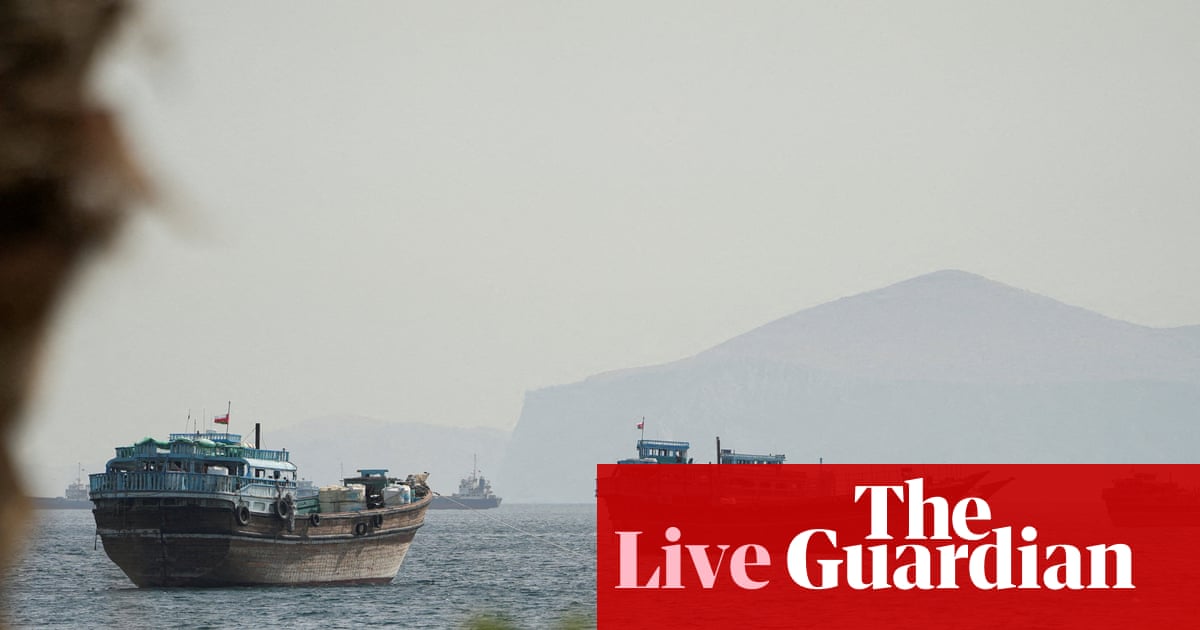
A ship near Fujairah was reportedly seized and sent toward Iranian waters as US-Iran war talks stall and gas prices rise.
World politics
fromwww.nytimes.com
1 week agoTrump-Xi Meeting Live Updates: Trump Says U.S. Arms Sale to Taiwan Discussed in China Talks
Trump and Xi emphasized constructive strategic stability while discussing Taiwan and a delayed $14 billion arms sale without announcing clear resolutions on major issues.
Washington DC
fromWashingtonian - The website that Washington lives by.
1 week agoDOJ Sues DC Bar, KAWS Sculpture Comes to Hirshhorn Sculpture Garden, Spencer Pratt Makes First and Likely Only Appearance in Our Morning Roundup - Washingtonian
A ship near Fujairah was reportedly seized and sent toward Iranian waters as US-Iran war talks stall and gas prices rise.
fromwww.dw.com
1 week agoIndia hikes petrol, diesel prices as economic woes mount
India's state-run fuel retailers raised the prices of petrol and diesel on Friday the first time since the war in Iran began as they look to recoup some of the losses incurred over rising global crude prices. Indian Oil Corporation, Hindustan Petroleum Corporation (HPCL) and Bharat Petroleum Corporation (BPCL) raised fuel prices by Rs 3 per litre ($0.03, 0.27), or more than 3%. With this, diesel will cost Rs 90.67 a litre ($0.95, 0.81) and petrol will cost Rs 97.77 a litre ($1.02, 0.88).
World politics
Europe news
fromLondon Business News | Londonlovesbusiness.com
2 weeks agoTui hit by plunge in UK holiday bookings as Iran war rattles travellers - London Business News | Londonlovesbusiness.com
UK summer bookings fell 10% as Middle East conflict and extreme weather increased uncertainty, delayed decisions, and shifted demand toward western Mediterranean destinations.
fromwww.aljazeera.com
2 weeks agoPentagon gives new $29bn Iran war price tag, downplays munitions concerns
The Pentagon has released a new price tag for the US-Israel war with Iran, saying it has cost the United States $29bn. The department's comptroller revealed the new total during a Senate committee hearing on Tuesday alongside Pentagon chief Pete Hegseth. The estimate is an increase from the $25bn the official, Jules Hurst, reported to members of Congress in late April, the first time the administration of US President Donald Trump had given an official figure.
Washington DC
fromThe Verge
2 weeks agoThere's an internet choke point in the Middle East - is the solution in the North Pole?
The Red Sea cuts spurred companies and governments to look for alternate routes, and the Strait of Hormuz seemed promising. Then the US and Israel attacked Iran, cable projects were halted, and now the world is looking elsewhere once again.
European startups
fromwww.theguardian.com
2 weeks agoIn the 1979 hostage crisis, why did Iran free 10 Black Americans before the others?
On 4 November, a student demonstration outside the US embassy in Tehran erupted into an all-out assault on the compound, and 66 Americans were taken hostage. It was the culmination of decades of tension, beginning with the US and Britain's role in installing the Shah of Iran to safeguard energy interests, and ending with a popular uprising that toppled his oppressive regime and drove him into exile.
World news
fromwww.theguardian.com
2 weeks agoUK households cut back spending at fastest rate in 18 months, Barclays says
Households cut back on their spending in April at the fastest pace in 18 months, as the conflict in the Middle East provoked fears of another cost of living crisis, a report from one of the UK's biggest banks has suggested. Barclays, which processes nearly 40% of the UK's credit and debit card transactions, said its data showed there had been a 0.1% fall in card spending last month compared with a year earlier. This was the first year-on-year fall since November 2024.
UK news
#iran-us-ceasefire
World news
fromFortune
2 weeks agoTrump quickly blasts Iran's response to U.S. ceasefire proposal as 'totally unacceptable' after warning Tehran 'will be laughing no longer' | Fortune
Iran wants negotiations to permanently end the war and secure shipping, but the U.S. rejected the ceasefire proposal immediately.
World politics
fromFortune
2 weeks agoTrump says ceasefire is on 'life support' after Iran's latest nuclear offer was 'garbage' | Fortune
Iran ceasefire talks are stalled as Trump rejected Iran’s latest proposal, calling it “garbage,” while regional tensions and energy disruptions risk renewed warfare.
fromwww.bbc.com
2 weeks agoHeathrow sees passenger dip amid Iran conflict
Heathrow's passenger numbers dipped by 5.3% last month, with the airport's chief executive citing the conflict in the Middle East as the main reason. The west London airport said about 6.7 million passengers travelled through Heathrow in April, compared with 7.1 million during the same month last year. Heathrow said the decline reflected "the ongoing impact of the Middle East conflict on some markets and shortterm adjustments to travel plans".
London
fromwww.theguardian.com
2 weeks agoHeathrow passenger numbers dip as demand for international travel ebbs amid Iran war fallout
About 6.7 million people flew through the airport in April, a 5% drop compared with the same period last year. The fall reflected the impact from the Iran conflict and short-term adjustments to travel plans, the airport said. However, the number of transfer passengers transiting for onward flights rose 10% in April year-on-year, as travellers rerouting to Asia and Oceania switched to the Heathrow instead of using rival hubs in the Gulf such as Dubai and Doha.
London food
fromFortune
2 weeks agoDriving less, canceling vacations, and tightening budgets: All the ways Americans are coping with soaring gas prices | Fortune
The conflict in the Middle East itself might be teetering on a tentative ceasefire, but higher gasoline prices are likely here to stay. The average price for a gallon of regular gasoline on Friday was $4.54, according to AAA, up from around $3 before the war, and the most expensive gas has been since the Ukraine War's early days in mid-2022.
Alternative transportation
[ Load more ]