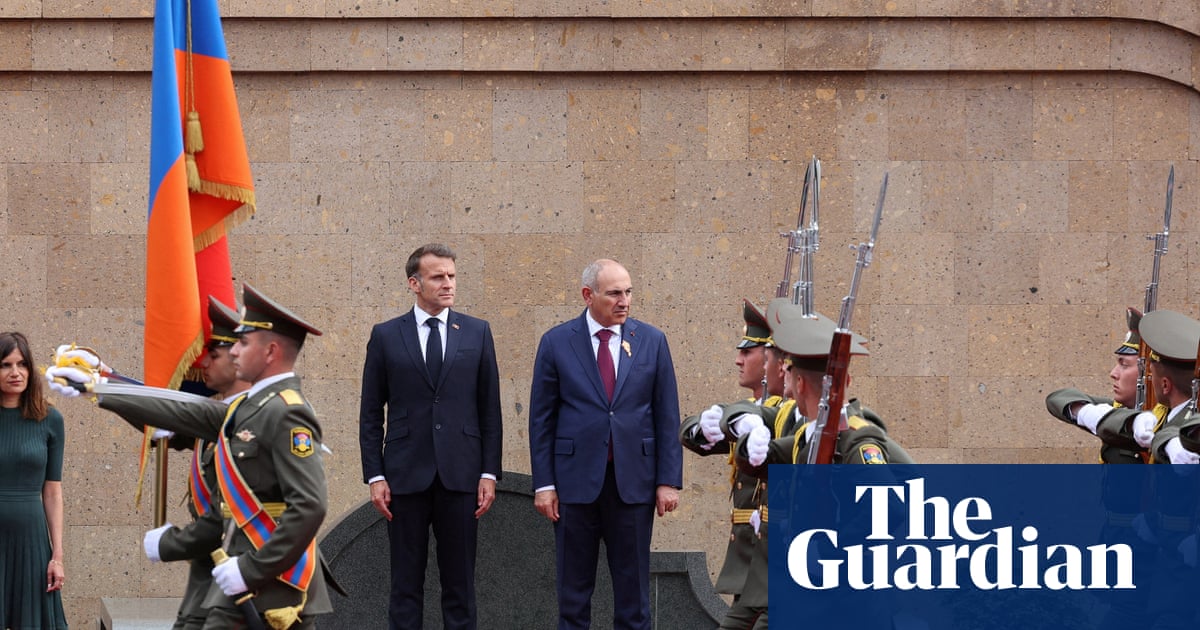
Yerevan’s Soviet-era architecture frames Armenia’s growing geopolitical relevance amid national elections. Armenia faces competing influence from Russia, the US, Turkey, Europe, and Azerbaijan. Interest centers on prospects for ending conflict with Azerbaijan, which could end physical isolation and enable Armenia to join the Middle Corridor linking western China and Europe while bypassing Russia’s northern route and the Suez canal. Armenia’s leaders claim that opening borders with Turkey and Azerbaijan and securing peace would effectively change Armenia’s geographic role. The goal is to become a bridge rather than an obstacle by connecting Europe with Central Asia, the far east, India, and China. A proposed trade route across Armenian territory would be one component of this connectivity plan.
"Armenia's claim that it can become the strategic crossroads of the landmass of Eurasia is becoming less and less fanciful. As the former Soviet Republic goes to the polls on 7 June for national elections, it finds itself in a five-way tug of war between Russia, the US, Turkey, Europe and Azerbaijan. The interest has in part been sparked by the possibility of an end to Armenia's conflict with its neighbour Azerbaijan and the chance this represents for Armenia to end its physical isolation and become part of the middle corridor, a vital trade route linking western China and Europe, bypassing both Russia's northern corridor and the Suez canal."
"The opening of its borders with Turkey and Azerbaijan could transform not just Armenia but the South Caucasus, Armenia's prime minister, Nikol Pashinyan, has claimed. Once these borders were open and peace secured, he said, it would be as if the geographical position of Armenia itself had changed. The shortest route between east and west, he said, goes through Armenia. Ararat Mirzoyan, the foreign minister, said the government's aim was to turn Armenia's geography into a strategic asset."
"The challenge after decades is how to become a bridge rather than an obstacle. So this is what we are now trying to do in Armenia. Somehow we have come to understand that we can connect Europe with Central Asia, with the far east, with India, China, and this, in turn, can not only be a way to save our existence, our sovereignty, but also guarantee our further peaceful prosperity."
"The so-called Trump Route for International Peace and Prosperity (Tripp) linking Europe and Asia and built across Armenian territory as part of a peace deal with Baku would only be one part of this new connectivity jigsaw. This geopolitical vision the heart of what Pashinyan is offering for his third consecutive term is also in p"
Read at www.theguardian.com
Unable to calculate read time
Collection
[
|
...
]