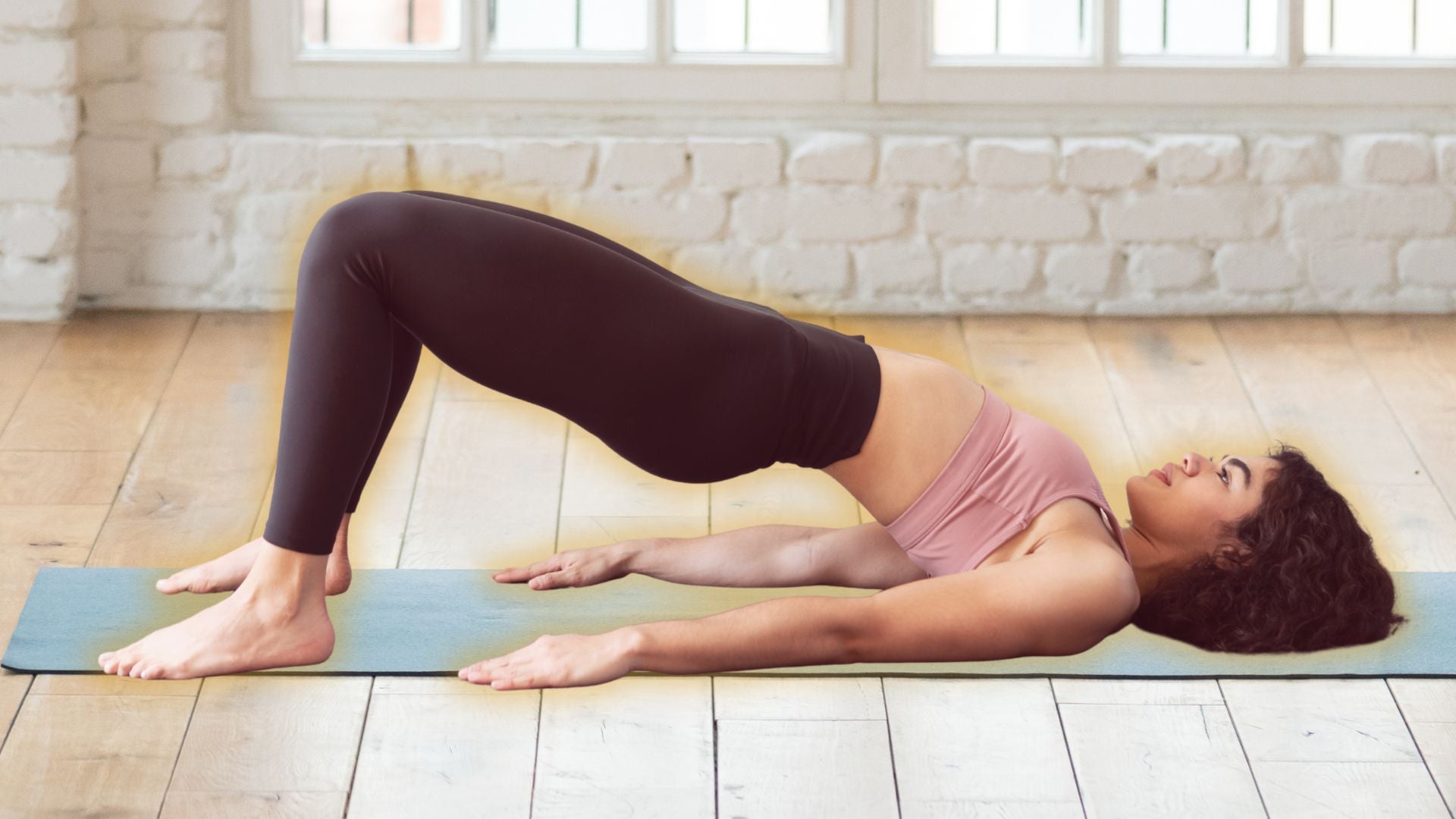
Glute muscles work together to support hip extension, external rotation, pelvic stabilization, and fine-tune posture. The gluteus maximus powers hip extension for standing, climbing, and backbends and helps control external thigh rotation. The gluteus medius stabilizes the pelvis during single-leg activities such as walking and balancing. The gluteus minimus assists hip stability and alignment in poses. Weak glutes cause compensations: lower-back gripping or pinching, inward knee collapse in Chair or Warrior, wobbliness in single-leg balances, and anterior pelvic tilt with rib flare. Strong, engaged glutes improve knee tracking, hip steadiness, lower-back relief, and overall movement support, especially for people who sit often.
"Your glutes are a team, not a single muscle. When we say "glutes," we're really talking about a group that works together: The gluteus maximus is the largest muscle that supports hip extension, in which your legs move underneath or behind you (standing up, climbing, backbends), and helps control external rotation of the thighs. The gluteus medius at the outer hip is a major pelvic stabilizer, especially in single-leg work (walking, balancing, stepping)."
"When the glutes aren't strong, the rest of the body quickly overcompensates. You might notice a gripping or pinching sensation in your lower back, especially when you're practicing lunges, backbends, and standing poses. Or your knees might collapse inward in Chair Pose or Warrior stances. Maybe it's a pinchy or wobbly feeling in a single-leg balancing pose or posture fatigue in which your pelvis tips forward and your ribs push forward."
Read at Yoga Journal
Unable to calculate read time
Collection
[
|
...
]