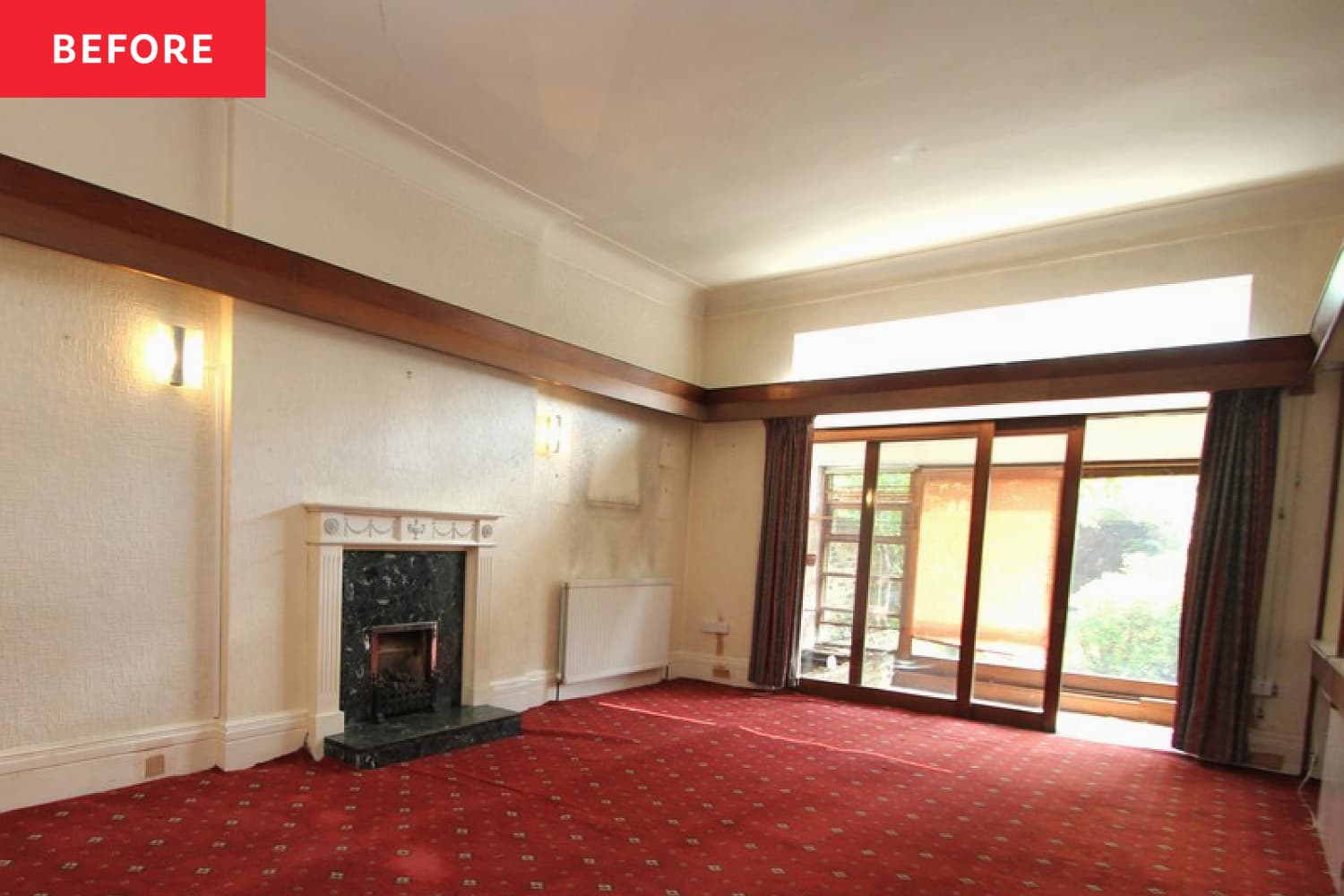
"Victorian conversion apartments like the one I live in come with many enviable perks, like large windows and high ceilings. But because they started out as larger Victorian houses that have since been chopped up into smaller apartments, these conversion apartments also come with plenty of quirks. Challenges include drafty windows, a lack of bathrooms, and the biggest one of all: at least one oddity in the layout."
"In my home, that head-scratcher was the living room, which I can only describe as a large "hallway." It has my bedroom at one end, the kitchen at the other, and the entryway in the middle, almost like a railroad-style apartment (just not in a completely straight line). It's also windowless apart from a sliver of glass near the ceiling."
"My living room started out in fixer-upper shape, with dated 1970s finishes, so gutting it down to its bare bones was the first step. I followed that with fresh wood floors and a new fireplace. This was the easy part! Choosing where new light switches and outlets should go was trickier, as was arranging the space so that flow of traffic to the surrounding rooms made sense. And then there was the lack of light! Here's how I made it all work."
The long, hallway-like living room in a Victorian conversion was gutted and updated with fresh wood floors and a new fireplace. Electrical placement and light-switch locations were carefully planned to improve functionality and traffic flow between surrounding rooms. An open layout with distinct zones was created to make the long space feel purposeful while keeping family members visually connected across rooms. The opening to the kitchen was narrowed without adding doors so each area reads separately yet remains connected. Additional strategies addressed the limited natural light and awkward circulation patterns.
Read at Apartment Therapy
Unable to calculate read time
Collection
[
|
...
]