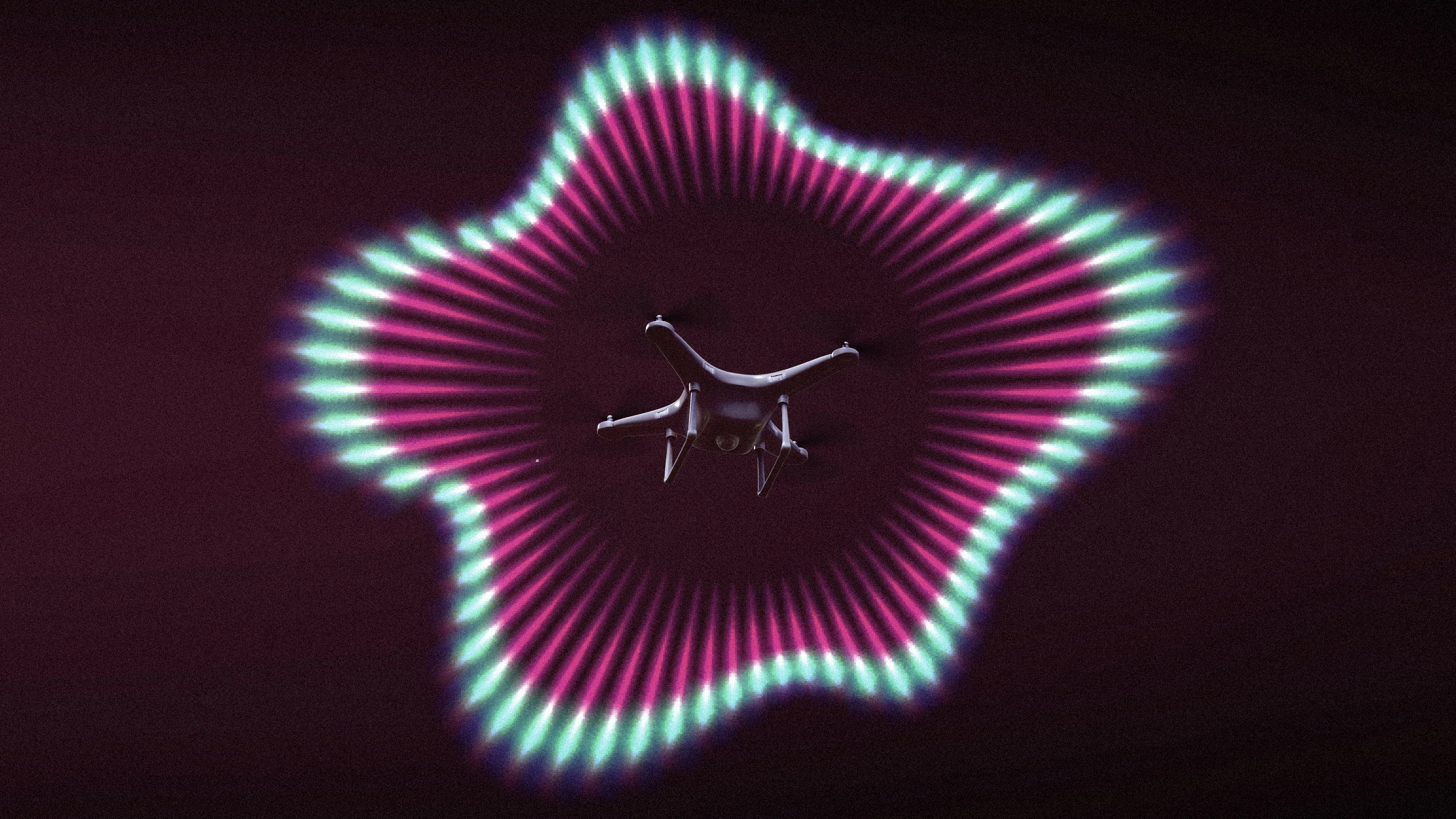
An ultrasound-based perception system has been developed to assist small aerial robots in navigating dark and low-visibility environments. Traditional sensors like cameras and lidar fail in conditions such as smoke, fog, and darkness. Inspired by bats, which use echolocation to detect obstacles, the system incorporates a physical acoustic shield to reduce propeller noise and a neural network called Saranga to recover weak echo signals. This technology allows robots to estimate obstacle locations in 3D, making them valuable for search and rescue operations in challenging environments.
"Bats thrive in dark, damp, and dusty caves and can detect obstacles as thin as a human hair using echolocation while weighing as little as two paper clips."
"A physical acoustic shield inspired by bat's ear cartilage reduces propeller noise around the acoustic sensors, which act like the robot's ears."
"A neural network called Saranga recovers weak echo signals from very noisy measurements by learning patterns over time, inspired by how bats process sound."
"These types of drones are very useful for search and rescue, especially in confined, dynamic, and dangerous environments, because they're small and inexpensive."
#ultrasound-perception #bat-echolocation #aerial-robots #search-and-rescue #low-visibility-navigation
Read at Fast Company
Unable to calculate read time
Collection
[
|
...
]