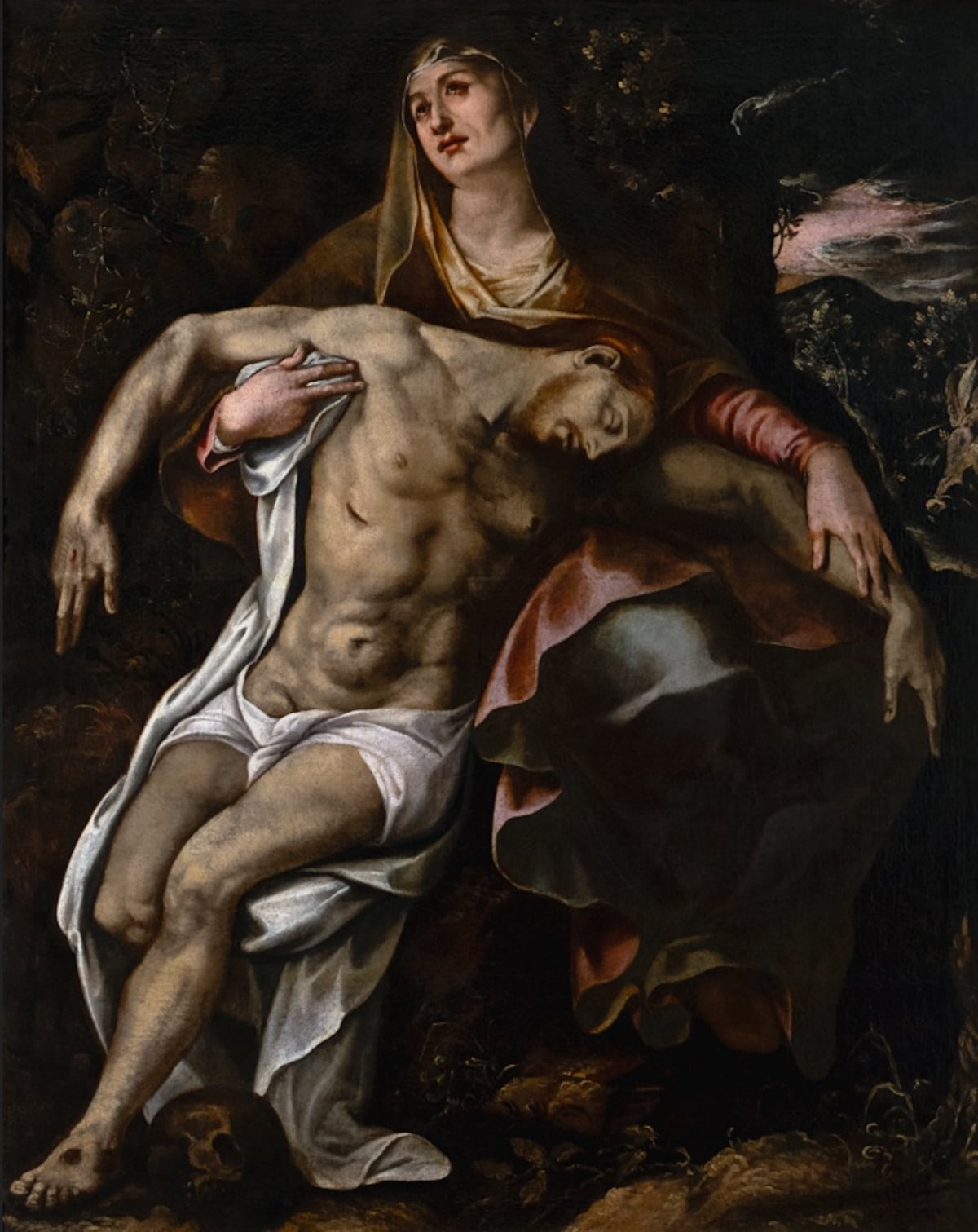
Advanced imaging and material analysis have led experts to reattribute a long-overlooked biblical scene to Rembrandt van Rijn, identifying the 1633 painting as a lost masterpiece after more than six decades of doubt. Titled Vision of Zacharias in the Temple, the work was last studied in 1960, when scholars ruled out the possibility that it could be by the Dutch master.
An analysis of two paintings in museums in the US and Italy by the 15th-century Flemish artist Jan van Eyck has raised a profound question: what if neither were by Van Eyck? Saint Francis of Assisi Receiving the Stigmata, the name given to near-identical unsigned paintings hanging in the Philadelphia Museum of Art and the Royal Museums of Turin, represent two of the small number of surviving works by one of western art's greatest masters, revered for his naturalistic portraits and religious subjects.
Recently, AI decided that a painting long thought to be a copy of Caravaggio's The Lute Player is actually by the master, while another version of the same subject, previously thought to be authentic, is not. Both conclusions were disputed by the former Metropolitan Museum of Art curator Keith Christiansen. A similar debate erupted in March 2025 when AI declared that portions of The Bath of Diana, also long believed to be a copy, could have been painted by Peter Paul Rubens.
A painting determined to be the work of "genius forger" Wolfgang Beltracchi in Japan's Tokushima Modern Art Museum, it was returned and refunded for 67.2 million yen ($426,000) by an Osaka-based company on Wednesday, November 19, reported the . The museum had announced that it would withdraw the canvas from an upcoming exhibition, following suspicions that it was a Beltracchi fake.
Not everyone appreciates the artistry of Jackson Pollock's famous drip paintings, with some dismissing them as something any child could create. While Pollock's work is undeniably more sophisticated than that, it turns out that when one looks at splatter paintings made by adults and young children through a fractal lens and compares them to those of Pollock himself, the children's work does bear a closer resemblance to Pollock's than those of the adults.
connoisseurship and provenance research with laboratory science and proprietary AI, and then backs the conclusion with an insurance policy from an A+ rated global insurer. If a certified attribution is later proven incorrect, the policy will cover financial loss to the artwork's owner.
Ray Palmer, director at Suros, told Business Matters the firm's loan book includes some of the strangest transactions in the market. Among them: a £6m loan against 21,000 bottles of wine stored in a Second World War bunker, a £60,000 Macallan whisky bottle, and even an Academy Award. Other approaches - ultimately rejected - included racehorses, Fabergé eggs and a bizarre offer of 50 tonnes of dirt supposedly containing 2% gold.
For many years, the paintings one of which is in the collection of the Philadelphia Museum of Art, while the other hangs at Kenwood were believed to have been painted by the Dutch master. But in the 1920s, the consensus shifted. The Kenwood painting, which is in much better condition and crucially is signed by the artist, was the original Vermeer, experts agreed.