Higher education
fromHarvard Gazette
3 days ago'This is not about Harvard. It is about higher education.' - Harvard Gazette
The partnership between U.S. universities and government is threatened, risking a brain drain similar to post-war Europe.
It wasn't until Whitmarsh had been herded into the main hall that he grasped what he'd signed up for: 'a geopolitical event, not an intellectual one,' as he put it, with hosts including Greece and China's ministries of culture.
"If a rover comes across a crater in front of it, for instance, it can't decide what to do after communicating with Earth," he says, because sending signals across space takes too long. "It must decide on its own. So I think AI is very important for the nation's deep space exploration."
Explore the history of education in the Middle Ages through the development of schools, curriculums, the growth of universities, and the diverse individuals who were involved in teaching and learning during this 1000 years of history. Class begins on Saturday, January 24th. This six-week course includes live 90-minute sessions with Ryder Patzuk-Russell each week from 12:00 to 1:30 pm EST.
A parent is worried about an assignment requiring her son to use A.I. They bring on Jeff Young from the Learning Curve podcast to unpack what the listener's teacher was trying to get at, some good uses for ChatGPT (versus the bad ones), how A.I. ruined the em dash, and more.
In a letter addressed to Purdue leadership, which was publicized Friday and shared exclusively with the Guardian, dozens of signatories argue that the university soft banning students based on their nationality erodes higher education's core values of meritocracy, equality and academic freedom. They called on Purdue to clarify any instructions it has given graduate admissions committees and to restore offers to scores of international students they say the university rescinded last year.
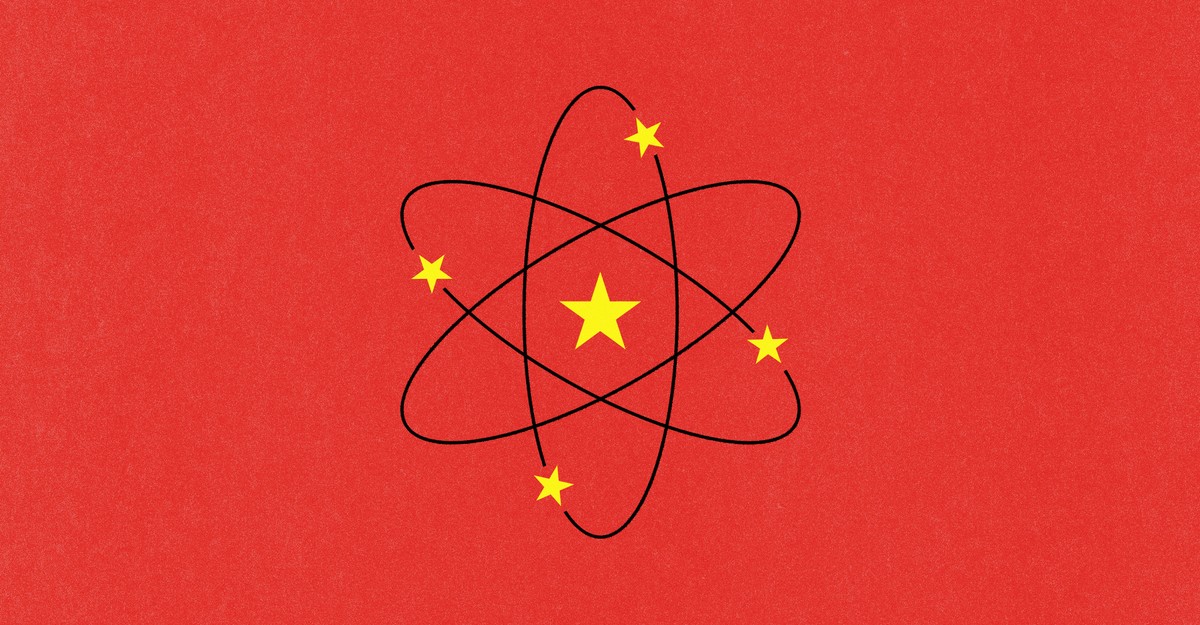
A decade ago, China's political leaders laid out an ambitious industrial plan: By 2025, they pledged, their country would be a world capital, with the goal of moving from "Chinese speed to Chinese quality, the transformation of Chinese products to Chinese brands." This is the difference, they wrote, between "Made in China" and "Created in China." At WIRED, we never take what the government (ours or anybody else's) says at face value.
Wuzhou Elementary School is a public primary located in central , designed by People's Architecture Office (PAO) to support contemporary educational models that emphasize creativity, exploration, and experiential learning. The project responds to Shenzhen's broader transition from an industrial economy to one oriented toward innovation by reconsidering how architectural space can support evolving modes of education. The school is conceived as a three-dimensional 'Learning Landscape,' replacing conventional classroom-and-corridor arrangements with a continuous field of varied spatial conditions.
This idea was based on the parallel between the pluck and elan that are characteristic of both the early-college students I worked with and that of America's hardest-working founding father. Five years after I wrote the book, I had the opportunity to revisit the field for a revised edition, making it appropriate to ask, after Thomas Jefferson's song in the second act of Hamilton, "What'd I Miss": How has early college/dual enrollment changed over the past half decade?
The most exciting moments for a teacher come when students stumble onto something unexpected-when they run to my office to tell me about a new twist in their thinking about birds in Sula or the discovery of yet another biblical reflection in Housekeeping. Those revelations come only when they survey the text as it is, not as they assume it to be.
This is a striking decision at a moment when public confidence in higher education is eroding. It is also puzzling because rigorous research and evaluation have demonstrated, over and over, the value of the work of centers for teaching and learning, including positive impacts on student learning outcomes, institutional effectiveness and faculty development.
Education is compulsory in France for children aged between three and 16 years of age. Schools can be public or private and, under certain circumstances, there is the possibility of home-schooling. Some parents moving to France may choose an international school for their children or teenagers, with lessons taught partly in English, sometimes following a UK or American curriculum. We moved to France with children aged 14 and 11 in 2018.