#corey-bellemore
#corey-bellemore
[ follow ]
#athletics #olympics #running #nhl #boston-marathon #world-record #confidence #ultrarunning #trail-running
fromSnowBrains
1 day agoWhy "On the Edge" is the Perfect Cure for the Ski Racing Off-Season - SnowBrains
What makes it shine are the behind-the-scenes moments throughout this five-part series. Without getting lost in technical detail or overselling the sport, it leans into what ski racing actually is: long travel days, fragile confidence, and moments where everything - a season, a career - comes down to a few seconds between gates.
Snowboarding


Washington Capitals
fromMaple Leafs Hotstove
2 weeks agoCraig Berube on the impression Easton Cowan has made down the stretch: "He's really showing me something with his willingness to be physical, get in there to protect people, and be a good teammate"
Players have shown good attitudes and commitment despite recent challenges, with standout performances from Easton Cowan and Jake McCabe.
Toronto Maple Leafs
fromMaple Leafs Hotstove
3 weeks agoCraig Berube on whether Scott Laughton could return to the Leafs in the summer: "It was a dream for him to go back home and play... I could see him going back there, for sure"
Oliver Ekman-Larsson is probably doubtful for Saturday's game, with decisions pending on other banged-up players.

fromwww.theguardian.com
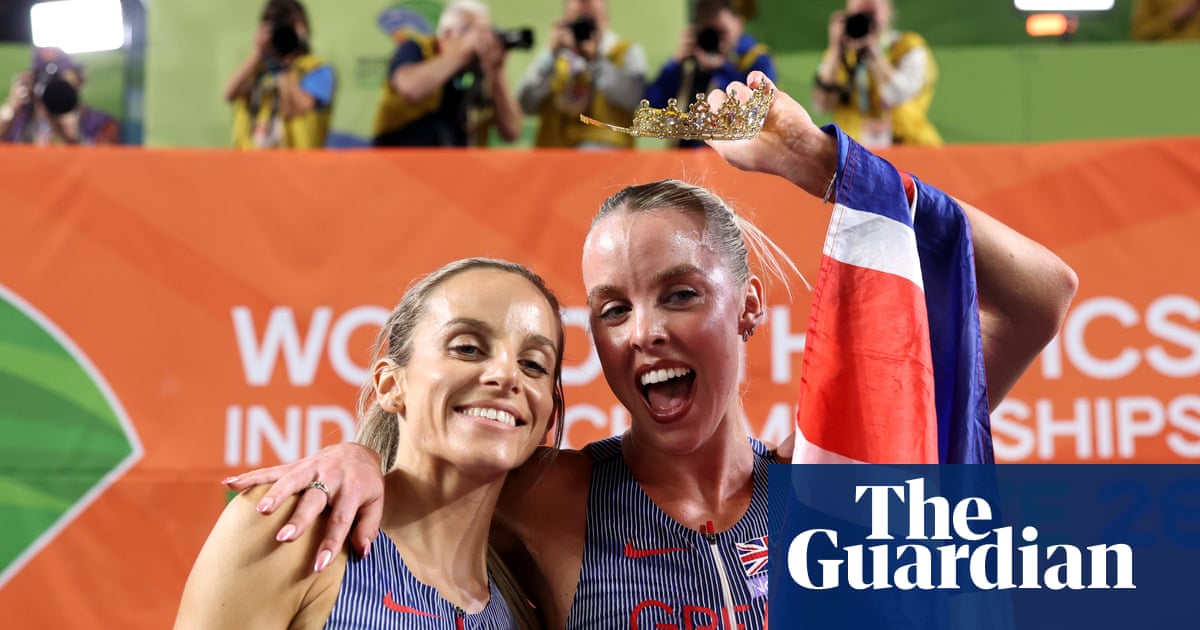
1 month agoThe one medal I don't have': confident Keely Hodgkinson targets a first world title
Yeah, training's gone really well. I'm very happy with where I am. As you get into an indoor season and you start racing and running faster and the reps get shorter and the recovery gets longer, I think you just naturally come into even more shape, which is obviously really exciting.
Skiing
fromThe Atlantic
2 months agoWhat Pressure Does to an Athlete's Body
Those of us who watch the Olympics as bystanders tend to smugly judge athletes for succumbing to pressure without understanding what we even mean by the term. The first thing to know about pressure is that it has actual physical properties. Feeling it is not a sign of a too-thin veneer of character. Pressure might as well be a snakebite, given its very real qualities in the bloodstream and how it can paralyze even the strongest legs. The way to deal with pressure, and become
Science
US news
fromwww.npr.org
1 month agoThey were led off course in a big race. But a fix is more complicated than prize money
The top three finishers in the USATF Half Marathon Championships were misdirected off course by an official race vehicle, resulting in incorrect final standings and jeopardizing their qualification for the 2026 World Road Running Championships.
Canada news
fromBlueJaysNation
1 month agoEverything is still right in front of Team Canada entering final days of pool play
Canada faces a winner-take-all matchup against Cuba on Wednesday to advance to the WBC knockout round for the first time, with their strongest roster featuring multiple major league pitchers.
fromwww.mercurynews.com
2 months agoJadin O'Brien's path: A track star gets a message, and winds up part of the US Olympic bobsled team
Jadin O'Brien thought she was being scammed. The Milan Cortina Olympics and the sport of bobsled, for that matter were not anywhere near O'Brien's radar a couple years ago, when the Notre Dame track and field star saw that someone sent her a direct message on Instagram. The message was ignored. Several months later, the same person slid into O'Brien's DMs again.
US news
fromSnowBrains
1 month agoIt's Time to Stop Debating & Start Putting the Bar Down - SnowBrains
I have evolved from someone who didn't think much of the bar except for resting my legs to thinking of it as an obvious life-saving precaution. Dr. Bourne shared several examples from Mammoth in which the bar could have saved lives, including the death of her former ski coach, who fell from a chairlift to his death, most likely from a medical event which may have been treatable.
Snowboarding
fromInsideHook
2 months agoWhat's the Point of Chasing a Plank PR?
It's just what it looks like: I time my planks then file them away, determined to last a little longer tomorrow. And sometimes I do, for several days in a row, then one day I'll collapse nearly a minute short of my personal best. I'll pound the mat like Charlton Heston at the end of Planet of the Apes, then I'll get myself together - you've got to stay cool at Equinox - and move on with my day.
Exercise
Mental health
fromBusiness Insider
2 months agoAlpine skier Mikaela Shiffrin, 30, says she worked with a psychologist to 'desensitize' herself to the Olympics
Mikaela Shiffrin desensitized herself to the Olympics through psychologist-guided mental training and environment exposure to better manage pressure and perform.
fromPsychology Today
2 months agoTips From a Psychologist Who Trains Olympic Athletes
If you're watching the Olympics this year, or have watched in the past, you've probably wondered how the top athletes in the world bolster themselves emotionally for high- stress situations, being exposed and visible to millions of viewers in difficult moments, and how they deal with failure and defeat and become resilient. Dr. Cindra Kamphoff, whose MD-level background in sports psychology, two decades of work with professional and Olympic athletics, and The High Performance Mindset podcast, has developed techniques that are helpful to people inside or outside of the sports arena.
Mental health
Skiing
fromBusiness Insider
1 month agoI'm a 2-time Olympic freeski medalist. I don't drink coffee or scroll between runs.
Olympic freestyle skier Alex Hall maintains a disciplined daily routine centered on early waking, shared team meals, and consistent training while traveling globally for competitions.
fromDefector
2 months agoThis Backward Guy Medaled | Defector
Dual moguls is new to the Olympics this year. It's head-to-head heats, with skiers facing moguls, gates, and jumps-and being judged, head-to-head, on each element for a combined score. In the men's medal rounds today, Japan's Ikuma Horishima (pictured above, sort of) had a disastrous run in his round-of-16 showdown, and somehow ended up facing the wrong way. That's an odd and very specific sort of adversity to overcome, but he did it.
Skiing
fromiRunFar
1 month ago2026 IAU 50k World Championships Results: British Sweep for Alex Milne and Naomi Robinson
Although the 4 a.m. start allowed athletes to avoid the worst of the heat and pollution levels, the air quality index was 178 at the start time, a level that is considered unhealthy, and the temperature hovered near 21 degrees Celsius (70 degrees Fahrenheit). The combination made for challenging conditions from the start.
Running
Running
fromiRunFar
1 month agoMany Small Leaps for Runnerkind: Wondering About Non-Linear Improvement in Running
Runners experience breakthrough moments where performance suddenly improves, often after returning to regular training or during consistent improvement phases, driven by accumulated physiological adaptations.
fromiRunFar
1 month agoAI-Powered Optimization: New Frontiers in Peak Running Performance
Super shoes and ultralight gear make a difference, but with new advancements in artificial intelligence (AI) that can look at our running form and compare it to the ideal, analyze our nutrition intake from a simple photo and help us plan our diets, and offer guidance on training and recovery, the interwovenness of technology and running is only set to increase.
Running
fromScience of Running
2 months agoFit and Fast: Achieving Robustness in Training
In this episode of the On Coaching Podcast, Steve Magness and Jon Marcus discuss the concept of 'fit but flat,' exploring the phenomenon where athletes excel in metabolic fitness but fail to perform competitively due to a lack of neuromuscular coordination. Using examples like middle-distance runner Ingram Brion, the hosts delve into how metabolic training alone can lead to race failures.
Running
fromiRunFar
2 months agoAbigail West and the Art of Running
I call myself an artist-athlete, because both are really important in how I live my life, though I do put "artist" first in that configuration on purpose! I've been an artist for as long as I can remember, whereas athletics came a little later, and art is a little more reliable in the sense that even when I'm injured, I can focus on my artwork.
Running
Running
fromwww.theguardian.com
1 month agoI think I could run even faster': the NZ teenager shattering athletics records
Sam Ruthe, a 16-year-old New Zealand runner, became the youngest person to break the four-minute mile and subsequently ran the fastest indoor mile ever by an athlete under 18 at 3:48.88.
[ Load more ]