#crypto-regulation
#crypto-regulation
[ follow ]
#clarity-act #stablecoins #digital-assets #sec #bitcoin #cftc #blockchain #japan #coinbase #investor-protection
#clarity-act

US politics
fromFortune
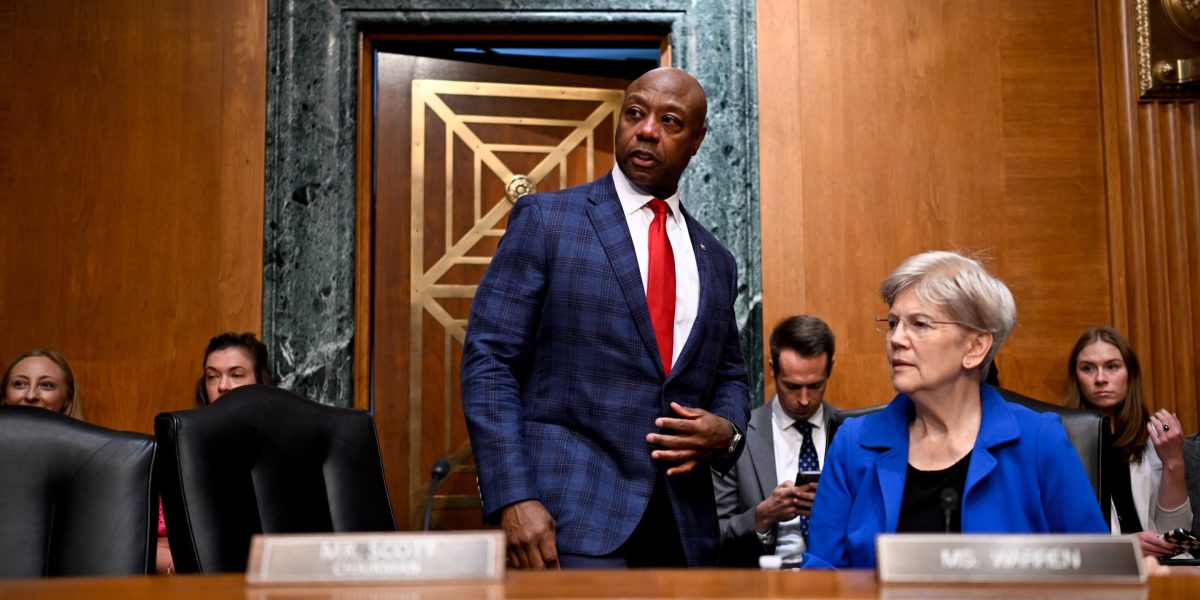
2 months agoLandmark crypto bill clears Senate hurdle but Democrats withhold support over lack of 'gryfto' rules to prevent Trump family conflicts of interest | Fortune
Senate Agriculture Committee advanced the Clarity Act with only Republican votes; the broad crypto regulatory bill still needs Senate Banking approval and faces bipartisan resistance.


#sec


US politics
from24/7 Wall St.
3 months agoSEC's Caroline Crenshaw Exit Fuels Bitcoin and XRP Rally-Why the All-Republican Panel Could Push Crypto Higher in 2026
The SEC's last Democratic commissioner departed Jan 2, 2026, enabling an all-Republican panel to pursue clearer crypto rules and softer enforcement.



#japan
Cryptocurrency
fromnews.bitcoin.com
2 weeks agoWhat Japanese Regulators Are Worried About Now: The Oversight Blind Spots Shaping Japan's Crypto Policy Shift
Japan's FSA signals tougher regulations for crypto markets to enhance user protection and address risks associated with speculative assets like meme coins.




Cryptocurrency
fromLondon Business News | Londonlovesbusiness.com
1 month agoBitcoin steady as ETF demand counters headwinds - London Business News | Londonlovesbusiness.com
Bitcoin trades near $70,000 amid consolidation, facing headwinds from Middle East tensions and rising Treasury yields, but supported by institutional inflows and positive regulatory developments.
Cryptocurrency
from24/7 Wall St.
1 month agoRegulation Catalysts Would Completely Reshape BlackRock's Ethereum ETF
The iShares Ethereum Trust ETF (ETHA) provides simplified Ethereum exposure through standard brokerage accounts with BlackRock custody, but performance depends entirely on Ethereum's price movements and U.S. regulatory developments.






fromwww.theguardian.com
2 months agoHow cryptocurrency's second largest coin missed out on the industry's boom
Ryan, who had worked for seven years at the Ethereum Foundation (EF), Ethereum's de facto governing body, suggested that Ethereum could be on the cusp of an era-defining shift. Since its founding in 2014, the foundation had prioritized technical upgrades and had avoided centralizing power while its user base was growing, but Ethereum had now grown up, and the cryptocurrency world around it had grown up, too.
US politics
fromCointelegraph
2 months agoWhat Dubai's Ban on Monero and Zcash Signals for Regulated Crypto
Dubai has spent years positioning itself as a hub for regulated digital finance. Yet its restrictions on privacy coins such as Monero ( XMR) and Zcash ( ZEC) clarify where the emirate is drawing the line between innovation and compliance. In January 2026, the Dubai Financial Services Authority (DFSA) prohibited anonymity-focused virtual currencies like Monero and Zcash from use on licensed venues within the Dubai International Financial Centre (DIFC).



fromLondon Business News | Londonlovesbusiness.com
2 months ago2026 market outlook: An analysis of the top eight Bitcoin cloud mining platforms and WPA Hash's competitive position - London Business News | Londonlovesbusiness.com
Bitcoin cloud mining represents a critical stage in the year 2026. The escalating cost of hardware, surging power expenses and mounting regulatory transparency are transforming the manner in which investors engage in Bitcoin mining. Complex physical infrastructure is no longer managed by them, but it is replaced by cloud mining platforms, which are simple, transparent, and predictable returns. With the increasing competition, platforms whose infrastructure is robust, contracts are clear, and payouts are reliable are the only ones that stand to win.
Venture
fromCointelegraph
3 months agoWhat the GENIUS Act Was Meant to Stop-and the Stablecoin Loophole Banks See
The GENIUS Act was designed to keep stablecoins as payment tools rather than savings products. As a result, it bans issuers from paying interest or yield to stablecoin holders. Community banks argue that a loophole exists because exchanges and affiliated partners can still offer rewards on stablecoin balances, even if the issuer itself does not pay yield. Smaller banks are more concerned than large banks because they rely heavily on local deposits.
US politics
fromTheregister
3 months agoCrypto outfits in India must get customer locations, selfies
The revised guidance requires registered crypto outfits (REs) to implement strict client due diligence measures, at least for new customers, that require them to collect details of customers' identity documents, bank account details, occupation, and even income range. The regulation also requires REs to collect "Latitude and longitude coordinates of the onboarding location with date and timestamp along with IP address" and to secure a selfie of new customers to prove they are alive and a real person.
World news
fromBitcoin Magazine
3 months agoSenate Republicans Make 'Closing Offer' On Crypto Bill
The document, described as a "closing offer and state of play," includes more than 30 revisions to Title I, which governs the legal classification of digital assets, as well as two new titles focused on investor protections and combating illicit finance, according to POLITICO. The proposal was sent to Democratic negotiators by Scott and fellow GOP senators Cynthia Lummis (R-Wyo.), Bill Hagerty (R-Tenn.), and Bernie Moreno (R-Ohio).
US politics
from24/7 Wall St.
4 months agoCircle Internet Wins Crypto Bank Charter. Is It a Buy Again?
In a major regulatory win for the cryptocurrency sector, the Office of the Comptroller of the Currency (OCC) has granted conditional approval for Circle Internet Group ( ) and Ripple to establish new national trust banks. The OCC also conditionally approved Paxos, BitGo, and Fidelity Digital Assets to convert their existing state trust licenses into national charters. These five approvals mark a significant step toward integrating digital asset firms into the federal banking system.
Cryptocurrency
fromBitcoin Magazine
4 months agoPakistan Rolls Out 2 Bold Crypto Exchange Deals
According to Pakistan's finance ministry, the MoU with Binance will allow the government to assess tokenising sovereign bonds, treasury bills, and commodity reserves - including oil, gas, and metals - as it seeks new tools to boost liquidity and expand market reach. Tokenization would create digital representations of real-world assets on blockchain networks, potentially widening investor access and supporting secondary-market efficiency.
World news
fromBitcoin Magazine
4 months agoItaly Launches Review Of Crypto Safeguards Due To Risks
The review will focus on safeguards for both direct and indirect investments in crypto-assets by retail investors, regulators added. The decision came during a meeting of the Committee for Macroprudential Policies. The committee includes the heads of the Bank of Italy, market watchdog Consob, insurance and pension regulators, and the Treasury's director general, according to Reuters reporting. Committee members warned that risks from crypto-assets could rise. Growing connections between crypto and the wider financial system, along with inconsistent international regulations, could heighten vulnerabilities, they said.
Miscellaneous
fromBitcoin Magazine
4 months agoCrypto Targeted: House Confirms Operation Choke Point 2.0
While many of the findings - such as the Fed, FDIC, and OCC pressuring banks away from crypto through informal guidance, and the SEC's "enforce first, make rules never" approach - were previously known, the report now places them squarely in the Congressional record. The report identifies at least 30 entities that were effectively "debanked" through informal regulatory guidance and supervisory pressure. These businesses, the Committee claims, were forced out of the U.S. banking system without formal enforcement actions.
US politics
Cryptocurrency
fromFinbold
5 months agoCrypto Content Creator Campus (CCCC) 2025 Concludes in Lisbon: A Look at the Future of Influence, Authenticity, and Next-Level Monetisation
AI-driven tools and creator-first affiliate strategies are transforming crypto content monetisation, with long-term, compliant creators poised to lead Web3 adoption.
US politics
fromFortune
5 months agoInternational laws need to be updated for a 'machine-governed economic system,' says CEO of stablecoin giant Circle | Fortune
Governments must overhaul legal systems within five to ten years to regulate corporations increasingly run and governed by machines using AI and blockchain.
fromBitcoin Magazine
5 months agoHouse Democrat Targets President Trump With Bill To Ban Lawmakers From Owning Crypto
The proposal follows President Donald Trump's pardon of Binance founder Changpeng Zhao and seeks to eliminate what Khanna calls "blatant corruption" at the intersection of politics and crypto. "The pardon of Zhao is corrupt," Khanna said on MSNBC. "You've got a foreign billionaire engaged in money laundering and financing terrorism, who supports the president's son's cryptocurrency firm, and then the president pardons him. This is corruption in plain sight."
US politics
World news
fromTechCrunch
6 months agoIndia cracks down on 25 crypto exchanges including BingX, LBank, CoinW over compliance failures | TechCrunch
Indian authorities are targeting 25 offshore crypto exchanges for failing to register and comply with anti-money laundering rules, ordering apps and websites withdrawn from India.
[ Load more ]