#department-of-energy-loan
#department-of-energy-loan
[ follow ]
Online Community Development
fromwww.housingwire.com
4 days agoCDFIs could draw institutional capital for climate projects
There is a strong desire for collaboration between institutional investors and community development financial institutions, but barriers exist due to perceived risks and lack of standardization.



Science
fromNextgov.com
4 weeks agoEnergy opens applications for $293 million in research funding
The Department of Energy is allocating $293 million to fund interdisciplinary teams using artificial intelligence to solve critical challenges in advanced manufacturing, biotechnology, critical materials, nuclear energy, and quantum information science.
fromEarth911
4 weeks agoShould You Go Solar In 2026?
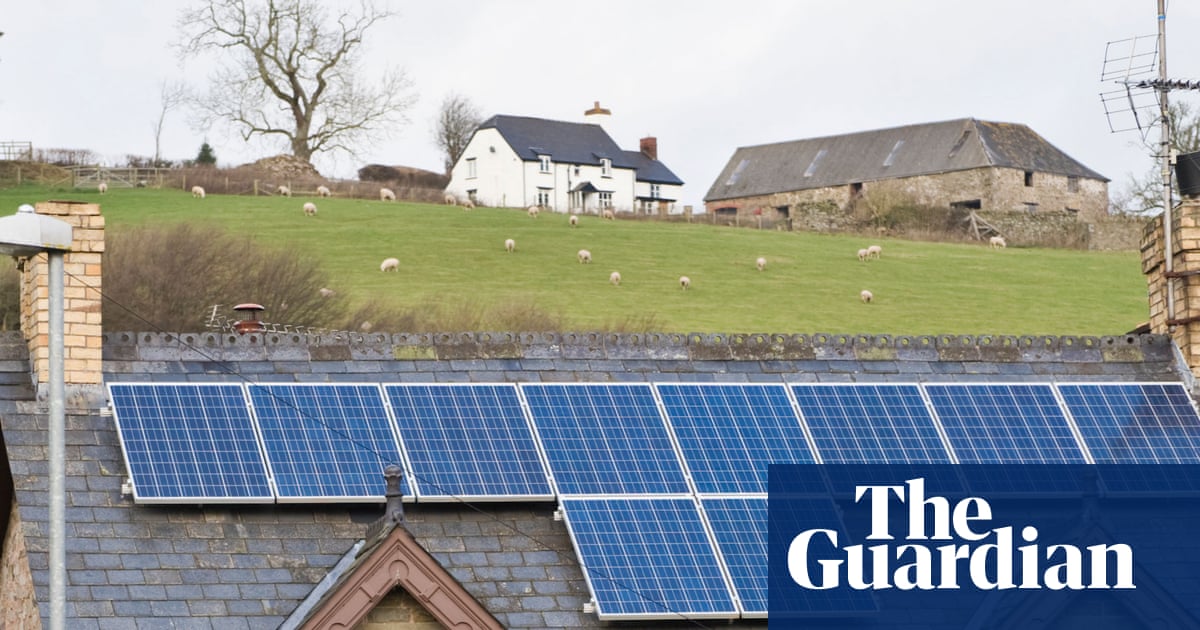
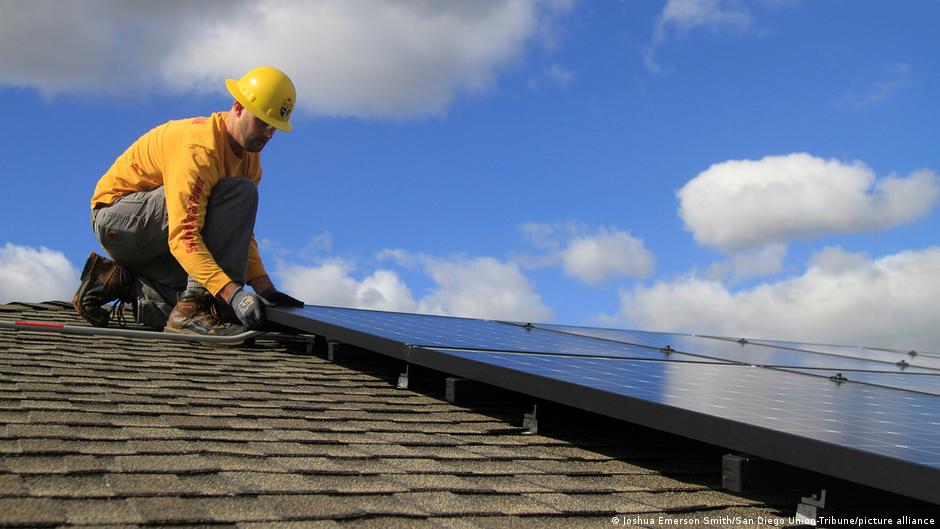
The most consequential shift for anyone considering rooftop solar in 2026 is the expiration of Section 25D, the Residential Clean Energy Credit. That 30% credit, which was worth up to $9,000 on a $30,000 system, is no longer available for home solar installations. The One Big Beautiful Bill, signed July 4, 2025, accelerated the phase-out that the Inflation Reduction Act had originally extended through 2034.
SF real estate
NYC real estate
fromCity Limits
4 weeks agoMore NYC Households to Qualify for Energy Efficiency Upgrades Under Tweaked State Program
New York State adjusted Empower+ income eligibility criteria to increase energy-saving retrofit projects in city households, addressing previous underrepresentation where only 7 percent of projects occurred in the five boroughs since 2010.
US news
fromwww.npr.org
1 month agoEasy-to-use solar panels are coming, but utilities are trying to delay them
Plug-in solar panels that connect to standard outlets are gaining traction in the U.S. as a cost-effective alternative to traditional rooftop solar, though utility opposition based on safety concerns is slowing legislative adoption.
UK politics
fromwww.bbc.com
3 weeks agoGreens push for billions to be spent on energy support if bills rise
The Green Party leader calls for the government to set aside billions of pounds to support households against potential energy bill rises from Middle East conflict, funded through capital gains tax increases and energy firm profit taxes.





fromNextgov.com
1 month agoEnergy announces $352M in funding for frontier science
For over 15 years, the EFRC program has provided a transformational research environment that has brought together the strengths of our National Laboratories and universities to accelerate discovery, develop innovative tools, and train the next generation of the American energy science workforce. The EFRCs will continue to play a vital role in bridging disciplines and institutions, advancing foundational science and strengthening America's leadership to push forward scientific frontiers critical for new energy technologies.
Science
fromFortune
1 week agoCountries are turning to 'structurally more resilient' energy sources as oil and gas crisis deepens, UN renewables chief says | Fortune
"A more decentralized energy system, with a growing share of renewables and more market players, is structurally more resilient. Countries that invested in the energy transition are weathering this crisis with less economic damage, as they boost energy security, resilience and competitiveness."
Environment
Toronto startup
fromBoston.com
1 month agoLargest energy storage facility statewide gets approved for construction in Everett
Jupiter Power secured state approval to build Massachusetts's largest battery energy storage system on a former ExxonMobil tank farm site in Everett, using lithium-ion technology to store excess grid energy.


fromWIRED
2 weeks agoSenators Demand to Know How Much Energy Data Centers Use
"If we're worried about ratepayers paying data-center energy costs, then knowing how much energy data centers are using is a necessary part of that calculation. It's not the only piece of information you need, but it certainly is a piece of the puzzle."
Environment
fromLos Angeles Times
1 month agoCalifornia sues Trump administration over billions in canceled clean energy funding
These aren't optional programs - these are investments approved by bipartisan majorities in Congress, and the President doesn't get to cancel them simply because he disagrees with them," Bonta told reporters Wednesday.
US politics
New York City
fromwww.amny.com
2 months agoNational Grid and National Grid Foundation announce $5M in energy affordability and efficiency grants for New York households and small businesses
National Grid and the National Grid Foundation committed $5 million to statewide programs providing winter bill assistance, efficiency upgrades, and energy education for vulnerable New Yorkers.
Alternative transportation
fromHigh Country News
1 month agoWhy Western states are pushing for plug-in solar - High Country News
Plug-in solar panels, common in Germany, are gaining legislative support across 27 U.S. states to enable affordable household solar energy generation without regulatory barriers.
fromwww.npr.org
1 month agoTax credits for solar panels are available, but the catch is you can't own them
With these arrangements sometimes called subscriptions or power purchase agreements (PPAs), a third party owns the panels and leases them back to the homeowner. But last summer, President Trump signed legislation that ended federal tax incentives that had cut at least 30% off the price of purchased panels. Similar incentives for leased panels remain.
US news
US politics
fromThe Verge
1 month agoTrump claims he'll make data centers pay for their own power supply
Trump announced a 'rate payer protection pledge' with major tech companies requiring them to build, buy, or pay for electricity generation for their AI data centers to address rising electricity costs.
fromTheregister
2 months agoUS wants states to host nuclear sites as safety rules shrink
The DOE issued a Request for Information (RFI) on Wednesday, seeking responses from states that may be interested in hosting the campuses, which will operate a "full‑cycle nuclear ecosystem." In practice, this means these sites will be expected to provide facilities for atomic waste reprocessing and disposal, in addition to fuel fabrication and enrichment. They may also serve as locations for nuclear reactors and co‑located datacenters powered by them.
US politics
fromCity Limits
2 months agoOpinion: For Affordable Clean Energy at Home, New York Needs Solar ASAP
We can keep tethering ourselves to volatile geopolitics, to fossil fuel prices we'll never control, and to an energy system built on instability and extraction-or we can choose the alternative that's right in front of us: harnessing the sun here at home on our own rooftops. By rapidly accelerating local solar in New York, we can build power right here in our communities, beyond the reach of coups, cartels, and commodity shocks.
Environment
fromwww.aljazeera.com
2 months agoRenewables muscle fossil fuels out of EU electricity market, says research
Solar and wind power provided more electricity than coal and gas last year, leading a global trend, said think tank Ember. Solar and wind power outperformed fossil fuels in the European Union for the first time last year, a new high watermark on Europe's transition to green and autonomous energy. The two sources of energy generated 30 percent of EU electricity, compared with 29 percent for coal and gas, Ember, a global energy think tank, said on Thursday in its European Electricity Review.
Environment
fromFast Company
2 months agoWhy your electric bill is so high-and what could bring down rates
In a Berkeley National Lab report published last year that looked at trends in electric rates from 2019 to 2024, researchers found that states that had the biggest growth in electricity demand-from customers like data centers-actually saw costs go down. That's because the electricity market isn't just about supply and demand; it's expensive to maintain equipment, and if costs can be spread out among more customers, everyone pays less.
Environment
Environment
fromLondon Business News | Londonlovesbusiness.com
2 months agoDo government grants cover ground source pumps? - London Business News | Londonlovesbusiness.com
Ground source heat pumps cost £14,000–£25,000 but deliver 400%+ efficiency; UK funding includes a £7,500 Boiler Upgrade Scheme and full ECO4 support for eligible households.
[ Load more ]