#electric-trains
#electric-trains
[ follow ]
#electric-vehicles #public-transport #transportation #infrastructure #sustainability #electric-buses

fromSustainable Bus
19 hours agoMarket, policy and operations in focus for zero-emission intercity buses, at Sustainable Bus Tour session in Bus2Bus - Sustainable Bus
Intercity bus transport in Europe is characterized by a fragmented operator landscape, including a high number of small and medium-sized companies, alongside less standardized operational patterns and frequent dual-use vehicle profiles.
Alternative transportation
fromianVisits
5 hours agoSeven shades of green: the DLR's quietly complicated network
The DLR first opened in 1987, it had two lines: Red - Stratford to Island Gardens and Green - Tower Gateway to Island Gardens. Within just a few years, as the DLR extended out to Beckton and later Lewisham, they turned the whole map green.
London
London startup
fromLondon Business News | Londonlovesbusiness.com
4 days agoHow digital technology is making road freight operations more efficient - London Business News | Londonlovesbusiness.com
Digital technologies enhance operational efficiency and transparency in UK logistics, addressing rising costs and customer expectations.
fromLondon Business News | Londonlovesbusiness.com
4 days agoUK car industry warns EU plan could hit EV trade and jobs - London Business News | Londonlovesbusiness.com
The Society of Motor Manufacturers and Traders is calling for UK-built vehicles, components and batteries to be granted equivalent status to EU-made products under the proposed 'Made in Europe' framework, arguing that the current draft risks undermining a deeply integrated cross-border industry.
Europe politics
#electric-vehicles

Alternative transportation
fromSustainable Bus
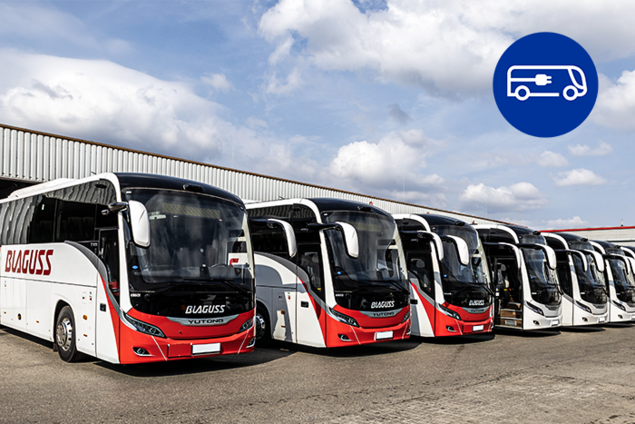
23 hours agoAustrian carrier Blaguss introduces 12 Yutong electric coaches alongside fleet-wide solar rollout - Sustainable Bus
Blaguss has introduced 12 battery-electric coaches as part of its 'Way to Zero' program, focusing on electrification and solar integration.
fromTNW | Investors-Funding
1 week agoEurope's most important industrial decarbonisation project gets a lifeline
Stegra has agreed in principle on €1.4 billion in new financing to complete the construction of what would be the world's first large-scale green steel plant, located in Boden in northern Sweden.
Fundraising

Alternative transportation
fromYanko Design - Modern Industrial Design News
4 days agoThis Cybertruck-Inspired Electric Trike Solves Urban Delivery Problems Tesla Never Bothered With - Yanko Design
The Scooter P-Two addresses urban mobility challenges with a practical design for transporting goods and passengers in dense environments.

fromTravel + Leisure
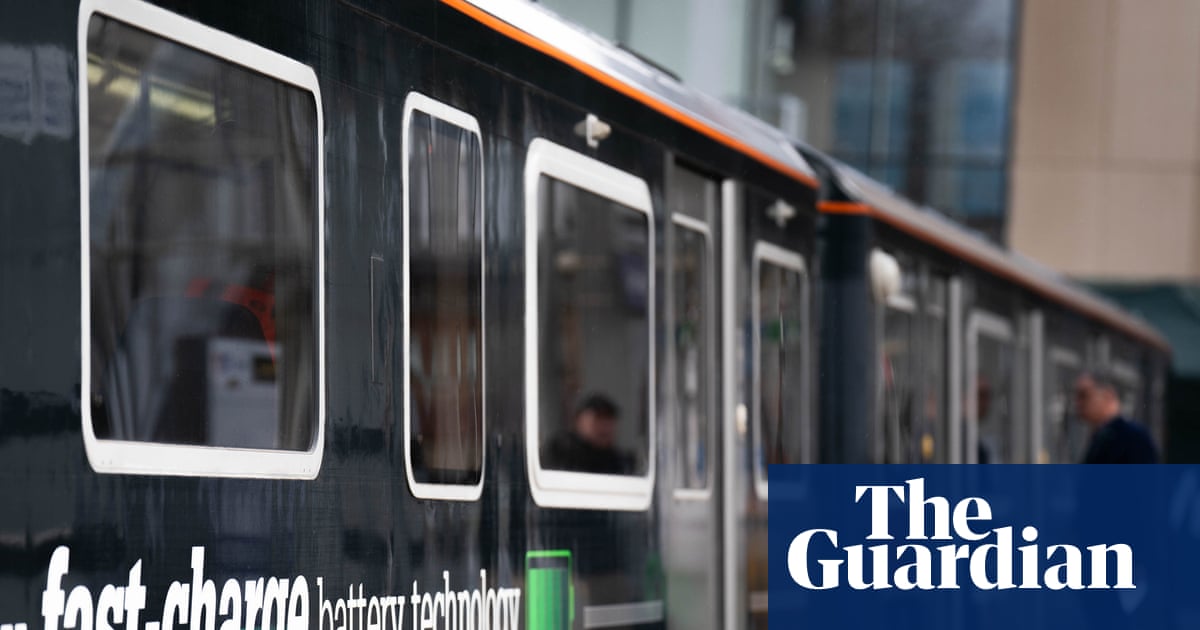
2 weeks agoAmerica's Fastest Trains Are Here-but Rail Experts Say High-speed Travel Is Still Years Away
True high-speed rail in the U.S. is still years away despite recent advancements and public support. Rail experts emphasize that actual high-speed rail requires dedicated infrastructure and faster trains, similar to systems in Europe and Asia.
Alternative transportation
fromSustainable Bus
2 months agoEvolution: the practical path to autonomous buses - Sustainable Bus
It's tempting to frame autonomous driving as a single leap. In public transport, adoption tends to be incremental - because the system is built for reliability, and new capabilities have to fit into daily operations without disrupting service. That is why a practical strategy is evolution, not revolution: introduce autonomy in a defined domain, learn safely in real operations, and expand capability step-by-step.
Artificial intelligence
Berlin
fromwww.thelocal.de
1 month agoDeutsche Bahn expands high speed train services between Cologne and Brussels
Deutsche Bahn expands cross-border rail services to Belgium with additional high-speed ICE trains from Cologne to Brussels, new airport connections, and weekend services to coastal and tourist destinations.
fromianVisits
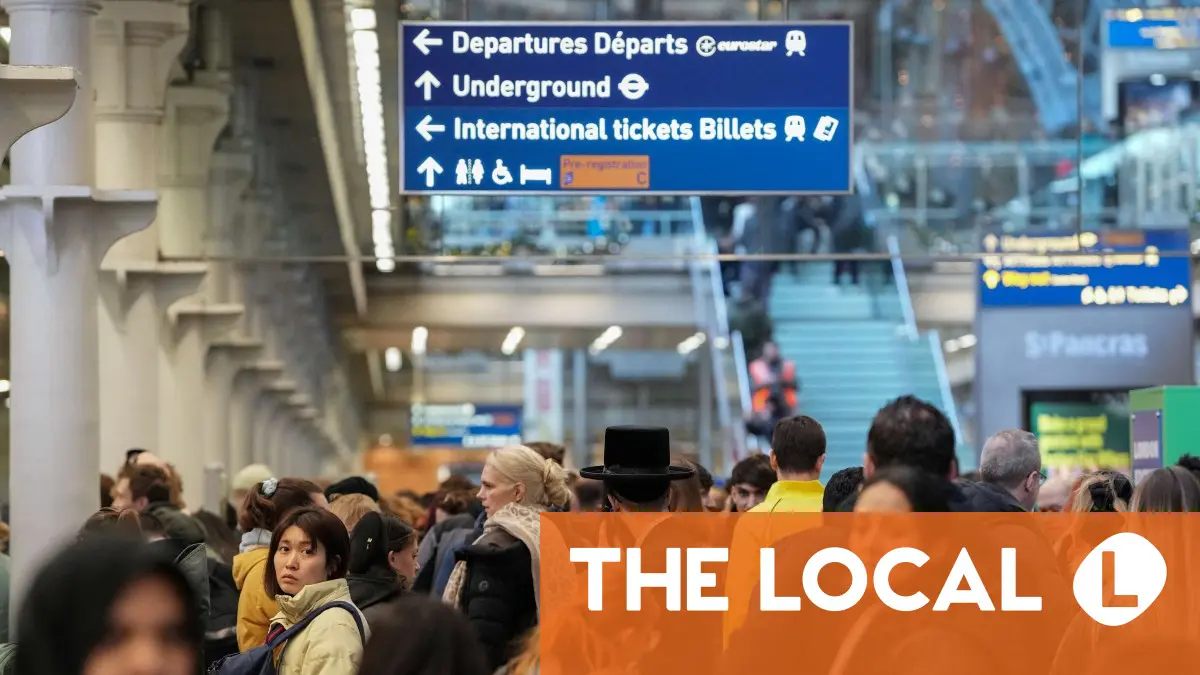
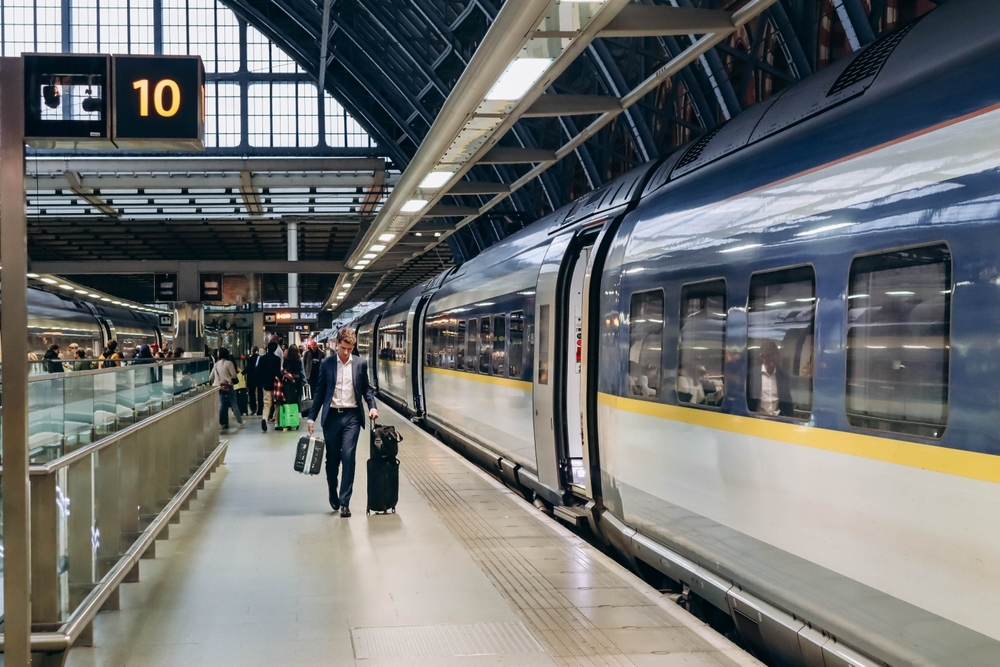
1 month agoTfL taps our largest nuclear fusion reactor to power the London Underground
TfL currently uses about 1.6 terawatt hours (TWh) of electricity each year, making it the largest single electricity consumer in London. Once operational, the solar installations could supply up to 65,000 megawatt hours (MWh) of renewable electricity each year - equivalent to roughly two-thirds of the Victoria line's annual power consumption.
London
Miscellaneous
fromTime Out London
1 month agoA futuristic high-speed travel project could link London and Paris in 20 minutes
Engineers in the Netherlands are developing hyperloop technology that could enable travel between London and Paris in 20 minutes at speeds of 600 miles per hour using magnetically suspended pods.
Alternative transportation
fromSustainable Bus
3 weeks agoHiger posts +14k units sold in 2025 as it expands European cooperation and prepares new e-bus launch - Sustainable Bus
Higer leads in new energy bus sales, focusing on European market expansion and innovative technology for efficiency and reliability.
Travel
fromTravel + Leisure
2 months agoThis Country Has the Safest Public Transportation System in the World-and No, It's Not in Europe or North America
Japan ranks first for transportation safety due to advanced infrastructure, rigorous protocols, cutting-edge technology, and a culture prioritizing order and responsibility.
Alternative transportation
fromSustainable Bus
3 weeks agoZero-emission buses move beyond cities: intercity transition in Sustainable Bus' session at BUS2BUS - Sustainable Bus
Electrification of intercity and coach segments in Europe is advancing, requiring new infrastructure and operational strategies for zero-emission mobility.
Alternative transportation
fromSustainable Bus
4 weeks agoBEV buses to dominate, delivery capability to decide market shares. Martin Schmitz outlines VDV's view - Sustainable Bus
Decarbonisation of public transport and integration of autonomous technologies are key challenges for the industry in Germany.
Cars
fromSustainable Bus
2 months agoZF to unveil modular electric bus drivetrains at Mobility Move 2026 Berlin - Sustainable Bus
ZF showcases modular electric drivetrains, lightweight axle models, ADAS and digital fleet services for more efficient, lower-maintenance, emission-free bus operations at Mobility Move 2026.
Alternative transportation
fromSustainable Bus
1 month agoSolaris battery retrofit offer: 170 e-buses in pipeline, 1,300 targeted - Sustainable Bus
Solaris launched a battery retrofit programme in December 2025 for over 1,300 early-generation electric buses delivered between 2013 and 2019, with 170 vehicles already undergoing retrofits across Europe.
fromSustainable Bus
1 month agoThe first of 121 new CAF Urbos trams arrives in Rome for ATAC
The first of the 121 Urbos models that CAF will deliver to ATAC has reached the Italian capital and will transform the city's rail-based public transport. The total investment amounts to more than €450 million. Numbered in the 9300 series and measuring 33.5 meters in length, the new vehicle will be able to carry up to 215 passengers, including 68 seated and two passengers with reduced mobility.
Alternative transportation
fromSustainable Bus
1 month agoKonvekta to present CO-based thermal management systems for electric buses at mobility move 2026 - Sustainable Bus
Heating, cooling, and battery temperature control are among the biggest energy consumers in electric buses today - and thus have a direct impact on range, availability, and operating costs.
Alternative transportation
Alternative transportation
fromSustainable Bus
2 months agoItaly becomes the fourth market to deploy Hitachi Energy's flash charging technology for e-buses - Sustainable Bus
Hitachi Energy's Grid-eMotion Flash ultra-fast charging will start operating in Italy in 2026, enabling opportunity charging for electric buses in Genoa and Vicenza.
Alternative transportation
fromSustainable Bus
1 month agoFrom e-coaches to UITP insights on MENA, Altas industrial strategy and Europe's trolleybus revival (and more) in new Sustainable Bus magazine - Sustainable Bus
Europe's e-bus sector achieved over 9,000 registrations in 2025 with 40% growth, while the bus and coach industry undergoes rapid transformation driven by electrification, battery strategies, charging infrastructure, and emerging driverless technologies.
[ Load more ]