#female-muslim-singers
#female-muslim-singers
[ follow ]
#ramadan #iran #iran-womens-football #eid-al-fitr #gaza #social-justice #gaza-conflict #national-anthem-protest
Independent films
fromwww.theguardian.com
2 weeks agoQ review freedom, lies and transgressions in emotional fallout from a secretive Muslim women's movement
Jude Chehab's documentary reveals her family's complex relationship with the al-Qubaysiat, highlighting themes of submission, liberation, and rediscovery of voice.
Arts
from48 hills
3 weeks agoFor Iranian artist Shiva Ahmadi, 'ornamentation becomes a form of resistance' - 48 hills
Shiva Ahmadi's interdisciplinary art practice channels personal experiences of displacement, political upheaval, and immigrant anxiety into visually seductive works that address brutal global issues affecting marginalized communities.
Berlin food
fromwww.aljazeera.com
3 weeks agoBaking in rubble: Gaza woman keeps Eid traditions alive despite shortages
Gazans persist in baking traditional Eid cookies despite border closures, ingredient shortages, and lack of cooking gas, maintaining cultural traditions while generating income for families.
fromwww.aljazeera.com
1 month agoQuran echoes loudly as Palestinian reciters gather in Gaza
Two hundred and fifty-six Quran memorisers—Palestinians who have committed the entire holy book to memory—sat in the place while companions beside them listened attentively, following each word carefully to ensure the recitation remained flawless. The gathering, titled Safwat Al-Huffaz—The Elite of Quran Memorisers, has become a special collective way of observing Ramadan in Gaza.
World news
Women in technology
fromwww.theguardian.com
1 month agoShahrnush Parsipur: The women of Iran will cause the fall of the Islamic Republic'
Shahrnush Parsipur's banned novella Women Without Men, longlisted for the 2026 International Booker Prize, uses magical realism to condemn the policing of women's bodies in Iran through five women's stories converging in a garden refuge.
Music production
fromwww.theguardian.com
1 month agoIranians embrace anthem by AI singer created by UK-based, Iran-born artist
An AI-generated singer named Nava created by Iranian-origin artist Farbod Mehr has become the voice of Iranian resistance, with her songs gaining 13 million Instagram views amid protests and military conflict.
Music
fromwww.theguardian.com
1 month agoMy family was threatened multiple times': Arab-American rockers Prostitute on confronting an Islamophobic US
Prostitute's Moe Kazra inhabits post-9/11 Arab vilification through industrial punk fusion, reclaiming dehumanizing stereotypes while exploring Dearborn's misrepresented Arab-majority community.
Berlin music
fromwww.theguardian.com
4 weeks agoPeople say: be quiet and make your music': avant-pop star Mary Ocher on her vociferous politics and leaving Israel behind
Artist Mary Ocher draws parallels between 1930s fascism and contemporary political repression, naming her album Weimar to reflect rising authoritarianism and deportations of EU citizens for pro-Palestine activism in Germany.
#iran-womens-football

World news
fromwww.bbc.com
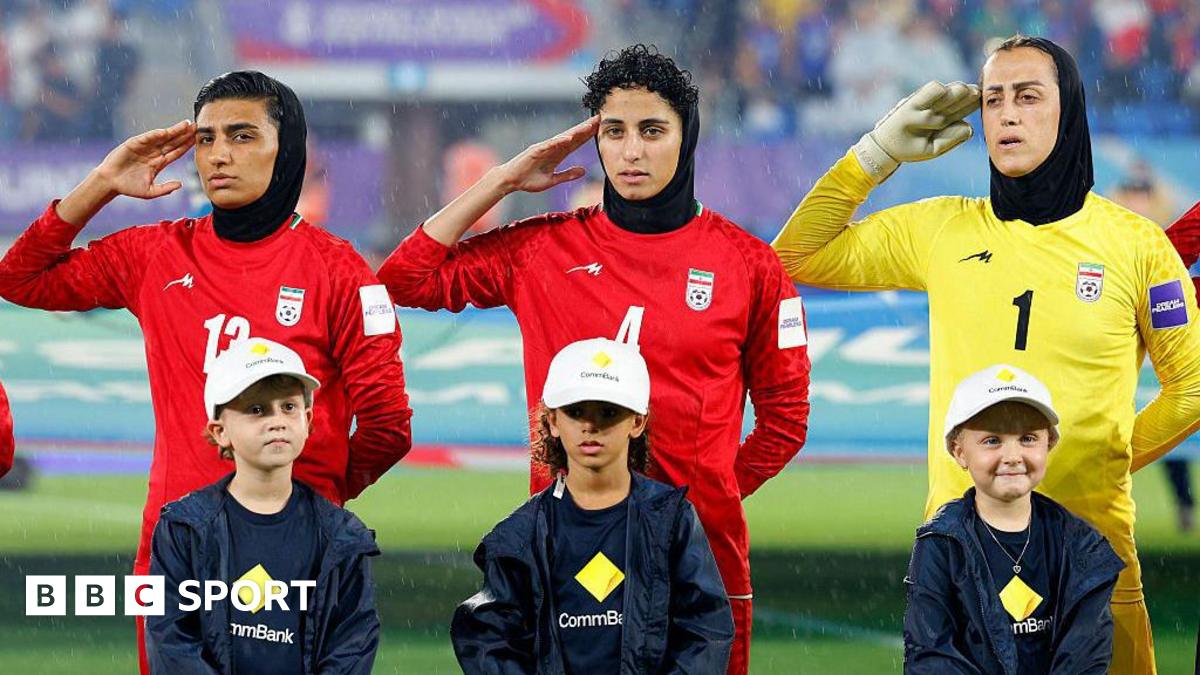
1 month ago'Iran's women are heroes - they want to be free'
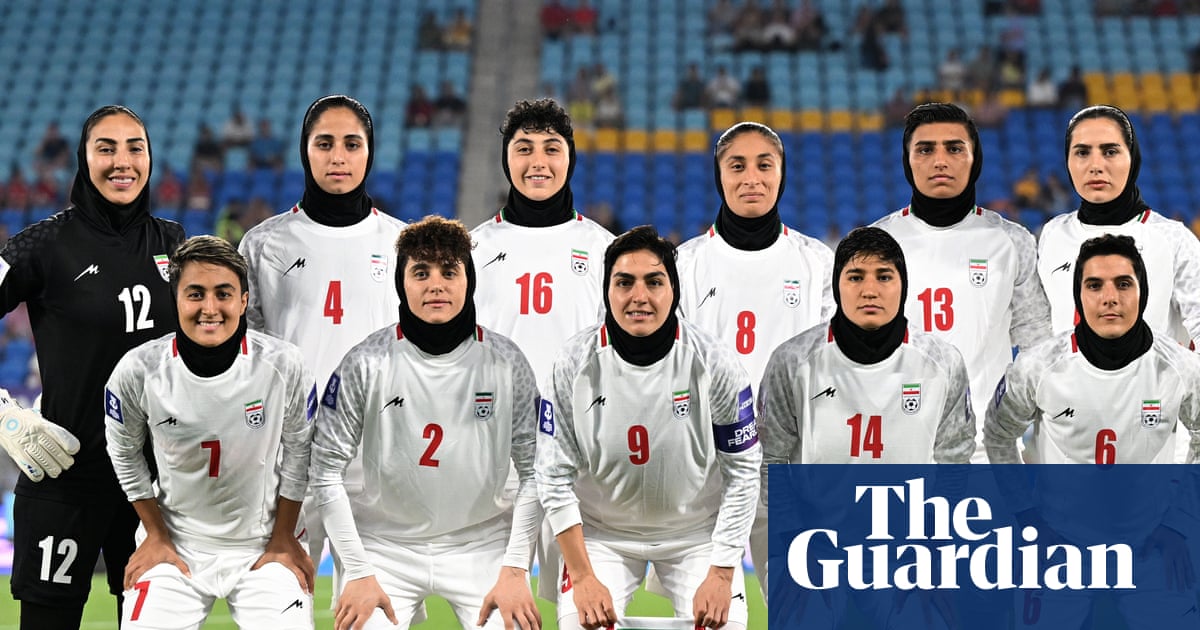
Iran's women's football team declined to sing the national anthem at the Asian Cup amid escalating military conflict and domestic unrest, creating immense pressure on players caught between government expectations and public sentiment.
Women
fromwww.aljazeera.com
1 month agoIran women's football team salute, sing national anthem in Asian Cup match
Iran's women's football team sang their national anthem before their Australia match after remaining silent in their opening game, amid ongoing conflict and difficulty contacting families back home.
Women
fromwww.theguardian.com
1 month agoIran's women footballers faced an impossible choice, but we must not romanticise what they are going through | Shiva Mokri and Moones Mansoubi
Iranian women's football players' silent protest during the national anthem represents decades of feminist struggle and carries life-altering consequences regardless of whether they stay abroad or return home.
fromwww.theguardian.com
1 month agoMy cultural awakening: a Rihanna song showed me how to live as a gay man in Iran
My parents fell in love with the Islamic Revolution when I was a baby and welcomed life under its strict religious rules. The Ayatollah's face stared down from the walls at home, a daily reminder of what was expected and what was forbidden. This included being gay, but by my teenage years I knew I was different from my peers, and began hiding my sexuality from my parents and the world outside.
LGBT
Writing
fromKqed
1 month agoA Glimpse of Iran Through the Eyes of its Artists and Journalists
Iranian-American artists and writers explore diaspora, identity, and historical trauma through poetry, fiction, and documentary, examining the lasting impact of political upheaval and U.S. intervention on Iranian communities.
LGBT
fromPinkNews | Latest lesbian, gay, bi and trans news | LGBTQ+ news
1 month agoTrans Muslim woman slams anti-trans Ramadan abuse
Trans Muslim content creator Faye Kingston practices Ramadan openly despite receiving hateful online comments, asserting her faith and identity are personal matters between her and God.
fromwww.aljazeera.com
1 month agoIraqi women's rights activist Yanar Mohammed killing spurs call for justice
We at the Organisation for Women's Freedom in Iraq condemn in the strongest terms this cowardly terrorist crime, which we consider a direct attack on the feminist struggle and the values of freedom and equality.
Women in technology
fromHyperallergic
2 months agoQueer Arab Artists on Their Own Terms
"The show is about giving the pen back to the writer, giving the paintbrush back to the artist, during this time of genocide," the Ridikkuluz told Hyperallergic in an interview at the gallery. "And when there's been so much censorship, these are artists that might not have been able to do this anywhere else."
Arts
fromwww.aljazeera.com
2 months agoSuper Saliha
The moving story of a Tunisian man who refuses to let cancer define his mother's life and turns her treatment into a celebration of love, joy and resilience. When Tunisian TV host Hassen becomes a full-time caregiver for his mother Saliha, dying of lung cancer, their home and hospital visits become the backdrop for an intimate family love story. This observational documentary follows them through birthday celebrations, 4am medication, difficult medical consultations and quiet, emotional moments together.
Film
fromFrenchly
2 months agoThe Rise of Francophone Female Rappers - Frenchly
Rap music has long been framed as a genre of excess: too loud, too violent, too vulgar. From its beginnings, it has been associated with anger, confrontation, and a form of hypermasculinity that leaves little room for alternative expressions. In France especially, rap has often been perceived as the voice of male youth from working-class neighborhoods, carrying narratives of struggle, rivalry, and domination.
Music


fromThe Atlantic
2 months agoProtest Concerts Are an American Tradition. The Gaza Ones Have Been Rather Quiet.
In early January, at the Shrine Auditorium in Los Angeles, a concert benefit for Palestine and Sudan conjured all the fury of an acoustic night at the local coffee shop. Musicians played stripped-down songs on a stage decorated with rugs, floor lamps, and couches. Members of the audience, mostly 20-somethings and teens, leaned in and filmed intimate performances by their favorite cult artists.
Music
World news
fromwww.theguardian.com
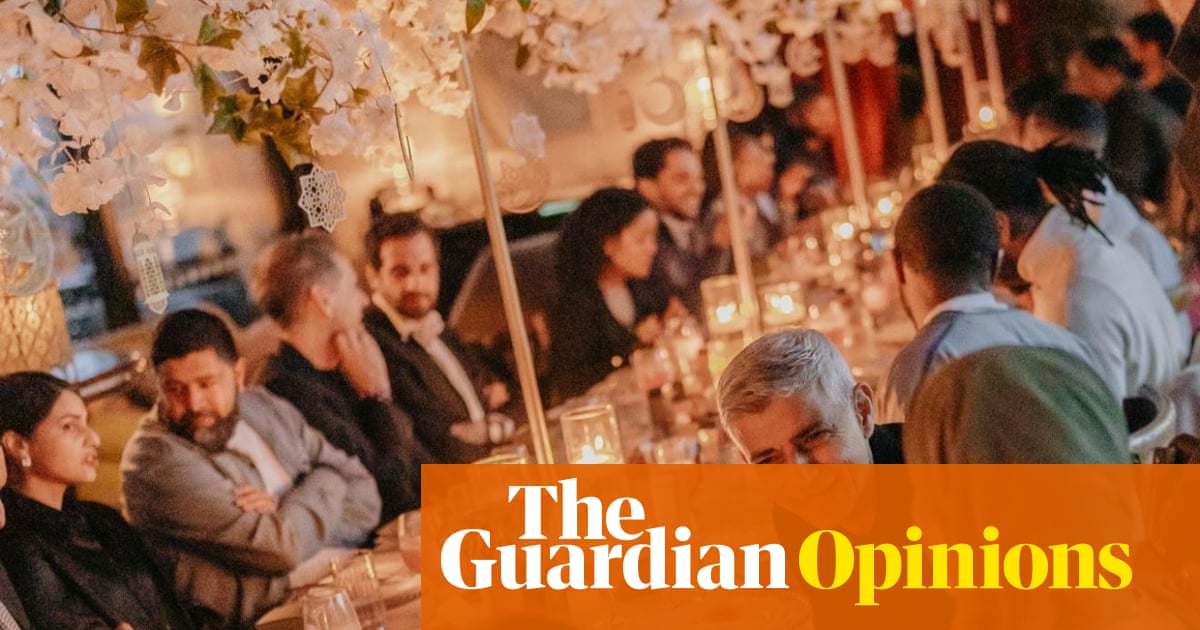
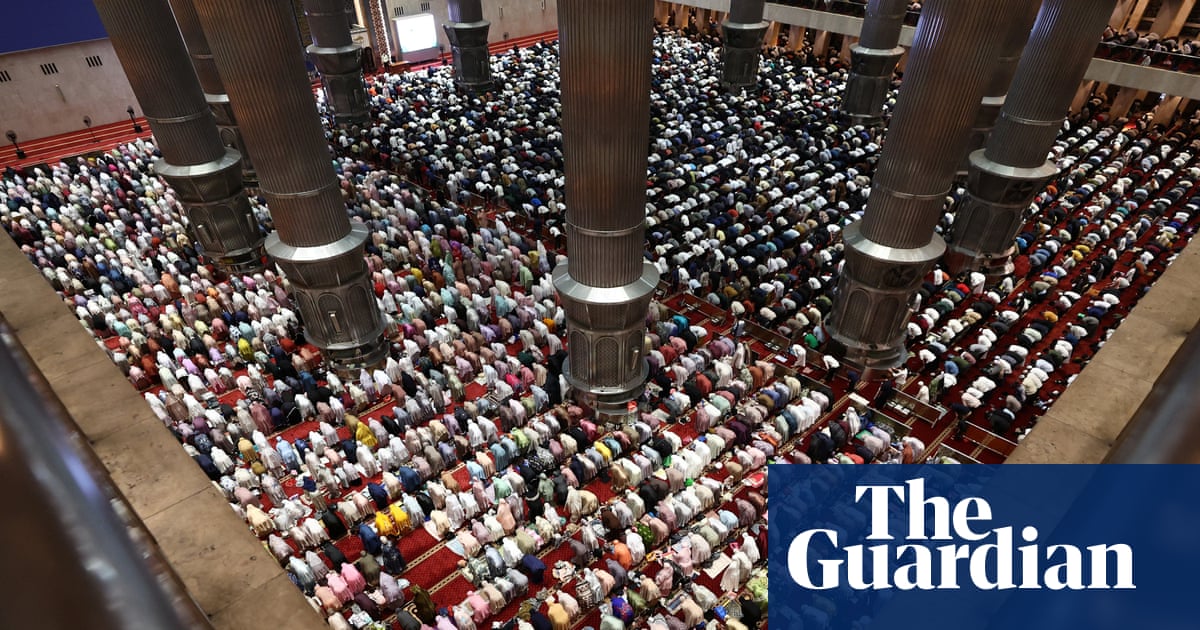
1 month agoThis Ramadan in Gaza we pray for mercy, share what we have and light a single candle for hope | Majdoleen Abu Assi
Ramadan in Gaza is marked by displacement, constant fear, destruction, and soaring costs, turning rituals into struggles under surveillance and uncertainty.
fromConde Nast Traveler
2 months agoDespite All Odds, Beirut's Jazz Scene Persists
I noticed the swelling of the double bass first, quickly followed by the fluttering of brushed cymbals. A saxophone pushing against the edges of a melody swiftly married the notes together, chords drifting haphazardly before reaching a slow, pulsing groove. The jazz quartet performed in front of a liquor cabinet lined with whisky bottles; low-hanging lights teetered overhead, throwing shapes on the monochromatic marble-tiled floor. Outside, a leafy veranda was filled with diners, the music drifting through flung-open doors and windows.
Music
fromwww.aljazeera.com
2 months agoSudan's women break traditional rules' to survive
In the displacement camps of Ad-Damazin in southeastern Sudan's Blue Nile State, the war is reshaping social norms and introducing new realities that are forcing Sudanese women into manual labour to survive. Rasha is a displaced mother. She has ignored old boundaries and perceptions of what a man's work is and started working as a woodcutter to feed her children. Carpentry is hard, but the axe has become an extension of my hand, Rasha told Al Jazeera Arabic.
World news
[ Load more ]