#hegel
#hegel
[ follow ]
#philosophy #critical-theory #jurgen-habermas #stoicism #frankfurt-school #public-sphere #democratic-theory
#frankfurt-school
Philosophy
fromwww.theguardian.com
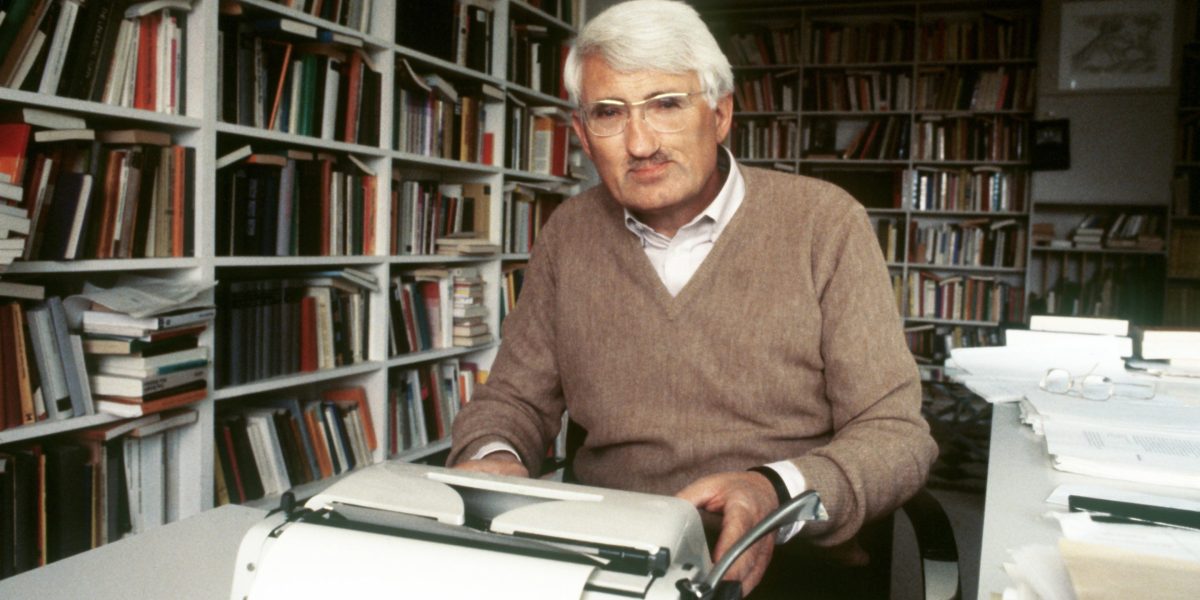
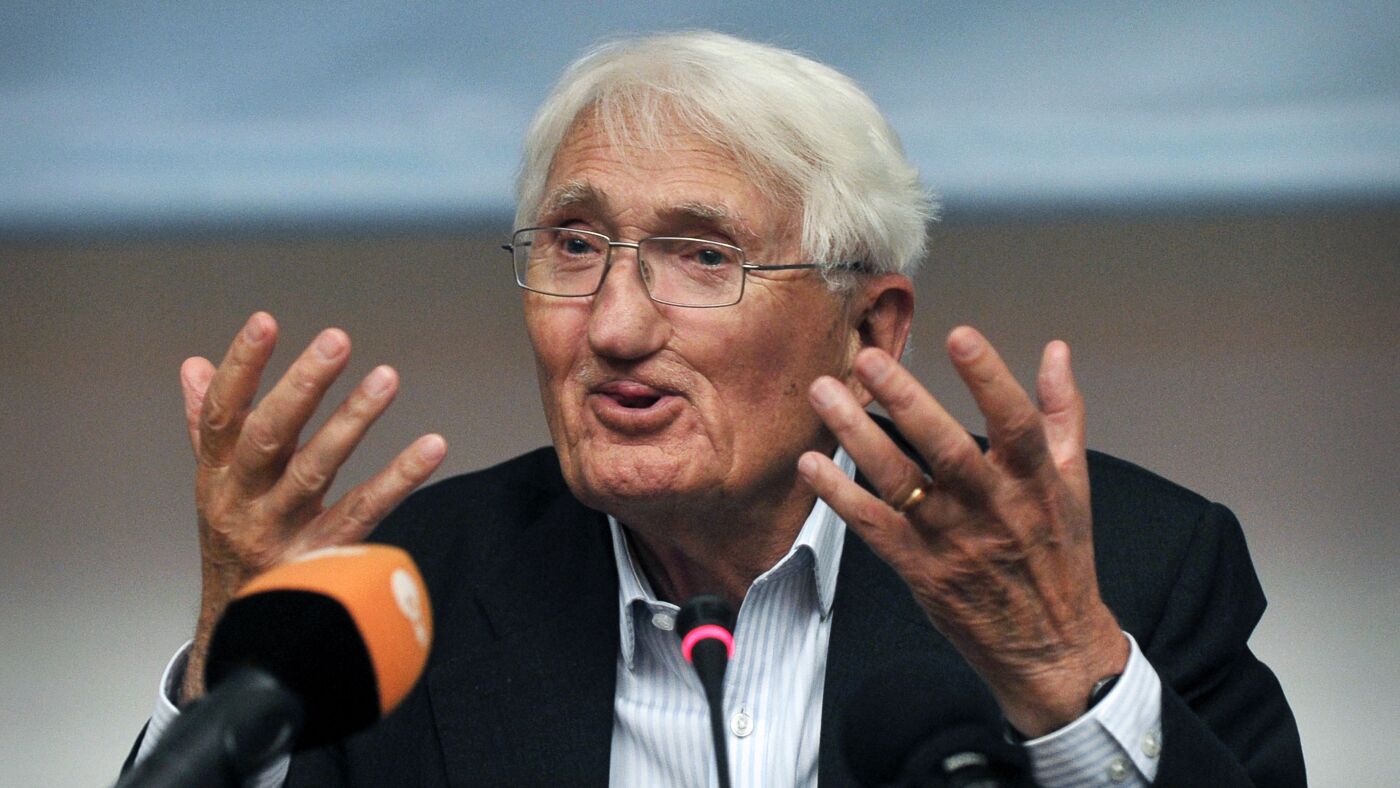
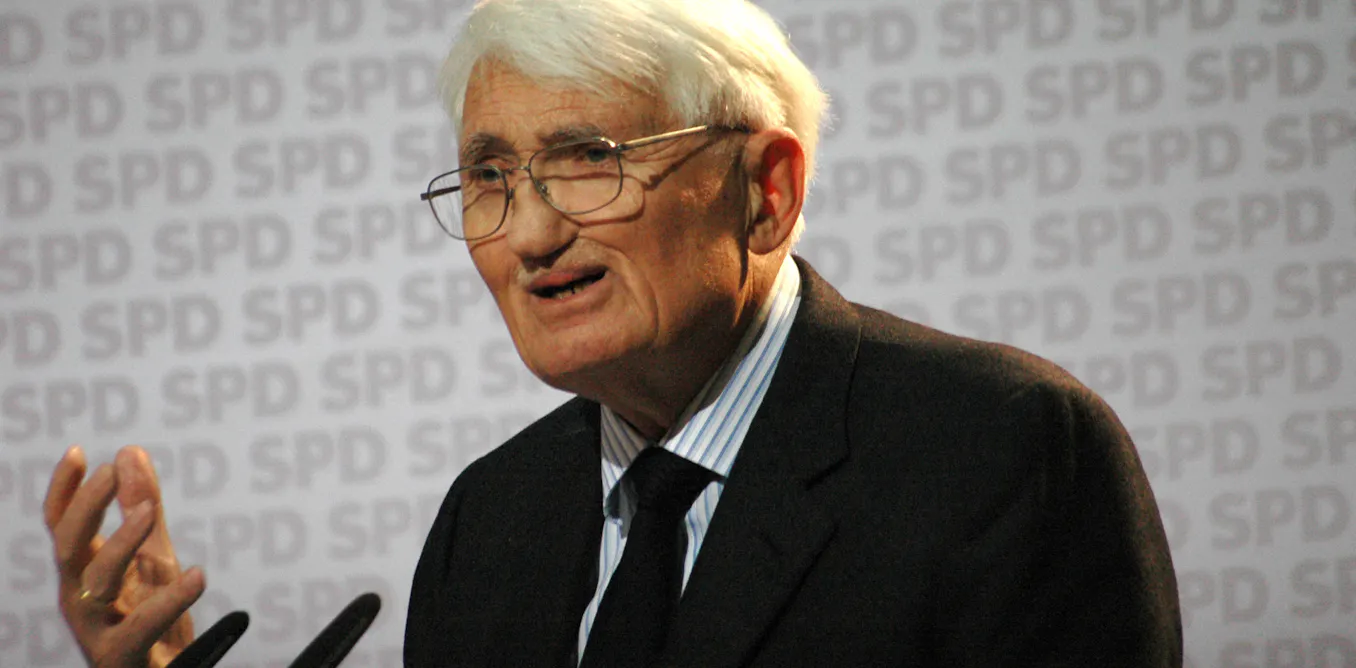
1 month agoTalk is precious: in the age of communication collapse, Jurgen Habermas's message remains vital | Eva von Redecker
The Frankfurt School is a scholarly constellation pursuing critique as transformative description of reality, with Jürgen Habermas serving as a foundational figure who shaped generations of critical theorists despite controversies surrounding his positions on discourse ethics and power.



fromBig Think
1 month agoHow our view of "fundamental" has evolved over time
In antiquity, many opined about "the elements" in combination. Around 2500 years ago, Leucippus and Democritus founded the idea of atoms. Perhaps everything, they opined, was composed of indivisible building blocks. In the late 1700s, hydrogen and oxygen were discovered. Circa 1804, John Dalton revived atomism to explain chemical behavior. Then in 1869, Mendeleev developed the periodic table: organizing the atoms.
Science
fromNature
2 months ago'What are we doing here?' The polymaths who searched for the meaning of life
A mentor once told me that, when writing a research statement for a professorship, I had to start with the most ambitious pitch I could imagine - and then go ten times bigger. It's tricky enough to do this as a cosmologist, given that the topic of study is the entire Universe. But there is a quest that is more ambitious still: to find out 'what are we doing here?'
Books
fromwww.theguardian.com
1 month agoThe Guardian view on the legacy of Jurgen Habermas: philosophical sustenance for illiberal times | Editorial
The Theory of Communicative Action, his 1980s magnum opus, was not (to put it mildly) as accessible as some of his newspaper opinion pieces. But its central idea—that our nature as linguistic beings puts reason and the search for consensus at the core of who we are—remains an antidote both to intellectual relativism and Trumpian realism, which elevates national or individual self-interest above all other sources of human motivation.
Philosophy
Education
fromPsychology Today
2 months agoA True Believer in the Intellectual Spirit
Entrenched anti-intellectualism, market-driven educational priorities, and political pressures are undermining liberal arts, academic freedom, and intellectual life while religious movements retain transformative power.
fromwww.kaltblut-magazine.com
2 months agoUnion of Opposites
Originally from Dallas and now based in New York City, I approach photography as an exercise in atmosphere, trust, and control. Trained in the discipline of film and later in fashion photography, I work with both natural and artificial light to construct images that feel cinematic and psychologically charged. Moving fluidly between studio and location, I transform spaces into environments that heighten mood and presence.
Fashion & style
Philosophy
fromwww.theguardian.com
1 month agoJurgen Habermas obituary
Jürgen Habermas transformed from a Hitler Youth member into a leading defender of Enlightenment values and democratic theory after witnessing Nazi atrocities, dedicating his philosophy to ensuring collective democratic influence over society.
fromPsychology Today
2 months agoThe Link Between Thinking and Being
Metaphors are linked to how we experience the world around us, according to seminal work by researchers George Lakoff and Mark Johnson. In English, we "move forward" with our lives and don't "retreat into" the past. We speak about people who are "cold as ice" and "heavy" matters we need to resolve. Some of these metaphorical expressions are more than just, well, expressions-they are actually based on our sensory experiences. This mind-body link is called "embodied cognition."
Science
fromJezebel
1 month agoThe Time I Learned Greek Scholars Are Canonically Hotter Than Roman Scholars
It started with a book launch in 2021. I'd been living in London as a social media journalist when I asked my then-publication's culture editor to send me to one of these exclusive-sounding events, as 1) I'd never been and 2) I just really wanted to be a person who "has a book launch to go to." Thankfully, there was one that exact day-and he put my name on the list for the release of Mary Beard's Emperor of Rome. Huzzah.
Books
fromApaonline
1 month agoRecommendation: U.K. Spinoza Circle
Spinoza was an heir to both Jewish and Christian culture-in Amsterdam he grew up in a Jewish community within a Protestant society-yet he distanced himself from both these religions. He did not want to be a member of a religious institution with strict, prescriptive codes of belonging and belief. He feared-quite rightly-that a [institutional religion would constrain philosophical freedom].
Philosophy
fromThe Conversation
1 month agoToday's obsession with authenticity isn't new - being true to yourself has troubled philosophers for centuries
All of us live in an age where we're bombarded by social media and artificial intelligence - when striving to be your authentic self becomes an increasingly difficult task. Yet, even if it has somehow become a common goal, it is unclear how many of us can truly define the "authenticity" that we say we are pursuing.
Philosophy
fromPsychology Today
2 months agoA Third Kind of Philosophy
Many philosophers strike me as like Polish apparatchiks in 1983-they turn up to work and do what they did yesterday just because they don't know what else to do, not because they seriously believe in the system they are maintaining. I think it's not been fully appreciated how much of a blow it is to the confidence of the field's youth that scientific ambitions are increasingly abandoned as untenable.
Philosophy
fromPsychology Today
2 months agoIf Justice Doesn't Exist, Then Numbers Don't Either
A drawn circle is at least something physical. You can see it, touch it, erase it. The skeptic can still say, "Circles are grounded in physical reality. Justice is different; it's just an idea in your head." So let's talk about the number two. Point to it. Not two apples, not two fingers, not a numeral on a page-that's just a symbol.
Philosophy
fromApaonline
2 months agoPhilosophy, Technology, and Mortality
This APA Blog series has broadly explored philosophy and technology with a throughline on the influence of technology and AI on well-being. This month's post brings those themes into focus recounting a vital Washington Post Opinion piece by friend of the APA Blog, Samuel Kimbriel. Samuel is the founding director of the Aspen Institute's Philosophy and Society Initiative and Editor at Large for Wisdom of Crowds. We collaborated on a Substack Newsletter about intellectual ambition, building on his essay, Thinking is Risky.
Philosophy
fromThe Conversation
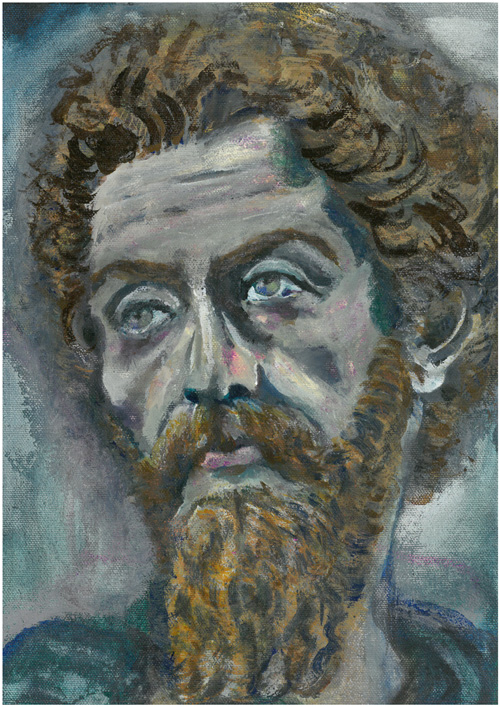
1 month agoWhat is happiness? A philosopher looks for answers
Happiness today is narrowly defined by some positive psychologists as a joyous state of mind or well-being. The happiness sciences see it as something you can calculate and quantify. They developed a Happiness Index and the World Happiness Report. These basically measure happiness as satisfaction, with criteria like gross domestic product per capita (money) and life expectancy (health) as some of the factors considered.
Philosophy
[ Load more ]