#henry-southan
#henry-southan
[ follow ]
Books
fromwww.theguardian.com
3 weeks agoDoes anyone think Matt Goodwin's book on Britain's demise is a publishing sensation? I mean, other than him | Marina Hyde
Liz Truss's book quickly sold out but fell to No 223 in sales, while Matt Goodwin's book faced controversy over AI assistance and publicity tactics.

Writing
fromwww.theguardian.com
1 month agoLight and Thread by Han Kang review a tantalising book of reflections
Han Kang's Nobel Prize-winning work explores historical trauma and human fragility through poetic prose that balances outward examination of events like the Gwangju massacre with inward psychological portrayal, leaving interpretive gaps for readers.
Television
fromwww.mercurynews.com
1 month agoWhat to watch: Saucy Vladimir' does justice to Julia May Jonas novel
Four new TV series offer diverse viewing options: Vladimir on Netflix combines smart humor with steamy content, American Classic provides feel-good comedy, Young Sherlock delivers entertainment on Prime Video, and 56 Days offers addictive drama, while Dolly provides horror thrills.
Books
fromwww.npr.org
1 month agoAuthor Luke Kennard talks about his novel, 'Black Bag'
Luke Kennard's novel 'Black Bag' fictionalizes a 1967 psychology experiment where a silent, bagged actor in a classroom gradually becomes liked by students through repeated exposure, exploring how familiarity transforms perception.
Music
fromThe Wire Magazine - Adventures In Modern Music
2 months agoRead an extract from Everybody's Head Is Open To Sound: Writings On Tom Wilson - The Wire
Tom Wilson became a pivotal record producer and influential presence at major 1960s recording sessions, beginning from early life in Waco to Harvard and WHRB.
Books
fromwww.theguardian.com
1 month agoAlmost Life by Kiran Millwood Hargrave review a will-they-won't-they queer romance
Almost Life chronicles a decades-long romance between two women beginning in 1970s Paris, exploring queer love, missed opportunities, and the consequences of life choices across different social contexts.
fromwww.theguardian.com
1 month agoThis month's best paperbacks: David Szalay, Han Kang and more
Tracking a river through a cedar forest in Ecuador, Robert Macfarlane comes to a 30ft-high waterfall and, below it, a wide pool. It's irresistible: he plunges in. The water under the falls is turbulent, a thousand little fists punching his shoulders. He's exhilarated. No one could mistake this for a dying river, sluggish or polluted. But that thought sparks others: Is this thing I'm in really alive? By whose standards?
Books
Books
fromThe New Yorker
1 month agoBriefly Noted Book Reviews
Two literary works explore complex themes through innovative narrative techniques: Morrison's essays examine challenging craft elements in Toni Morrison's writing, while Nganang's memoir uses the scale as a metaphor connecting personal experience to colonial history.
Books
fromwww.theguardian.com
1 month agoDaisy Johnson: I wasn't a fan of David Szalay, but Flesh is a masterpiece'
Reading shapes identity across life stages, from childhood memories through formative teenage years to adult perspectives, with specific books creating lasting connections and inspiring creative ambitions.
#literary-fiction
Books
fromPortland Mercury
1 month agoKevin Sampsell's New Novel Looks at the World Through a Baby in the Night
A two-year-old narrator perceives his world without stereotypes or cynicism, searching for his departed father whom he believes is the Moon while encountering homeless relatives and learning compassion through innocent observation.

Books
fromPortland Mercury
1 month agoKevin Sampsell's New Novel Looks at the World Through a Baby in the Night
A two-year-old narrator perceives his world without stereotypes or cynicism, searching for his departed father whom he believes is the Moon while encountering homeless relatives and learning compassion through innocent observation.
fromwww.theguardian.com
2 months agoTo say I was the favourite would imply I was liked': Mark Haddon on a loveless childhood
cardiganed grandmothers eating roadside picnics beside Morris Minors, pale men sunbathing in shoes and socks on stripy deckchairs, Raleigh Choppers and caged budgerigars and faux leather pouffes I feel a wave of what can't properly be called nostalgia, because the last thing I'd want is to return to that age and those places where I was often profoundly unhappy and from which I'd have been desperate to escape if escape had been a possibility.
Writing
fromDefector
1 month agoDan Simmons Is Dead So It's Time To Read 'Hyperion' | Defector
This is a shame, because his best work belongs with the greats of fantasy, horror, and sci-fi. Summer of Night is a tighter, more satisfying version of Stephen King's It. Carrion Comfort is a brick-sized epic about psychic vampires that reads as breezily as a trade paperback. The Terror, which inspired the well-regarded show, is for its first three-quarters a brilliant and non-supernatural speculative take on a real doomed Arctic expedition.
Books
Books
fromwww.theguardian.com
1 month agoSaba Sams: I've no interest in reading Wuthering Heights again'
Jacqueline Wilson's unflinching approach to children's literature, alongside works by authors like Gwendoline Riley and Clarice Lispector, demonstrates that literary courage and emotional complexity resonate more powerfully than conventional safety or virtuousness.
fromThe Atlantic
1 month agoPushing the Limits of Historical Fiction
Enrigue's 'penchant for shooting the facts of history through the prism of the absurd' makes him singular-but it also puts him firmly in a long literary tradition. The book 'distills a byzantine swirl of historical events through the lives of a handful of very colorful characters,' intertwining several real and invented incidents with major moments in the Apache Wars, a series of skirmishes involving Native Americans, the U.S., and Mexico across the Southwest borderlands.
Books



fromwww.theguardian.com
2 months agoSusan Choi: For so long I associated Dickens with unbearable Christmas TV specials'
The book that changed me as a teenager Donald Barthelme's Sixty Stories, because he was having such a good time and seemed so so smart, but was also mischievous and irreverent. It may sound corny but these stories made me grasp the existence of a world of art and literature. And Barthelme lived in Houston, where I was growing up, yet he was a major world writer.
Books
Books
fromwww.theguardian.com
1 month agoBen Markovits: I used to think any book concerned with people falling in love can't be very good'
Reading shaped formative years through detective stories, fantasy epics, and memoirs that provided companionship and escape during frequent moves and family transitions.
fromThe Atlantic
2 months agoBring Back Moral Fiction
It was once commonly understood that fiction was in the wisdom business, that it offered not only aesthetic pleasure but also moral improvement. This function of literature was not tough to spot. One of the first English novels was Samuel Richardson's 1740 work, Pamela: Or, Virtue Rewarded-a title not meant ironically. Through the 19th century, many authors turned directly to the reader with philosophical and social (if sometimes ironic) commentary: "It is a truth universally acknowledged"; "It was the best of times"; "All happy families are alike." For readers not up to the challenge of full George Eliot novels, her enterprising publisher compiled a volume of Eliot's many Wise, Witty, and Tender Sayings, in order to more broadly distribute "a morality as pure as it is impassioned."
Books
fromThe New Yorker
1 month agoBriefly Noted Book Reviews
Dilara, the protagonist of this début novel, is consumed by the absence of a stable home in her life. She and her family flee Turkey, where she is from, after a failed coup in 2016. When they end up in Italy, something inexplicable happens: Dilara's bathroom transforms into a cell in an infamous prison on the outskirts of Istanbul.
Books

fromJezebel
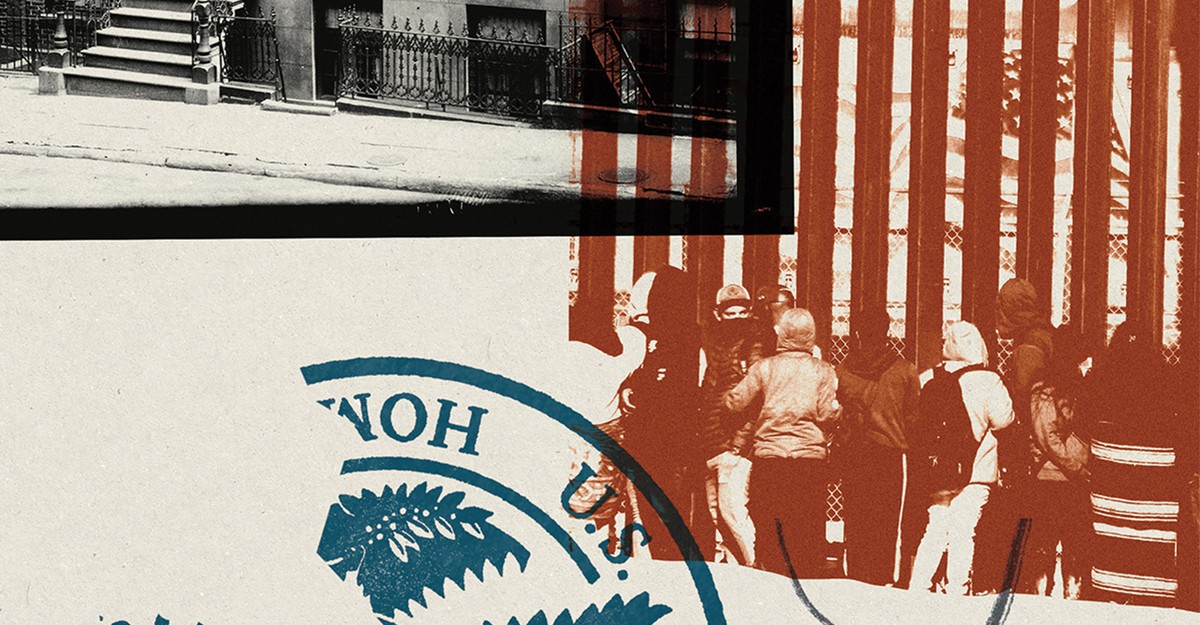
1 month agoTurns Out, When You Write a Novel About Killing a Politician, People Tell You How They'd Do It
When the people who are after me get here, they'll arrest me and put me on trial, or they'll disappear me to some black site. Or they won't bother with any of that and they'll just kill me. All of these seem like plausible outcomes, but in the novel's prologue, the narrator seems much more confident of her success: I am a fucking genius, a gorgeous fucking genius, and the only thing left to do is sit down and write.
Books
fromThe New Yorker
1 month agoBriefly Noted Book Reviews
This devastating début novel takes the form of an oral history about a tragedy that shatters a family. At its heart is a couple who arrived in the U.S. in the late nineteen-nineties as refugees from Afghanistan. They prospered, and brought up four children in an affluent suburb in Virginia. Rotating testimonies from people they know-family friends, a cousin, lawyers-offer theories about what led to the novel's central catastrophe.
Books
Books
fromwww.theguardian.com
2 months agoWhat we're reading: George Saunders, Erin Somers and Guardian readers on the books they enjoyed in January
Re-reading classics and contemporary novels reveals diverse literary powers: playful zaniness, dense language, sweeping ambition, humane realism, and restorative small-scale storytelling.
Books
fromThe Atlantic
1 month agoWhen Did Literature Get Less Dirty?
Philip Roth's Zuckerman Unbound functioned as a response to the controversial reception of Portnoy's Complaint, with Roth's protagonist expressing regret over writing sexually explicit material that drew accusations of anti-Semitism and misogyny.
Books
fromwww.theguardian.com
1 month agoThe Quantity Theory of Morality by Will Self review raucously inventive state-of-the-nation satire
Will Self's new novel The Quantity Theory of Morality extends his 1991 debut theory by proposing that moral resources are finite and their depletion inevitably triggers widespread bad behavior across all social groups.
fromenglish.elpais.com
2 months agoJulian Barnes: I've become more left-wing because the center has moved rightwards'
As he did in his masterful Flaubert's Parrot, the British author returns in this new work to a hybrid style that blends fiction and nonfiction, imagination and erudition. And once again he plays with the traps of the past and memory, as he did in The Sense of an Ending, which won the Booker Prize in 2011. In Departures, a couple, Stephen and Jean, attempt without much success to rekindle their idealized university romance half a century later.
Books
fromTODAY.com
2 months agoAmerican Girl's Samantha is All Grown Up In New Novel. Elder Millennials Will Swoon
For those unfamiliar with the beloved heroine, Samantha is one of the first three historical characters introduced by American Girl in 1986. Samantha, Swedish immigrant Kirsten and WWII homefront heroine Molly demonstrated courage, compassion and resilience. Along with an 18-inch doll, each 9-year-old character was featured in a series of easy chapter books; kids could follow each fictional story as well as the historical context surrounding it.
Books
fromwww.courant.com
2 months agoHan Kang, Angela Flournoy, Arundhati Roy nominated for National Book Critics Circle awards
Out of the many hundreds of titles that our organization carefully considered this year, these singular and striking finalists rose to the top, NBCC President Adam Dalva said in a statement Tuesday. They interrogate the lives we lead, broaden our creative and social horizons, move us, and continually surprise us. Especially in this difficult time, every one of these writers and translators deserves to be celebrated - and to be widely read.
Books
[ Load more ]