#historical
#historical
[ follow ]
#archaeology #mesopotamia #ancient-mesopotamia #sumer #pompeii #iraq #roman-archaeology #ancient-mathematics





Medicine
fromArs Technica
1 month agoWhat we can learn from scientific analysis of Renaissance recipes
16th-century people used scientific experimentation to create personalized home remedies, leaving protein traces on medical manuals that researchers now analyze to understand Renaissance knowledge construction.
History
fromWorld History Encyclopedia
3 weeks agoSargon of Akkad: From Gardener to King of the Four Corners of the World
Sargon of Akkad founded the first multinational empire in history, uniting Mesopotamian kingdoms under central authority and establishing bureaucratic administration standards that influenced rulers for 1,500 years.
fromMedievalists.net
4 weeks agoNew Medieval Books: Approaching Records of the Household and Wardrobe - Medievalists.net
The Household and Wardrobe Accounts are English records that document the daily needs of the king and his family. This book serves as a guide to these sources, showing how they can be used and what valuable insights they offer into medieval government.
History
fromMail Online
2 months agoLong-lost Egyptian scroll fuels debate over real-life biblical giants
An ancient Egyptian papyrus held by the British Museum has been cited as possible evidence supporting some of the Bible's most controversial claims about giants. The 3,300-year-old document, known as Anastasi I, has been in the museum's collection since 1839 and has recently resurfaced on the Associates for Biblical Research, renewing interest in its possible links to biblical accounts. The papyrus describes encounters with the Shosu people, said to stand 'four cubits or five cubits' tall, up to eight feet in height.
Books
fromWorld History Encyclopedia
4 weeks agoMesopotamian Literature: The Earliest Works of the Imagination
Writing was created in response to the need to communicate over long distances in trade and, initially, was focused on the purely practical aspects of record-keeping. Scribes in ancient Mesopotamia recorded what commercial goods had been shipped to which destination, their quantity, purpose, and cost.
History
fromOpen Culture
1 month agoWho Would Be Emperor If the Roman Empire Still Existed Today?
Very rare to see this level of tailoring nowadays, even on the wealthy. Even when not attending major sporting events, the king's collars always hug his neck, his lapels are always well-proportioned, the lines of his coat always flow into his trousers, and his four-in-hand always has just the right asymmetry.
History
fromWorld History Encyclopedia
1 month agoCuneiform: From trade lists to epic tales of gods
Cuneiform is a system of writing first developed by the ancient Sumerians of Mesopotamia circa 3600/3500 BCE. It is considered the most significant among the many cultural contributions of the Sumerians and the greatest among those of the Sumerian city of Uruk, which further developed and advanced cuneiform circa 3200 BCE and allowed for the creation of literature.
History
fromOpen Culture
1 month agoSeven Wonders of the Ancient World: From the Walls of Babylon to the Sewers of Rome
Seven were the strings of the lyre (unless there happened to be eight or nine), seven were the gates of Thebes, and seven were the "wandering stars" in the night sky (if you count the sun and moon). The identity of the wonders was less important than the length of their list, and indeed, additions and changes were proposed since the beginning.
History
History
fromWorld History Encyclopedia
1 month ago12 Great Cities of Ancient Mesopotamia: The Rise and Fall of the Earliest Cities in the World
Twelve major Mesopotamian cities including Nineveh, Uruk, Babylon, and Ur became legendary through Greek writings and yielded significant archaeological discoveries, each connected to a patron deity whose prestige determined the city's fate.


fromMail Online
1 month agoAncient time capsule found in Iraq corroborates the Bible
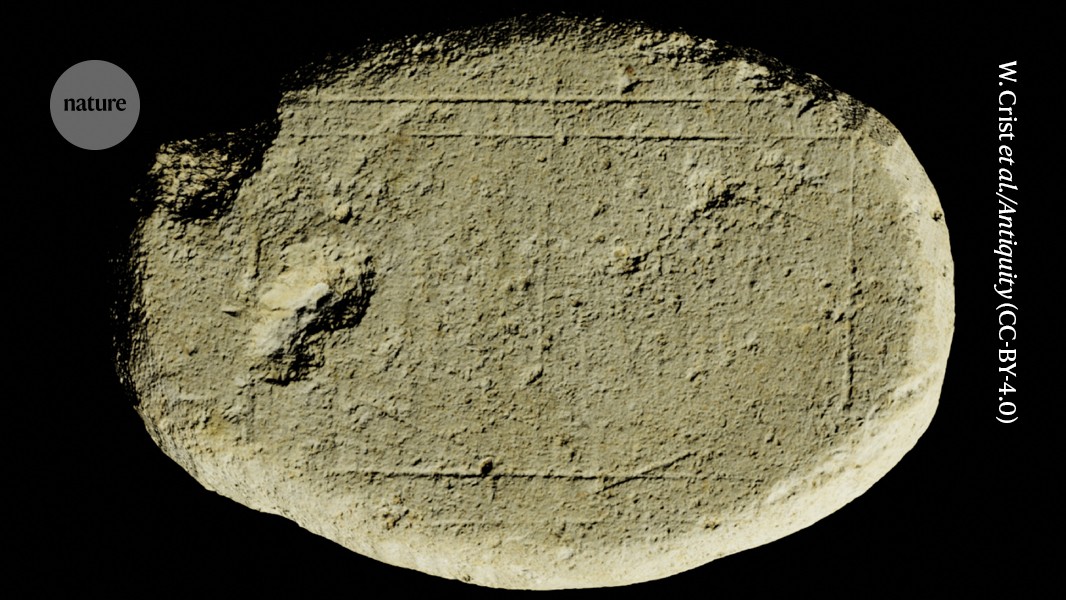
King Nebuchadnezzar II himself 'speaks' in the text, proudly describing how he restored an old, crumbling stepped temple tower in the city of Kish that was dedicated to the Mesopotamian god and goddess of war, Zababa and Ishtar. He explained that earlier kings had built and fixed the ziggurat before, but it had fallen into disrepair again from age and rain.
History
History
fromwww.theguardian.com
1 month agoScholar, seductress, alchemist: who was the real Cleopatra?
Cleopatra VII's legacy has been corrupted by ancient male sources portraying her as exotic and seductive, yet her name endures with greater recognition than her chroniclers, and historical evidence reveals her as a polyglot scholar interested in alchemy and healing remedies.
fromMedievalists.net
2 months agoNew Medieval Books: A Crusade Against the Turks as a Means of Reforming the Church - Medievalists.net
This project will focus on the Camaldolese hermits' proposal for achieving what they considered to be the most crucial task in the repair of the church, eliminating Islam and all Muslims. Our study will begin with an examination of the recipient of the Libellus, Giovanni de' Medici, who would become Pope Leo X. Next will be an exploration into the backgrounds of Paolo Giustiniani and Pietro Querini,
History
fromMail Online
2 months agoThe bone that proves Hannibal really DID cross the Alps with elephants
While the bone was worn and poorly preserved, archaeologists managed to identify its origin by comparing it with modern elephant and mammoth bones. Despite there not being enough DNA to confirm the exact species, the researchers were able to carbon date a tiny sample of the bone. This places the elephant's death between the late fourth and early third centuries BC - right in the middle of the Second Punic War.
History
History
fromMedievalists.net
2 months agoReading in Byzantium: Literacy, Books, and a World of Texts - Medievalists.net
Byzantine reading was communal and performative, woven into religious, educational, and administrative life while preserving classical learning within a Christian intellectual framework.
fromMail Online
2 months agoMysterious symbols spanning the globe hint at a lost civilization
His investigation began after identifying recurring giant T-shapes, three-level indents, and step pyramids carved into ancient stones worldwide. 'These specific symbols that are built in different size proportions, and the symbols are found in ancient stones around the world, are not supposed to exist; no cultures are supposed to have any cross-platform,' LaCroix explained. The symbols appear in locations ranging from Turkey's Van region to South America and Cambodia.
History
fromWorld History Encyclopedia
2 months agoFestivals in Ancient Mesopotamia: Courting the Goodwill of the Gods
as the gods were understood as the true monarchs and the king as simply their steward. In order to maintain his authority, the king needed to court the goodwill of the gods, and although they made their approval clear through military victories, bountiful harvests, and prosperous trade, events such as the Akitu festival provided an annual opportunity for the divine to continue its relationship with the ruling house or withdraw its favor.
History


History
fromWorld History Encyclopedia
2 months agoMesopotamian Art and Architecture: The Birth of Art and Architecture in the Ancient World
Mesopotamian art and architecture began over 7,000 years ago, evolving from northern sites into Sumerian innovations and sustained through multiple ancient Mesopotamian periods.
History
fromWorld History Encyclopedia
2 months agoThe Crisis of the Third Century: A Pivotal Era of Ancient Rome
The Roman Empire nearly collapsed during the Third Century due to military intervention, political fragmentation, economic collapse, plague, and external pressures leading to breakaway empires.
fromDiscover the Best Podcasts | Discover Pods
2 months agoThe Best Hardcore History Episodes Teach Us About Patterns We're Repeating
Hit me like, as my high school English teacher liked to say, "like a MAC truck." The episode starts with the tale of Icarus. You know, the kid who flew too close to the sun with his wax wings and plummeted into the sea. Or the little cherub NES character. Either way. And I'm sitting there thinking: has anyone in Washington actually read this story? Played the game?
History
History
fromMedievalists.net
1 month agoNew Online Course: The Americas during the Middle Ages - Medievalists.net
An online six-week course examines indigenous peoples of North America and Mesoamerica (500–1500 CE), emphasizing diverse peoples, environments, lifestyles, and pre-contact historical trends.
fromMedievalists.net
2 months agoNew Medieval Books: Interconnected Traditions - Medievalists.net
This open-access book brings together more than thirty essays on languages and the ways they develop, interact, and influence one another. Its main focus is the Middle East, where Hebrew, Arabic, and Aramaic long existed side by side and often overlapped in everyday use, scholarship, and culture. In line with Geoffrey (Khan)'s commitment to the maximally accessible dissemination of research, this Festschrift has been published in both open-access digital editions and affordable printed formats.
History
fromMedievalists.net
1 month agoNew Medieval Books: The Medieval Moon - Medievalists.net
In this book of moons, I am writing for people for whom the medieval world and its literatures and arts may be unfamiliar. I hope that in telling the stories of medieval moons, I also introduce these readers to the wonderful, mesmerising realm of medieval texts and images. But I also hope that this book may be useful to those with greater familiarity with medieval languages, literatures, and arts.
History
fromWorld History Encyclopedia
2 months agoCities, writing, and governments: Early Dynastic Mesopotamia's revolutionary advances
It should be noted, however, that the advances of Mesopotamia's Early Dynastic period differed from Egypt's in significant ways, notably in that Mesopotamia - even under the rule of Sargon or later empires - was never the cohesive ethnic or political entity Egypt was, and the kinds of cultural development cited for this era were not as uniform as they were in Egypt.
History
[ Load more ]