#industrial-metalwork
#industrial-metalwork
[ follow ]
#3d-printing #robotics #user-experience #ai #market-trends #skilled-trades #ergonomics #generative-ai
#3d-printing
Graphic design
fromYanko Design - Modern Industrial Design News
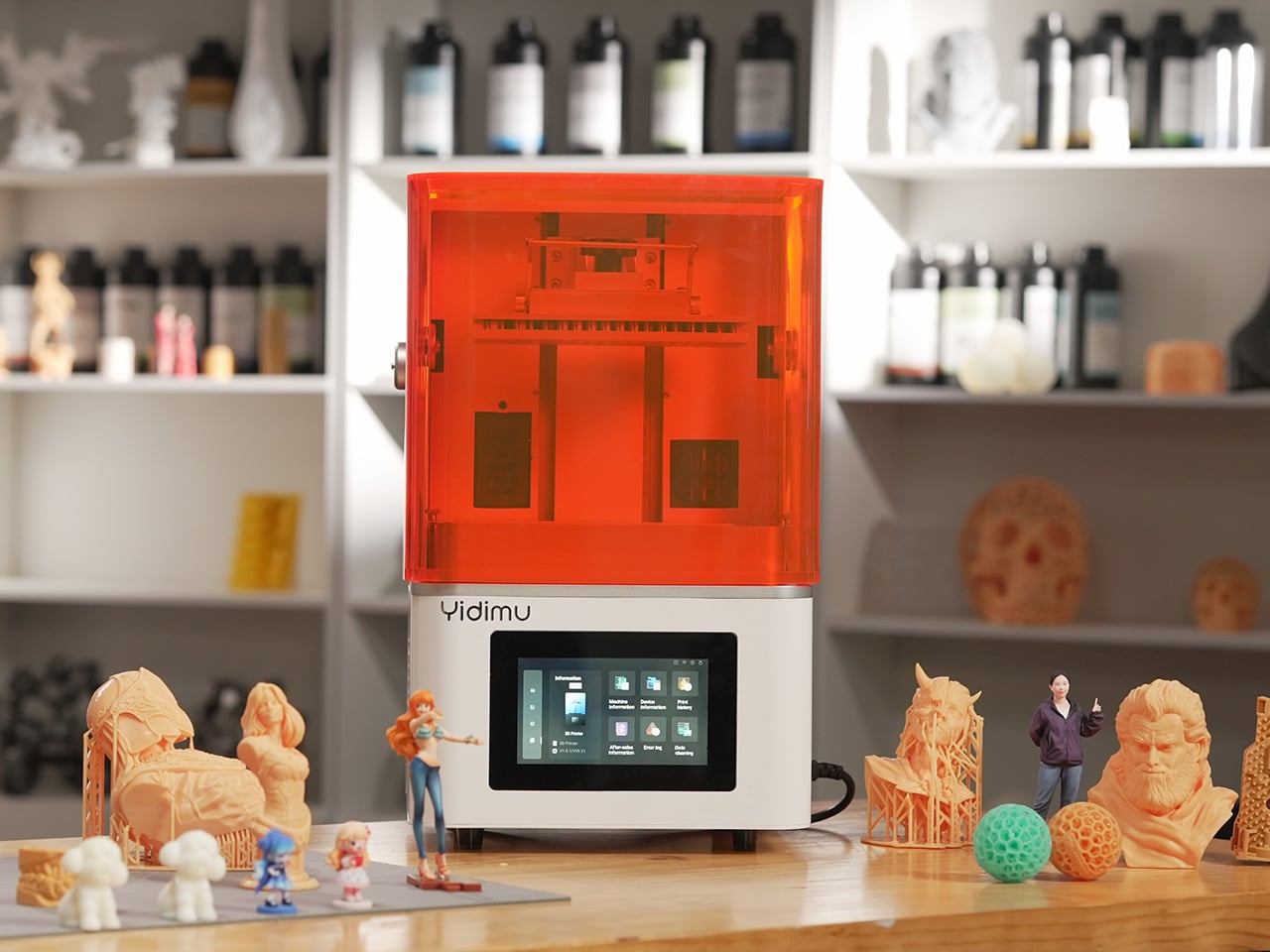
5 days agoThis Resin 3D Printer Packs 14K Resolution and Auto-Tool Release, Giving You Sharper Prints Without The Mess - Yanko Design
YIDIMU's MagPro resin printer features a one-click auto-release mechanism, eliminating the need for scrapers and enhancing the printing experience.
fromChrbutler
1 week agoCraft is Untouchable - Christopher Butler
Craft is often defined as skill in making things by hand, but this interpretation is being challenged by AI. Craft transcends physical interaction; historical figures like Mozart and Beethoven exemplify mastery without traditional methods.
Intellectual property law
Careers
fromwww.businessinsider.com
3 weeks agoI was a laid-off software engineer who pivoted into blue-collar work because of AI. One year in, I couldn't be happier.
Tabby Toney transitioned from software engineering to welding after being laid off, finding job security and satisfaction in her new career.
fromFortune
3 weeks agoThis AI-proof career faces a 250,000-worker shortage-now the Trump administration is trying to revive the job millennials abandoned | Fortune
"This is absolutely a rare window for young workers because the demand is real, funded, and seemingly long-term," Fraser Patterson, CEO of Skillit, stated. "These are not speculative jobs. They are tied to multi-decade investment cycles, and they offer a path to strong earnings, skill development, and stability without requiring a traditional four-year degree."
Business
fromBusiness Matters
1 month ago6 Business Use Cases For Perforated Metal
Perforated metal has long been valued for its strength, versatility, and clean visual appeal. Created by punching patterns of holes into metal sheets, it offers a practical balance between airflow, light control, and structural support. Across industries such as architecture, construction, mining, and interior design, perforated metal has become a go-to material for projects that require both function and style.
Design
Artificial intelligence
fromFuturism
1 month agoFactory Paying Human Worker to Watch Robot Worker All Day
Humanoid robots like Digit are being deployed in factories with human supervisors, with costs expected to drop from $10-$25 per hour to $2-$3 per hour, potentially displacing workers earning $20 per hour.
Design
fromArchDaily
1 month agoFacing the Age of Robots? Material Innovation in Architectural Structures
Robotic technology in construction extends beyond automation and cost reduction to fundamentally reshape architectural design, material experimentation, and construction methodologies through collaborative human-robot workflows.
Graphic design
fromYanko Design - Modern Industrial Design News
1 month agoStop Hunting for 4 Tools: This Designer's Multitool Does It All - Yanko Design
STRIA integrates four essential design tools—tape measure, ruler, caliper, and utility knife—into one handheld device to eliminate workflow interruptions and maintain creative focus during model-making.
fromInfoWorld
1 month agoAn ode to craftsmanship in software development
Your coding apprentice can build, at your direction, pretty much anything now. The task becomes more like conducting an orchestra than playing in it. Not all members of the orchestra want to conduct, but given that is where things are headed, I think we all need to consider it at least.
Software development
Business
fromSitePoint Forums | Web Development & Design Community
2 months agoU.S based custom metal stamping company for precision telecom or shielding components?
Seeking a U.S. precision metal-stamping partner for telecom and EMI/RFI shielding with tight tolerances, in-house tooling, secondary ops, and smooth prototype-to-production transition.
Retirement
fromSilicon Canals
1 month ago9 things every man who worked a trade for 30+ years knows about retirement that white-collar retirees usually learn the hard way - Silicon Canals
Tradesmen understand retirement challenges better than office workers because physical labor teaches lessons about body maintenance, purpose, and identity that desk jobs delay until retirement arrives.
fromFuturism
2 months agoTrade Unions Alarmed by Robots Designed to Do Blue Collar Work
When past generations imagined the best version of the future, it was one of leisure. Advertisements, cartoonists, and pulp novelists dared us to dream of a world where the spoils of industrial development were shared with all: robot butlers, transit by pneumatic tube, and more familiar tropes. These developments, it seemed, would make our lives more convenient, more secure, and - dare we say - more abundant.
US politics
Psychology
fromSilicon Canals
2 months agoPeople who built things for a living usually see the world differently from people who worked behind a desk, and psychology says the difference matters more than you'd think - Silicon Canals
Hands-on work fosters embodied cognition, leading to different problem-solving, stress responses, and life perspectives compared with abstract office work.
Gadgets
fromYanko Design - Modern Industrial Design News
2 months agoThis Reciprocating Detail Sander Works on Detailed Projects like Gundam Kits, Wood, and Jewelry - Yanko Design
NeoSander is a palm-sized, cordless linear-motor detail sander delivering up to 13,000 SPM and adjustable stroke for precise, low-vibration finishing in tight spaces.
fromBusiness Matters
2 months agoWhy Tolerance Management Is a Business-Critical Skill in Modern Manufacturing
We are now in a time of manufacturing where precision is more than a technical necessity; it's a business requirement. The more complex, globally dispersed and demanding things get, the less slack remains in the system. Under these circumstances tolerance management has become a decisive competence and affects competitiveness not only in terms of controlling costs, ensuring quality and improving production efficiency but also for long term market success.
Business
Careers
fromSilicon Canals
1 month agoI'm 66 and my grandson asked me what I did for a living and when I said "I was an electrician" he said "oh" - and that single syllable taught me more about how the world sees blue-collar work than forty years of doing it ever did - Silicon Canals
Blue-collar trades like electrical work are undervalued and invisible in society despite being essential infrastructure that enables modern life.
Gadgets
fromYanko Design - Modern Industrial Design News
2 months agoStop Ruining Your Chisels: This Sharpening Kit Locks Angles Every Time - Yanko Design
EdgeForm mechanically locks the sharpening angle and stabilizes the stroke to deliver repeatable, precise sharpening using modular plates, rollers, and clamps.
Remodel
fromTasting Table
2 months ago7 Things You Need To Know Before Investing In Stainless Steel Countertops - Tasting Table
Stainless steel countertops offer professional-grade heat resistance, durability, and easy cleaning but have trade-offs in cost, customization, maintenance, and home suitability.
fromv buckenham
2 months agoSome thoughts about tool design and AI
The normative form for interacting with what we think of as "AI" is something like this: there's a chat you type a question you wait for a few seconds you start seeing an answer. you start reading it you read or scan some more tens of seconds longer, while the rest of the response appears you maybe study the response in more detail you respond the loop continues
Artificial intelligence
fromdesignboom | architecture & design magazine
2 months agoindustrial components assemble glowing clock-house by drawing architecture studio in china
Drawing Architecture Studio presents The Clock House No.2 at the 7th Shenzhen Bay Public Art Season in Shenzhen, Guangdong Province, China, on view until April 19th, 2026. Commissioned for the public art program, the Beijing-based practice reinterprets the historical automaton clock as architecture, using low-cost industrial components to construct a structure that chimes and glows every fifteen minutes. Where the clocks once gifted to emperors represented technical virtuosity and expensive craftsmanship, this installation adopts a deliberately rough and economical construction.
Design
fromZDNET
2 months agoThis $50 tool essentially gives you another pair of hands to work with
These unassuming pliers replaced my multitool for a fraction of the cost But sometimes there's a tool that completely changes the way you work, and you wonder why it took you so long to get one. This is how I feel about my Stanley Maxsteel MultiAngle Base Vise . It's an invaluable tool that goes a long way for me in the workshop.
Gadgets
fromMedium
7 months agoYou Suck as a Design Leader
This article won't start out well, because I'm sort of at rock bottom in my career and it seems that I'm projecting my frustrations of the industry out in the open. But I promise you, my rants are merely neutral observations and opinions. I love talking to people, and over the last 2 months of unemployment (I am now employed), I called upon designer friends all in Asia and Europe to get their opinion on the current state of Design leadership and how it has impacted our careers.
Design
[ Load more ]