Science
fromArs Technica
3 days agoEight months early and under budget, the Roman Telescope is ready to launch
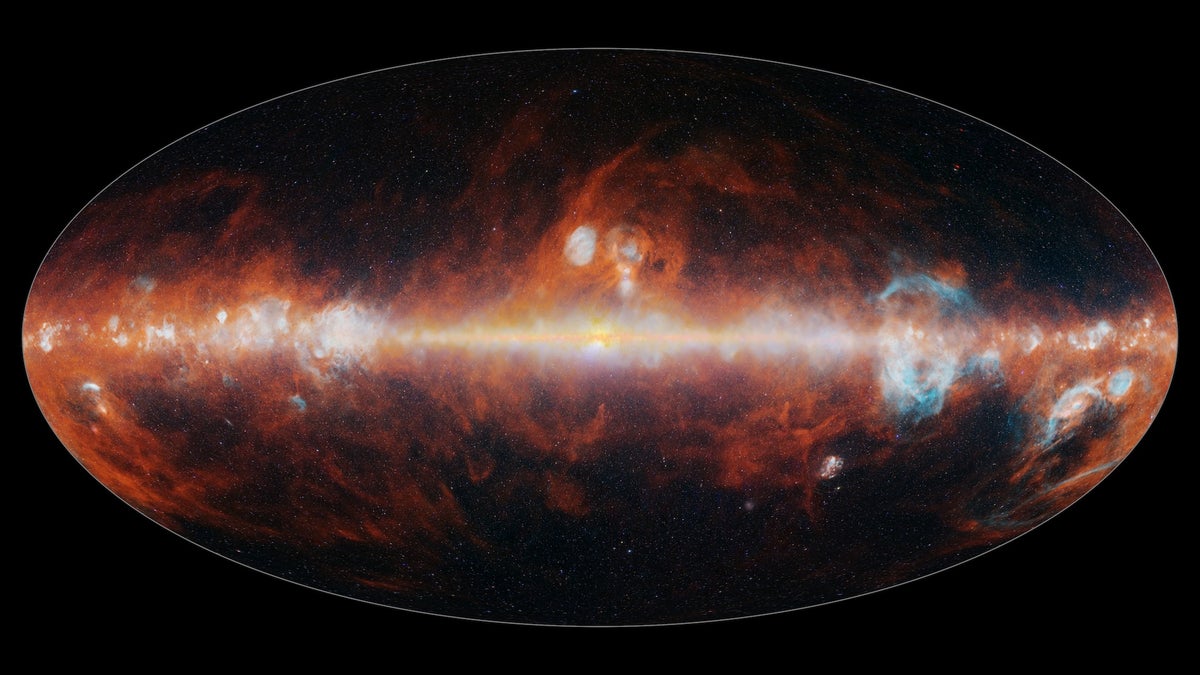
NASA's Nancy Grace Roman Space Telescope will utilize repurposed spy satellite hardware to conduct wide-field infrared astronomy.
A bright star in a nearby galaxy has essentially vanished. Astronomers believe that it died and collapsed in on itself, transforming into the eerie cosmic phenomenon known as a black hole. "It used to be one of the brightest stars in the Andromeda galaxy," says Kishalay De, an astronomer with Columbia University and the Flatiron Institute. "Today, it is nowhere to be seen, even with the most sensitive telescopes."
Imagine he's looking at the spectrum of light. He puts his thermometer at the very end of the longest wavelengths, what's going to be your red, your hot wavelengths, and he realizes that his temperature of his thermometer continues to increase in temperature. What does this tell us? This tells us that there's something beyond what we can physically see. There's something beyond that red wavelength that we can see.
Red dwarfs, or M dwarfs, are the most tempting places to seek alien Earths because they're the most abundant and enduring stars. They make up the majority of the stars in the Milky Way and shine with a slow thermonuclear simmer that should allow them to live exponentially longer than mosteven, say, for 14 trillion years, or 1,000 times the current age of the universe.