#interior-design
#interior-design
[ follow ]
#home-decor #home-improvement #architecture #renovation #diy #home-renovation #kitchen-design #home-design




fromArchitectural Digest
1 day agoActor Patina Miller Brings Major Drama to Her Manhattan Town House
Miller and Mars scoured lower Manhattan and Brooklyn for a brownstone that would meet their needs, but it wasn't until they discovered a gem nestled on a quiet Upper West Side block that they knew they'd found the one.
Renovation
fromdesignboom | architecture & design magazine
1 day agoraw concrete meets marshmallow-inspired palette within drinkit flagship cafe in russia
The project combines references to reinforced construction with a palette derived from confectionery tones, establishing a contrast between material heaviness and visual softness.
Design




#architecture

Design
fromdesignboom | architecture & design magazine
2 days agocurved wood, rattan, and macaron displays frame a tropical french patisserie in singapore
The Pierre Hermé Paris flagship in Singapore merges French pastry culture with local context through innovative design and spatial experiences.
#home-renovation
Renovation
fromIndependent
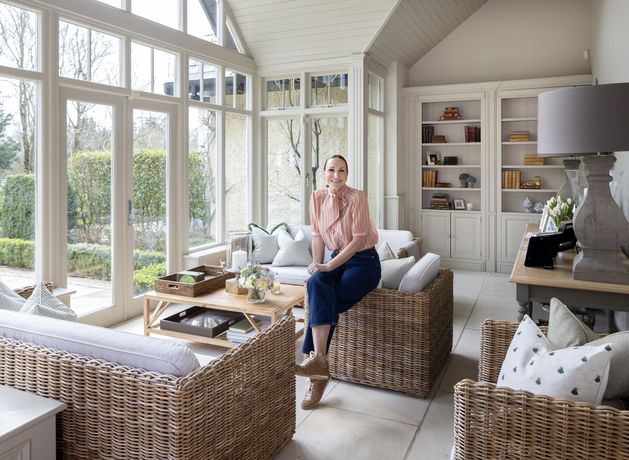
1 week agoMy favourite room: 'The thought of being chosen for Home of the Year went from being a joke to being a great motivator' - Inside Finbarr Collins' Stoneybatter remodel
Finbarr Collins transformed his neglected Dublin home into a contender for Home of the Year after initially tagging the show on Instagram.
fromYanko Design - Modern Industrial Design News
4 days ago2026 Chevrolet Corvette Stingray Z51 Review: The Interior Finally Matches the Supercar - Yanko Design
The 2026 Stingray is the first version of this car where the design language inside matches the sculptural ambition of the body. Everything before this was a supercar exterior with a parts-bin cockpit. That tension is finally resolved.
Cars
fromApartment Therapy
6 days agoIKEA's $25 Solid Pine Find Is the Most Unexpected Way to Get a Gorgeous Room Divider
Cleveland explains, 'I just wasn't into the idea of constantly seeing my bed from the couch. I spent almost two months hunting online for a room divider that wouldn't block too much natural light or make the space feel cramped. Eventually, I realized I'd have to make one myself.'
Remodel
UX design
fromdesignboom | architecture & design magazine
1 week agolight and sound transform tubular office into an immersive interior relax room
The Relax Room transforms corporate meeting spaces into immersive environments for pause and informal interaction using curved geometry and controlled lighting.
fromArchitectural Digest
1 week agoThis Airy Nantucket Compound Is Tailor-Made for Happy Dogs and Spontaneous Dance Parties
"I can't stress enough how much of a revolving door it is," says designer Henry Boyle of the seaside Nantucket compound he recently completed for a Connecticut-based couple, their four young-adult children, and a pack of beloved dogs. "They're local celebrities in this community-it's a constant stream of people."
Renovation
UX design
fromYanko Design - Modern Industrial Design News
1 week agoMUJI-Meets-Cyberpunk Vinyl Record Player Glows Like an Ambient Light and Charges Wirelessly - Yanko Design
Minimalism in product design has become monotonous, prompting a shift towards more expressive and functional designs that enhance interior aesthetics.
fromArchitectural Digest
1 week agoThis 248-Square-Foot Attic Used to Be a Maid's Room-Now It's a Peaceful Paris Retreat
Before, it was very dark. We created a system to make use of the low-ceilinged space under the roof. It allowed us to incorporate plenty of storage, as well as the apartment's service elements.
Renovation
fromArchitectural Digest
1 week agoHow Hailee Steinfeld Prepared Her Home for Her Next "Season of Life" as a New Mom
When redesigning a space, Hailee Steinfeld prioritizes how it should feel over how it will look. It's a lesson she learned from her mother, Cheri, who began a career in interior design shortly after marrying the singer and actor's father.
Parenting
Renovation
fromYanko Design - Modern Industrial Design News
1 week agoHow Architects Turned a Postwar London Terrace Into an Open-Plan Home Without Touching the Facade - Yanko Design
Islington houses are redesigned to create open, continuous spaces while maintaining the original facade and architectural integrity.
[ Load more ]