#jurassic-coast
#jurassic-coast
[ follow ]
#paleontology #fossil-discovery #coastal-erosion #public-safety #foskeia-pelendonum #climate-change #fossils

fromwww.theguardian.com
1 week agoOn the shoulders of giants: roaming among England's famous chalk figures
The Long Man may be Anglo-Saxon in origin; the shape is similar to the design on a buckle discovered in Kent in 1964 by the archaeologist Sonia Chadwick Hawkes, which probably represents the god Odin (or Woden).
History
fromArs Technica
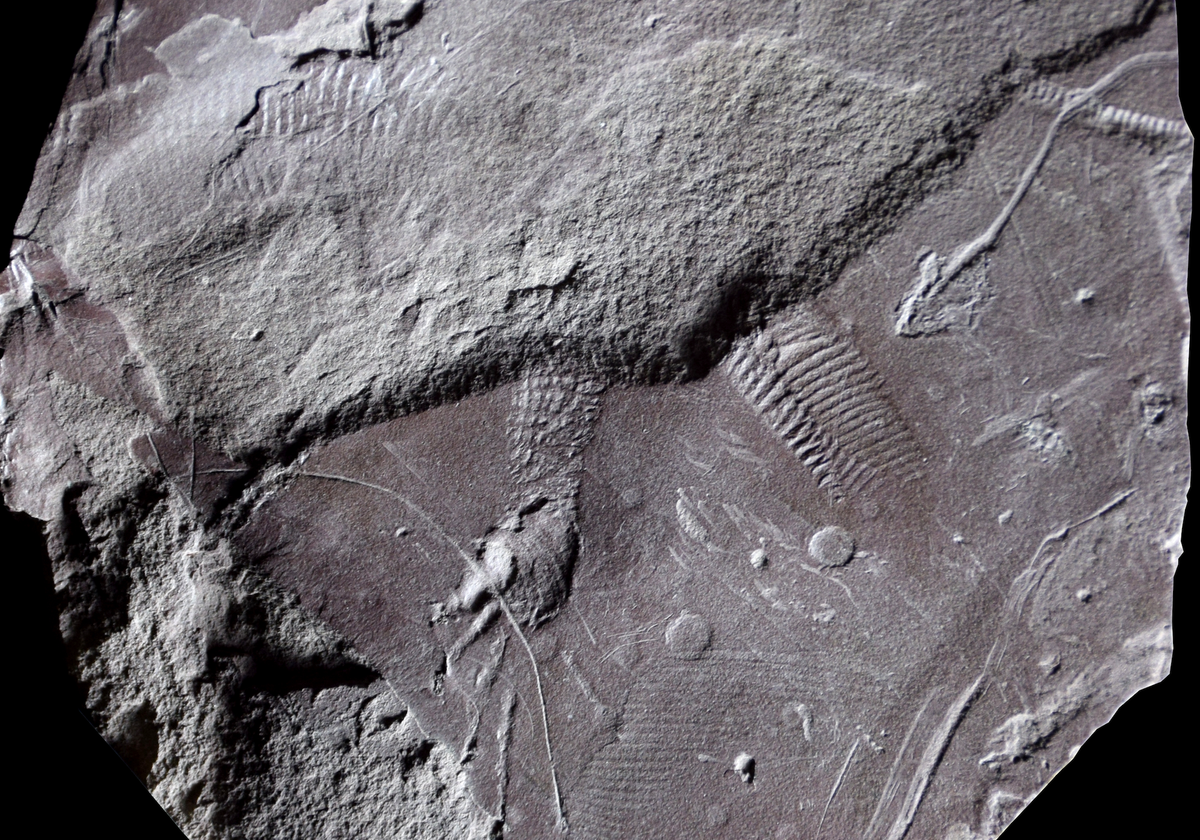
1 week agoNew fossil deposits show complex animal groups predating the Cambrian
Four protrusions appear to be arranged in pairs, each consisting of two connected branches surrounding a central depression. We really don't understand what any of these features represent anatomically.
OMG science
London politics
fromwww.theguardian.com
3 weeks agoStonehenge tunnel plan officially scrapped after years of protests
The UK Department for Transport has officially cancelled a controversial tunnel project under Stonehenge after spending £179.2 million on planning, citing exceptional circumstances and revoking the development consent order.
London food
fromCN Traveller
4 weeks agoThe longest coastal path in the world is coming to the UK - here's everything you need to know
The King Charles III England Coast Path National Trail, opening summer 2026, will be the world's longest managed coastal path, spanning eight sections across England's coastline from Scotland to Cornwall.
Travel
fromCN Traveller
6 years ago25 of the most beautiful beaches in Cornwall: Blue Flag bliss, unspoilt sands and stunning Atlantic views
Cornwall's coastline spans hundreds of miles with diverse beaches ranging from energetic surf destinations to secluded coves, each offering distinct experiences from dramatic Atlantic cliffs to sheltered turquoise bays.
fromArs Technica
1 month agoA unicorn-like Spinosaurus found in the Sahara
The Spinosaurus is a sail-backed, crocodile-snouted dinosaur that Hollywood depicted as a giant terrestrial predator capable of taking down a T. rex in Jurassic Park 3. Then they changed their mind and made it a fully aquatic diver in Jurassic World Rebirth—a rendering that was more in line with the latest paleontological knowledge. But now, deep in the Sahara Desert, a team of researchers led by Paul C. Sereno discovered new Spinosaurus fossils suggesting both scientists and filmmakers might have got it all wrong again.
Science

Independent films
fromwww.theguardian.com
1 month agoThe Dinosaurs review Morgan Freeman's narration is so soothing, you could use this as a relaxation aid
Dinosaur documentaries increasingly rely on familiar narrative tropes and visual effects that have become clichéd, combining predictable animal behavior patterns with sensationalized predator encounters.
fromMail Online
1 month agoSea fossils atop world's mountains fuel claims of Noah's Great Flood
Marine fossils have been discovered on mountain ranges around the world, including the Himalayas, Andes and Rocky Mountains, which scientists say were once covered by ancient seas before being pushed upward as continents collided and mountains formed.
OMG science
fromArtnet News
1 month agoRare Complete Triceratops Skeleton Could Snag $5 Million at Auction
Paleontology is built on specimens as data points. Trey is one among many of these that help us better understand this extinct group of horned dinosaurs. The fossil spent three decades on continuous loan and public exhibition at a museum, playing a role in advancing scientific study.
Arts

fromenglish.elpais.com
1 month agoAnts trapped in amber reveal what diminutive life was like millions of years ago
Although there are many amber stones containing a single creature, there are fewer that include two or more, as is the case with a pair of mosquitoes trapped in amber 130 million years ago which tell us that, back then, males also sucked blood. Even more extraordinary is when several organisms can be seen interacting, either eating the other, acting as a parasite, or cooperating.
Science
fromwww.independent.co.uk
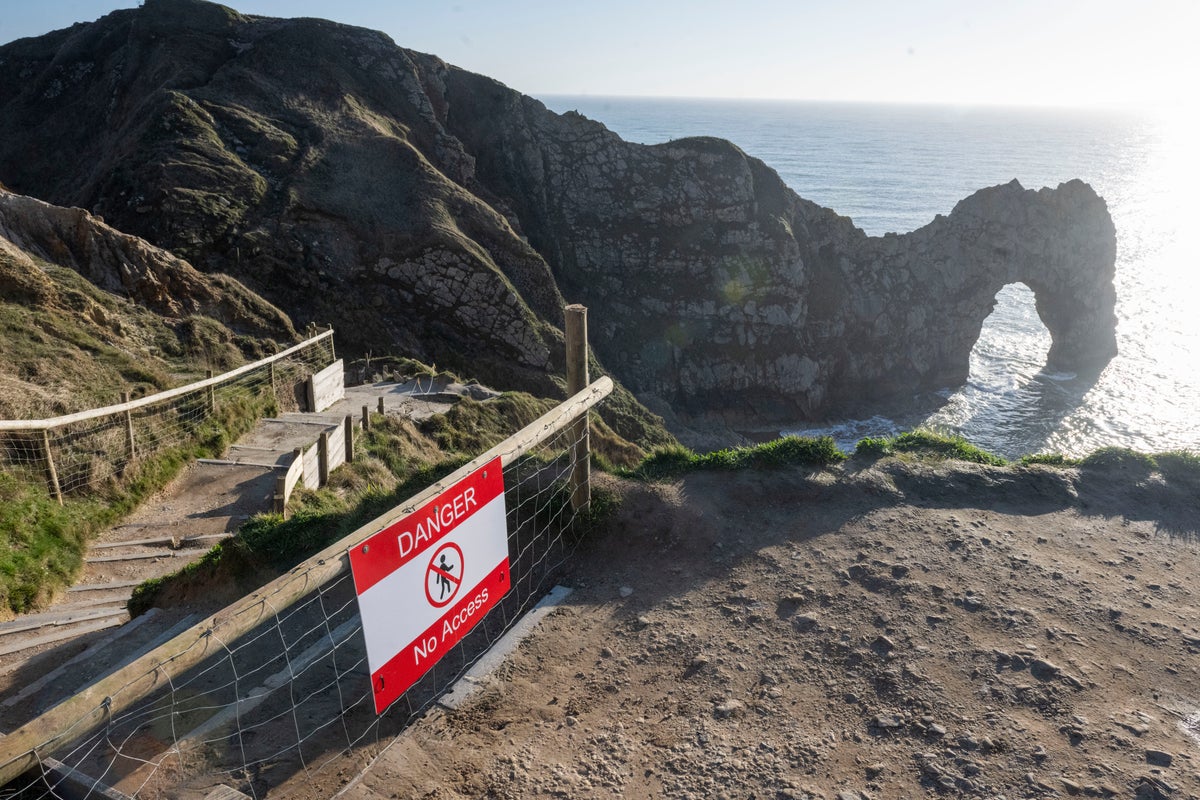
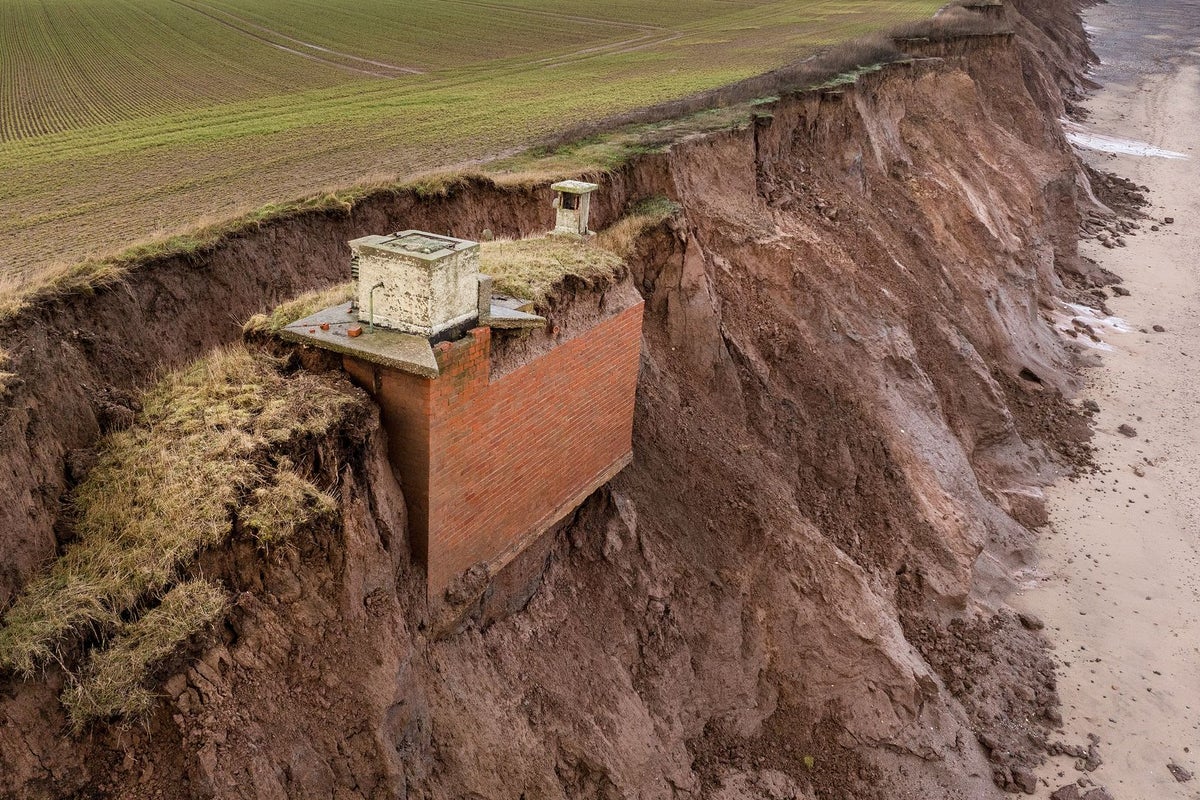
1 month agoHuge landslide closes part of England's most-visited National Trail
A massive landslip has dramatically reshaped a section of the Jurassic Coast, weeks after a significant 300ft crack emerged in the cliff face. Thousands of tonnes of rock and mud have collapsed onto Charmouth beach in Dorset, obliterating a chunk of the popular South West Coastal Path England's most-visited National Trail. A 30ft wide section of the 450ft tall cliff has detached from the mainland, now resting approximately 20ft lower than its original position.
Environment
US politics
fromwww.independent.co.uk
2 months agoOnions and chips keep washing up on England's south coast. Here's why
Container losses during storms deposited consumer goods on UK shores, offering oceanographers a rare real-time opportunity to study currents while highlighting the global scale of containerized trade.
fromMail Online
1 month agoArchaeologists fight tides to save the Swash Channel Wreck in Dorset
Archaeologists have fought the tides to save a 17th-century shipwreck from a popular nudist beach in Dorset. The remains are believed to be part of the Swash Channel Wreck, a Dutch merchant ship called The Fame of Hoorn that ran aground while approaching Poole Harbour in 1631. The wreck was found on Dorset's Studland Beach at the end of January when Storm Chandra washed away the sand that had kept it hidden for almost 400 years.
History
fromBig Think
2 months agoThe dinosaur that vanished twice: How WWII nearly erased Spinosaurus from history
Dinosaur fever gripped the Western world during the early 1900s, fueled by the discovery of new, ever larger and more spectacular dinosaurs in Europe and especially in North America. Interest in these fossils was not merely driven by academic curiosity. Dinosaur skeletons and research had become a status symbol for museums and their financiers, whether government or private, and colonial powers turned to their areas of influence to find new remains.
Science
fromArs Technica
1 month agoScientists hunting mammoth fossils found whales 400 km inland
At first glance, it looked like Wooller and his colleagues might have found evidence that mammoths lived in central Alaska just 2,000 years ago. But ancient DNA revealed that two "mammoth" bones actually belonged to a North Pacific right whale and a minke whale-which raised a whole new set of questions. The team's hunt for Alaska's last mammoth had turned into an epic case of mistaken identity, starring two whale species and a mid-century fossil hunter.
Science
Science
fromwww.scientificamerican.com
1 month agoThese jaw-dropping photographs show a new Triassic Park' of dinosaur prints in the Italian Alps
An exceptionally rich Triassic dinosaur tracksite with about 2,000 well-preserved prints was discovered on vertical rock faces in the Fraele Valley, Italian Alps.
[ Load more ]