#latam-markets
#latam-markets
[ follow ]
#argentina #cryptocurrency #brazil #inflation #emerging-markets #latin-america #eu-mercosur #free-trade-agreement



fromwww.aljazeera.com
2 days agoColombia responds to Ecuador's tariff hike with 100-percent import tax
Colombia's trade ministry has announced it will raise tariffs on neighbouring Ecuador to 100 percent from 30 percent, matching the rate Ecuador set a day earlier amid escalating trade and diplomatic spat.
Europe politics
Europe news
fromLondon Business News | Londonlovesbusiness.com
4 days agoAfter the rupture: European demand for EquitiesFirst financing - London Business News | Londonlovesbusiness.com
European equity markets are experiencing significant growth, narrowing the gap with U.S. markets amid geopolitical and economic changes.
London
fromLondon Business News | Londonlovesbusiness.com
3 days agoWhat London professionals are doing differently with their money in 2026 - London Business News | Londonlovesbusiness.com
Londoners are rethinking their financial strategies due to rising costs and inflation, shifting focus from saving to growing their wealth.
Online Community Development
fromHarvard Business Review
6 days agoA New Model to Drive Financial Health and Commercial Sustainability in the Development Sector - SPONSOR CONTENT FROM MASTERCARD
Many development projects fail to achieve sustainable impact due to lack of long-term planning and holistic approaches.
fromTravel + Leisure
5 days agoThese 18 Countries Offer the Quickest Path to Citizenship in 5 Years or Less-and Some in Just 2 Years
Naturalization is often the best, most logical path forward for those without the necessary family ties or funds. It involves living legally in the country for a set number of years, demonstrating familiarity with the language, and sometimes passing a test on history, culture, and the political system.
Europe politics

World news
fromLondon Business News | Londonlovesbusiness.com
6 days agoDollar holds firm amid ongoing geopolitical uncertainty - London Business News | Londonlovesbusiness.com
The dollar remains stable amid geopolitical tensions, with demand as a safe-haven asset and rising Treasury yields supporting its value.
Travel
fromTravel + Leisure
3 weeks agoThese Popular Latin American Destinations Come With Varying Travel Advisories-What to Know About Safety in Central and South America Right Now
Safety is crucial for travelers in Central and South America, with varying advisories and precautions in place across different countries.
World news
fromLondon Business News | Londonlovesbusiness.com
6 days agoSilver consolidates as geopolitical deadline keeps markets on edge - London Business News | Londonlovesbusiness.com
Silver prices are consolidating as investors remain cautious due to geopolitical uncertainties and inflation concerns.
fromRealagriculture
2 weeks agoBiofuels, Brazil, and the cost of war: Suderman outlines key forces shaping grain markets
"I think it surprised me how easily people are swayed by headlines," says Suderman, noting that wartime information flows are often strategic and conflicting. "You have to learn in a wartime to take everything with a grain of salt in the context of what you observe."
World politics
fromnews.bitcoin.com
3 days agoEast Africa Leads Stablecoin FX Compression in Q1 2026, Borderless Benchmark Reports
The Borderless Benchmark Q1 2026 report indicates that the Brazilian real recorded a 0 bps quoted execution cost from multiple providers across two consecutive months, showcasing the stability of the LATAM corridor.
Cryptocurrency
#eu-mercosur
Europe politics
fromFortune
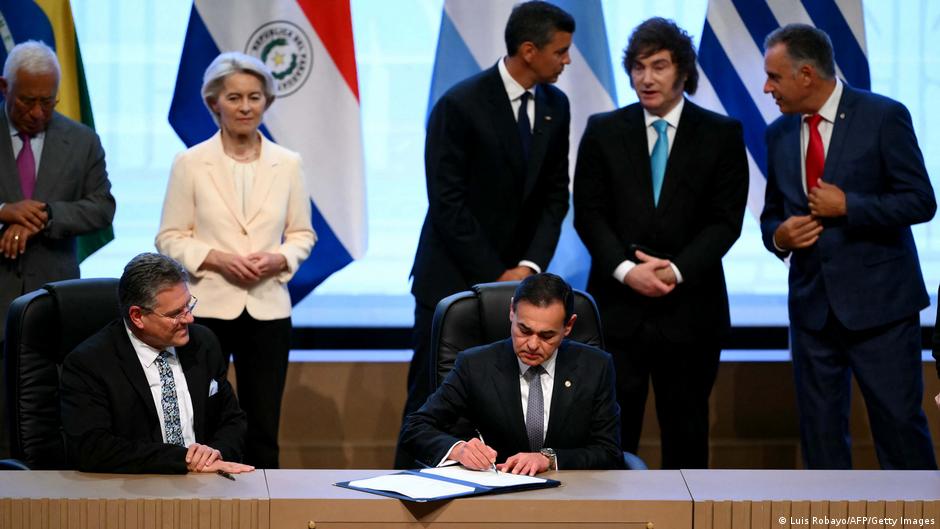
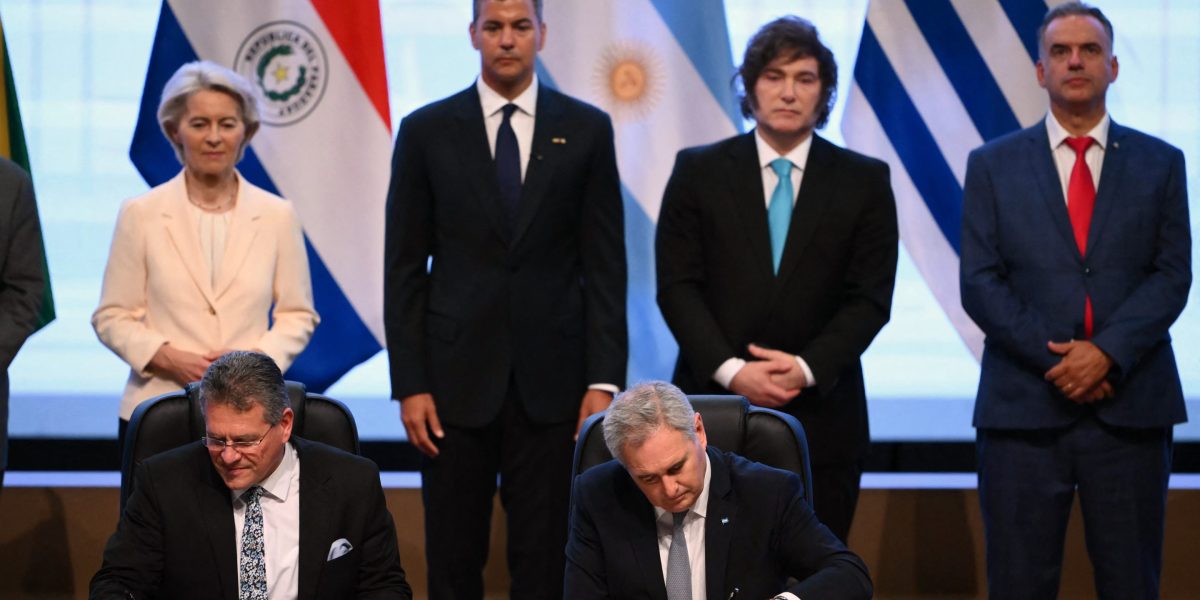
2 weeks agoAfter 25 years of negotiations, the EU finally signs the EU-Mercosur deal, the biggest trade deal in history linking 700 million people | Fortune
The EU-Mercosur free trade deal will begin on May 1, enhancing trade among 700 million people and reducing dependency on China and the US.

Europe politics
fromFortune
2 weeks agoAfter 25 years of negotiations, the EU finally signs the EU-Mercosur deal, the biggest trade deal in history linking 700 million people | Fortune
The EU-Mercosur free trade deal will begin on May 1, enhancing trade among 700 million people and reducing dependency on China and the US.
#ripple
Cryptocurrency
from24/7 Wall St.
3 weeks agoXRP News: Ripple Just Launched Its Full Financial Stack in Brazil-Will XRP Price Move This Time?
Ripple expanded its services in Brazil, offering payments, custody, stablecoins, prime brokerage, and treasury management, with six financial institutions already participating.
Business
from24/7 Wall St.
1 month agoThe Latin American Stock Delivering Monster Growth at a Record-Low Valuation
MercadoLibre's stock fell 36% from its peak despite 50% revenue growth, creating historically low valuations as competitive pressures and margin compression from strategic investments weigh on near-term profitability.
World politics
fromwww.mediaite.com
1 month agoI'm Not Learning Your Damn Language': Trump Addresses Latin American Leaders at His Shield Of The Americas' Summit
Trump stated he lacks time to learn Spanish, relying instead on interpreters at a Latin American leaders summit focused on Western Hemisphere security and immigration.
World politics
fromenglish.elpais.com
1 month agoHow the war in Iran is affecting the main economies of Latin America
Latin American oil-producing nations face mixed impacts from Middle East tensions, with Venezuela potentially benefiting from higher crude prices while managing geopolitical complications from reduced Iranian ties.
European startups
fromSilicon Canals
1 month agoBrazil's Pix payment system now processes more transactions than Visa and Mastercard combined - Silicon Canals
Brazil's Pix instant payment system now processes more daily transactions than Visa and Mastercard combined, handling over 224 million transactions daily since its November 2020 launch.
US politics
fromwww.theguardian.com
1 month agoMore exploitation, fewer rights': Argentina braces for sweeping overhaul of labor laws
Argentina's senate prepares to approve labour law reforms that weaken unions, extend working hours to 12, cut severance pay, and allow direct employer-employee negotiations, despite concerns about rising informal employment and job losses.
from24/7 Wall St.
1 month agoLive: Is Nu Holdings (NU) Ready to Jump After Earnings Tonight?
Nu's Q3 2025 results were difficult to criticize. Revenue reached $4.17 billion, exceeding consensus expectations of roughly $4.04 billion by about $134 million. Revenue grew 46% year-over-year, underscoring continued momentum across its core markets. Net income totaled $783 million, up 39% year-over-year on an FX-neutral basis.
Business intelligence
Venture
from24/7 Wall St.
1 month agoArgentina's Reform Bet Comes With One ETF and No Safety Net
ARGT provides concentrated, high-conviction exposure to Argentine equities for investors with specific views on Argentina's economic trajectory, delivering 223% five-year returns but with extreme volatility and significant concentration risk.
Business
from24/7 Wall St.
1 month agoMercadoLibre vs Sea: Which Emerging Market Giant Punished After Earnings Is the Better Buy?
MercadoLibre and Sea Limited both experienced stock declines despite strong revenue growth, driven by different risk factors: MELI faces currency volatility in Latin America while SE confronts competitive pressures and margin concerns in Southeast Asia.
fromThe Local France
2 months agoEU to ink long-awaited trade deal with South American bloc
The European Union will on Saturday sign a deal 25 years in the making with the South American trade bloc Mercosur, creating one of the world's largest free trade areas at a time of growing protectionism and volatility. The long-awaited agreement comes amid the sweeping use of tariffs and trade threats by US President Donald Trump's administration, which has sent countries scrambling for new partnerships.
France news
fromThe Drum
2 months agoFandango unveils new global brand strategy for Latin America
Fandango, the leading digital network for moviegoers, is expanding its focus in Latin America, a fast-growing market for theatrical films. The company announced today (March 27) at CinemaCon, the annual convention for theater owners, that it is rolling out a new global brand strategy that includes the launch of new ticketing destinations at its subsidiaries Ingresso.com in Brazil and Fandango Latin America (formerly Cinepapaya), as well as seven key countries in Spanish-speaking Latin America: Peru; Colombia; Argentina; Mexico; Chile; Ecuador and Bolivia.
Film
fromwww.aljazeera.com
1 month agoLatin America: In the Shadow of the US | Ep 2 Wars
The 1980s bring revolutionary wars, CIA-backed conflict and the violent birth of a new democratic era. Episode 2: Wars begins with Nicaragua's Sandinista revolution, which promised egalitarian transformation through literacy crusades. But civil war erupted as United States President Ronald Reagan's administration covertly backed the Contra rebels, plunging the nation into turmoil and suffering. Panama transitioned from Omar Torrijos's diplomatic triumphs over the Panama Canal to Manuel Noriega's sinister collaboration with both the CIA and drug cartels.
US politics
fromFortune
2 months ago'The Chinese have invaded us in terms of merchandise': Mexico and Argentina lead Latin America's struggles with flood of imports | Fortune
China has been flooding Latin American markets with low-priced exports, especially autos and e-commerce goods, as its exporters adjust to U.S. President Donald Trump's tariffs and geopolitical moves. The world's second-largest economy has become a major trading partner for many Latin American nations, seeking access to their abundant natural resources and growing markets while expanding its influence in a region Trump views as America's Backyard.
E-Commerce


World news
fromFortune
2 months agoArgentina's 5 straight months of surging inflation undercount the severity, economists say | Fortune
Argentina's inflation rose 2.9% in January; the 2004-based INDEC consumption basket understates true price increases amid subsidy cuts and rising regulated service costs.
Business
from24/7 Wall St.
2 months ago3 Top Copper Stocks to Watch as Copper Prices Skyrocket: BHP, FCX, SCCO
Major copper producers and select mining stocks stand to benefit from South American supply disruptions, Chinese infrastructure stimulus, and rising demand from electric vehicles and renewables.
fromwww.aljazeera.com
1 month agoHas BRICS given up on challenging Western economic dominance?
Jim O'Neill, the economist who coined the term BRIC' 25 years ago, argues that the group is losing its relevance. At its peak, the BRICS coalition of economies Brazil, Russia, India, China and South Africa was seen as a serious attempt to move away from the United States dollar and the domination of Western economic institutions like the World Bank, Group of Seven (G7), and International Monetary Fund (IMF).
World news
fromenglish.elpais.com
2 months agoEU executive must decide whether to implement Mercosur deal despite setback from Parliament
But what is legally possible could pose a serious political problem. Because, as the European Commission pointed out when remarking on the Parliament's negative vote, the legal formula used to process the ratification of this agreement is the same one used for an agreement reached with Chile that did not raise any questions inside the European Parliament. In other words, the outcome of this vote suggests that the opposition for legal concerns is motivated less by legal reasons than by political ones.
Miscellaneous
[ Load more ]